Exercise is an important part of a healthy lifestyle, but if you struggle with breakouts, you may wonder: does exercise help acne, or can working out make it worse?
The answer is not as simple as yes or no. Regular physical activity may support skin health by helping manage stress and promoting overall well-being. However, exercise is not a proven treatment for acne, and certain workout habits can contribute to breakouts.
Sweat, friction, tight clothing, makeup, and equipment that touches your skin may aggravate acne-prone areas. The good news is that you do not need to stop exercising to take care of your skin.
In this guide, we will explore the relationship between exercise and acne, explain what the available evidence suggests, and share practical skincare tips for before and after a workout.
Quick Answer: Does Exercise Help Acne?
Exercise may indirectly support skin health, but there is not enough strong evidence to say that it directly clears acne.
Physical activity can help reduce stress and support general health. Because stress can contribute to acne flare-ups in some people, managing stress may be helpful as part of an overall skincare approach.
However, sweat and friction during exercise can also irritate the skin. Acne may become worse when sweat, oil, and friction combine with tight clothing or equipment that repeatedly rubs against the skin.
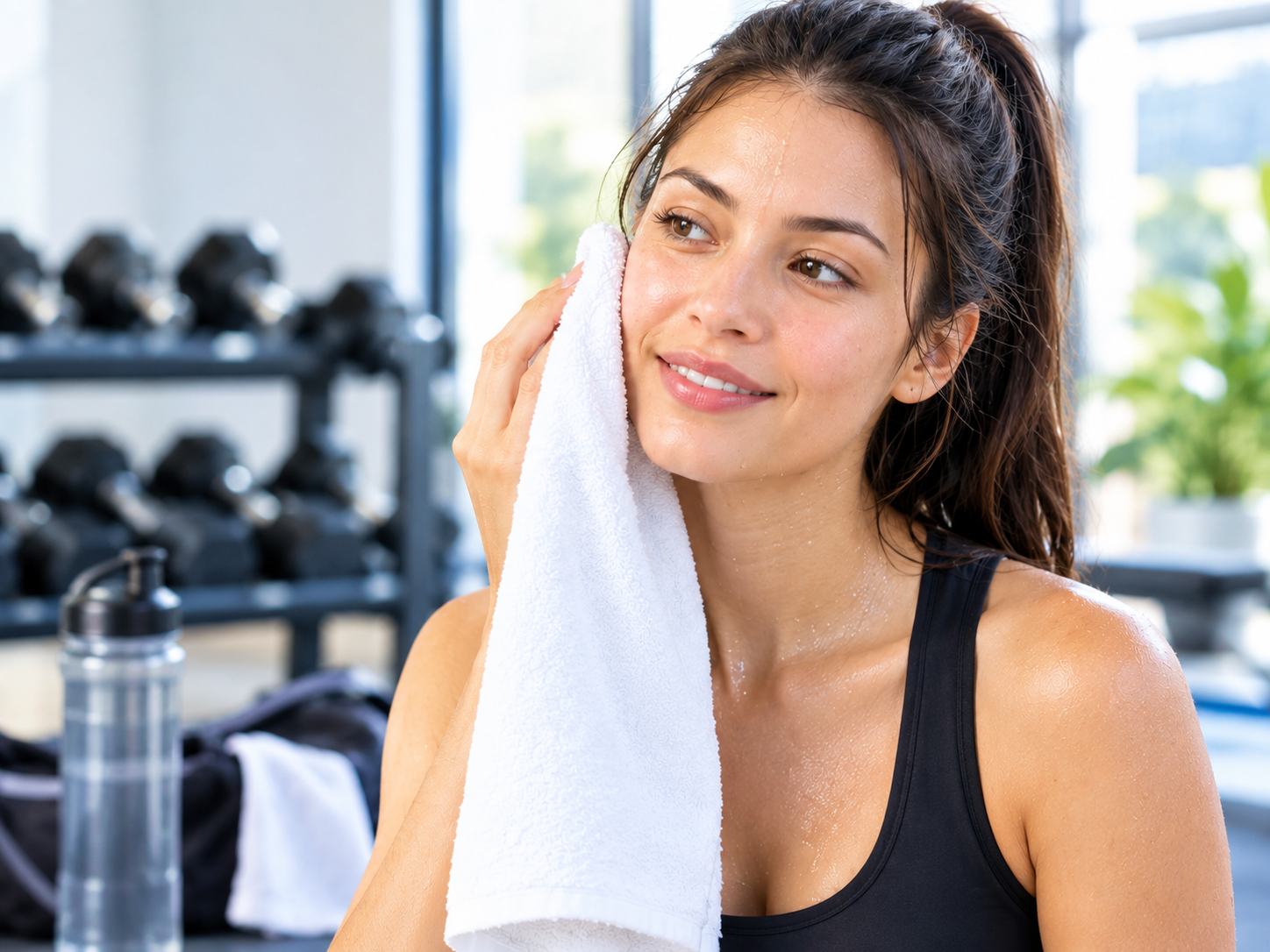
To help prevent workout-related breakouts, gently cleanse your skin after exercising, change out of sweaty clothing, and avoid rubbing your face with an unclean towel.
What Is Acne, and Why Does It Happen?
Acne is a common skin condition that develops when hair follicles become clogged with oil and dead skin cells. Inflammation and the activity of acne-associated bacteria can contribute to the development of pimples.
Acne can appear as:
- Whiteheads: Small bumps formed when pores become clogged.
- Blackheads: Open clogged pores that appear dark.
- Papules: Small, inflamed bumps.
- Pustules: Inflamed pimples containing pus.
- Nodules and cysts: Deeper, often painful acne lesions that may cause scarring.
Several factors can influence acne, including hormones, genetics, excess oil production, certain medications, and skincare products.
Exercise is only one possible influence on the skin. If you experience breakouts after working out, it is worth looking at your overall routine instead of assuming sweat is the only cause.
5 Ways Exercise May Support Skin Health
Exercise offers several well-established health benefits. Some may also support skin health indirectly, although they should not be confused with proven acne treatments.
1. Exercise May Help Manage Stress
Stress does not cause every acne breakout, but it can worsen acne in some people.
Regular physical activity can help support mood and stress management. If stress is one of your acne triggers, a manageable exercise routine may be beneficial as part of your overall approach to skin care.
Walking, cycling, swimming, dancing, and strength training are all options. Choose an activity you enjoy and can maintain comfortably.
Remember that exercise does not replace appropriate acne treatment.
2. Exercise Increases Blood Flow
During physical activity, your heart pumps more blood to meet your body’s needs. Blood carries oxygen and nutrients to tissues, including the skin.
This increased circulation can temporarily give your face a flushed appearance, sometimes described as a post-workout glow.
However, increased blood flow does not mean that exercise cleans out pores or removes acne-causing impurities. There is not enough evidence to claim that better circulation alone clears acne.
3. Exercise Supports Overall Health
Regular physical activity supports cardiovascular health, strength, mobility, and general well-being.
These benefits are valuable regardless of whether your acne improves. Healthy skin depends on several factors, and exercise is just one part of a broader approach that includes appropriate skincare, sleep, and a balanced lifestyle.
4. Exercise May Support Better Sleep
Regular activity can help some people maintain a healthier sleep routine.
Sleep is important for general health, and a consistent routine may also help with stress management. However, better sleep should not be presented as a guaranteed way to clear acne.
If you notice that your skin becomes more irritated during stressful or sleep-deprived periods, consider looking at your habits alongside your established acne treatment.
5. Exercise Can Be Part of a Balanced Lifestyle
There is no need to avoid exercise simply because you have acne.
Instead, focus on activities that suit your fitness level and build a skincare routine around them. Gentle cleansing, clean workout clothing, and avoiding unnecessary friction can help reduce preventable irritation.
The goal is to enjoy the benefits of physical activity while caring for your skin appropriately.
Can Exercise Make Acne Worse?
Yes, exercise can contribute to breakouts in some people, particularly when heat, sweat, friction, and occlusion occur together.
Sweat itself is not the sole cause of acne. However, workout conditions can aggravate acne-prone skin or contribute to acne-like bumps.
Here are some common reasons you might notice more breakouts after exercising.
1. Sweat and Oil Build Up on the Skin
During exercise, you sweat more, and your skin may also feel oilier. Sweat, oil, and other residues can accumulate on the skin, particularly when combined with tight clothing or heavy makeup.
Sweat does not automatically clog pores or cause acne in everyone. The surrounding conditions and your individual skin tendencies matter.
What to do: Gently pat sweat away with a clean towel. After your workout, wash your face with a mild cleanser and lukewarm water.
2. Tight Clothing Can Trap Heat and Moisture
Tight workout clothing, straps, helmets, and other equipment may trap heat and moisture against your skin.
Repeated pressure and rubbing can aggravate breakouts. This type of problem is sometimes called acne mechanica.
It can occur on the forehead, chin, shoulders, back, or other areas where clothing or equipment repeatedly touches the skin.
What to do: Choose comfortable clothing that allows moisture to escape. Wash workout clothes after use, and clean sports equipment according to its care instructions.
3. Rubbing Your Face Can Irritate Your Skin
Wiping sweat away forcefully may irritate already inflamed skin.
Frequent rubbing can make existing breakouts feel more uncomfortable and may worsen irritation.
What to do: Use a clean towel and gently pat your skin instead of scrubbing it. Avoid touching your face with unwashed hands during exercise.
4. Makeup May Contribute to Clogged Pores
Some makeup products may contribute to clogged pores, especially if they are not suitable for acne-prone skin.
Heavy makeup combined with heat and sweat can also be uncomfortable during a workout.
What to do: When practical, remove makeup before exercising. If you prefer to wear makeup, choose products labelled non-comedogenic, meaning they are designed not to clog pores.
5. Shared Equipment May Irritate Acne-Prone Skin
Gym equipment, helmets, chin straps, and other sports gear can repeatedly touch or rub the skin.
Residue on equipment and friction against the skin may contribute to irritation or breakouts.
What to do: Clean shared equipment before use, avoid sharing personal towels, and regularly wash items that touch your face or body.
How to Prevent Acne After Exercise
You do not need an elaborate skincare routine to look after acne-prone skin during workouts. A few consistent habits can help reduce unnecessary irritation.
Step 1: Start With Clean Skin
If you wear makeup, consider removing it before exercising. Use a gentle cleanser if needed, especially when your face feels oily or has product residue.
Avoid harsh scrubs and strong cleansing products that leave your skin feeling tight or irritated.
Step 2: Wear Clean Workout Clothes
Put on freshly washed clothing before exercising.
If you experience breakouts on your chest, shoulders, or back, look for comfortable, breathable or moisture-wicking fabrics. Avoid clothing that repeatedly rubs against affected areas.
Step 3: Keep a Clean Towel Nearby
Use a clean towel to pat away sweat during your workout.
Do not rub aggressively, and avoid using a shared towel on your face.
Step 4: Cleanse After Your Workout
When possible, shower after exercise and gently wash areas that have become sweaty.
For facial cleansing, use a mild cleanser suited to your skin. Avoid repeatedly washing your face throughout the day simply because you sweat.
If you cannot shower immediately, change out of wet clothing and gently cleanse your face when practical.
Step 5: Apply Moisturizer
After cleansing, apply a moisturizer that suits your skin type.
Look for a non-comedogenic product if you are prone to clogged pores. Oily and acne-prone skin can still benefit from moisturization, particularly if acne treatments cause dryness.
Step 6: Protect Your Skin From the Sun
If you exercise outdoors during the day, apply broad-spectrum, water-resistant sunscreen with SPF 30 or higher.
Choose a formula that suits your skin and is labelled non-comedogenic if clogged pores are a concern. Reapply as directed on the product label, including after heavy sweating.
Step 7: Continue Your Acne Treatment
Do not rely on exercise or post-workout cleansing alone to treat persistent acne.
If you already use an acne treatment recommended by a healthcare professional, follow those instructions. Avoid adding several new active ingredients at once, because excessive treatment can irritate the skin.
A Simple Post-Workout Skincare Routine
Here is a basic routine you can adapt to your skin’s needs.
Morning Workout
- Remove makeup before exercising, if applicable.
- Wear clean workout clothes and use a clean towel.
- Shower or cleanse gently after exercise.
- Apply moisturizer if needed.
- Apply broad-spectrum SPF 30 or higher before going outdoors, following the product directions.
Evening Workout
- Remove makeup before exercise if you are wearing it.
- After exercising, shower and gently cleanse your face.
- Apply your usual acne treatment according to its directions.
- Finish with a suitable moisturizer.
You do not need to use exfoliating acids or acne treatments every time you sweat. Keep your routine gentle and avoid over-cleansing.
For more guidance, explore our Daily Skincare Routine Finder.
Does Sweating Help Clean Your Pores?
No. Sweating is a normal way for your body to regulate temperature, but it should not be considered a pore-cleansing treatment.
Acne develops through several processes involving clogged follicles, oil production, inflammation, and other contributing factors. Sweat does not remove these underlying causes.
After exercising, gentle cleansing can help remove sweat, oil, sunscreen, and other residues from your skin. Avoid scrubbing or using harsh products in an attempt to make your pores feel completely clean.
If you are prone to acne, a consistent routine is more useful than trying to remove every trace of oil from your face.
Does Exercise Help Hormonal Acne?
There is not enough evidence to recommend exercise as a direct treatment for hormonal acne.
Physical activity may support stress management and general health, but hormonal acne is influenced by hormone activity and other individual factors.
If you frequently experience deep, painful breakouts, persistent acne around the jawline, or acne alongside other hormonal symptoms, consider consulting a dermatologist or healthc