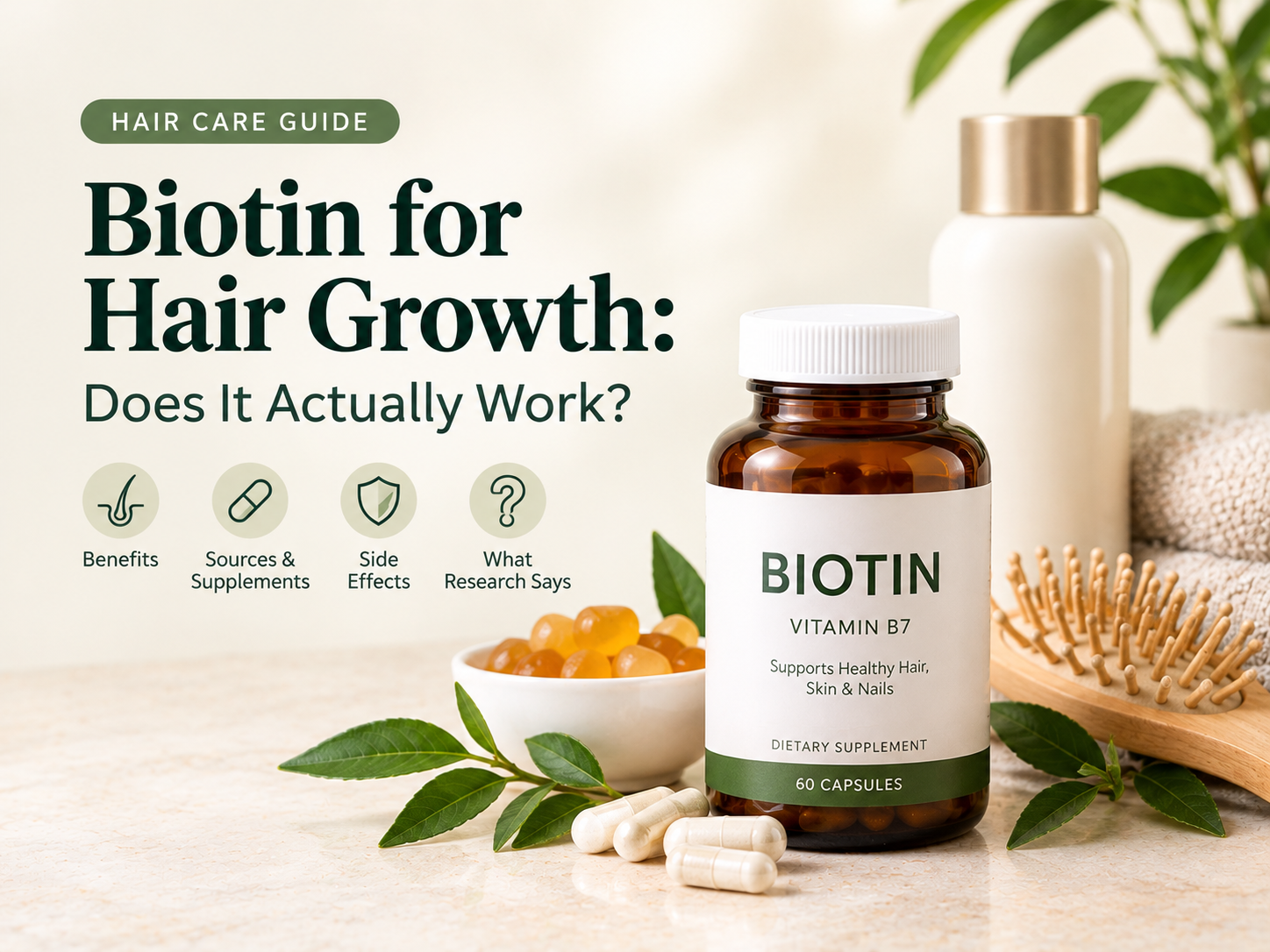
If you have been looking for ways to achieve longer, thicker, and healthier-looking hair, you have probably heard about biotin. This popular vitamin is found in hair growth supplements, gummies, shampoos, and many beauty products.
But does biotin for hair growth actually work, or is it just another beauty trend?
Biotin, also known as vitamin B7, is an essential nutrient that helps your body convert food into energy. It also plays a role in normal hair, skin, and nail health. However, taking extra biotin does not necessarily mean your hair will grow faster or become thicker.
In this guide, we will explore the potential benefits of biotin, what scientific research says about hair growth, foods that contain vitamin B7, and important safety tips to know before trying a supplement.
What Is Biotin?
Biotin is a water-soluble B vitamin that helps your body process carbohydrates, fats, and proteins. It supports several normal metabolic functions that keep your body working properly.
Biotin is often called a hair, skin, and nail vitamin because a deficiency can cause symptoms such as hair thinning, hair loss, skin problems, and brittle nails.
However, these symptoms can also be caused by other conditions. For example, hair loss may be associated with genetics, hormonal changes, stress, nutritional deficiencies, certain medications, or underlying health problems.
This is why it is important to understand the cause of hair loss rather than automatically assuming you need a biotin supplement.
Does Biotin for Hair Growth Actually Work?
Biotin may help improve deficiency-related hair problems, but there is limited scientific evidence that taking extra biotin promotes hair growth in people who already get enough vitamin B7.
Your body needs biotin for normal cellular functions, including processes involved in producing and using proteins. Hair is primarily made of a protein called keratin, which helps explain why biotin is commonly marketed for hair health.
However, the body needing a nutrient does not mean that taking more of it will automatically improve hair growth.
If your hair problems are related to a genuine biotin deficiency, correcting that deficiency may help. If your biotin intake is already adequate, high-dose supplements have not been convincingly shown to make hair grow faster, thicker, or longer.
Research on biotin supplements for hair loss is limited, and stronger clinical studies are needed.
Before buying a supplement, consider your diet, symptoms, and possible causes of hair loss. A healthcare professional can help determine whether a deficiency or another issue may be contributing to your symptoms.
Potential Benefits of Biotin for Hair
Biotin has several important functions in the body. However, its potential benefits should be understood realistically.
1. Supports Normal Hair Health
Biotin is essential for normal body functions that support healthy tissues, including hair. Getting enough vitamin B7 is an important part of maintaining overall health.
However, there is no strong evidence that taking extra biotin will improve hair growth if you already get enough through food.
2. May Help With Biotin Deficiency-Related Hair Loss
A genuine biotin deficiency can cause hair thinning or hair loss. In this situation, a healthcare professional may recommend supplementation to restore adequate levels.
Biotin deficiency is uncommon in otherwise healthy people who eat a varied diet. Hair loss alone is not enough to confirm that you have a deficiency.
3. Supports Overall Nutritional Health
Healthy hair depends on more than one vitamin. Your body also needs adequate protein, iron, zinc, and other nutrients to support normal hair growth.
Biotin can be part of a balanced nutritional approach, but it should not be viewed as a complete solution for every type of hair loss.
4. May Support Nail Health
Biotin is also widely promoted for stronger nails. Some small studies suggest that supplementation may help certain people with brittle nails, but the evidence remains limited.
These findings do not establish that biotin supplements will make hair grow faster.
What Does Scientific Research Say About Biotin for Hair Growth?
Scientific evidence supporting biotin supplements for hair growth is limited, especially in people who do not have a deficiency.
A review published in 2024 examined the available research on biotin and hair loss. The evidence was limited, and the findings did not establish that routine biotin supplementation improves hair growth in otherwise healthy people.
The National Institutes of Health also notes that there is little scientific evidence supporting claims that biotin supplements improve hair, skin, and nails in people who are not deficient.
You can explore these sources for more information:
- NIH Office of Dietary Supplements: https://ods.od.nih.gov/factsheets/Biotin-HealthProfessional/
- Research review on biotin and hair loss: https://pubmed.ncbi.nlm.nih.gov/39148962/
The main takeaway is that biotin is essential for health, but taking additional biotin is not a proven treatment for most types of hair loss.
Foods That Naturally Contain Biotin
Before considering supplements, look at the foods you eat regularly. Many everyday foods contain biotin and can help you meet your nutritional needs.
Some food sources of biotin include:
- Eggs, especially cooked eggs
- Salmon and other fish
- Meat and organ meats
- Nuts and seeds
- Sweet potatoes
- Legumes
- Certain vegetables
- Dairy products
Eating a varied diet can help provide the nutrients your body needs for normal hair health.
Raw egg whites contain avidin, a protein that binds biotin and can reduce its absorption when consumed regularly in large amounts. Cooking egg whites reduces this effect.
If you follow a restrictive diet or suspect you have a nutritional deficiency, consider speaking with a qualified healthcare professional or registered dietitian.
How Much Biotin Do You Need for Hair Growth?
For adults, the adequate intake of biotin established by the US National Institutes of Health is 30 micrograms per day. This is a general nutritional reference, not a special dose for hair growth.
Some supplements contain 1,000, 5,000, or even 10,000 micrograms of biotin. These amounts are much higher than the daily adequate intake.
However, a higher dose does not necessarily provide better results. There is no established universal dose of biotin proven to promote hair growth in people who already have adequate levels.
If a healthcare professional identifies a deficiency, they can advise you about an appropriate supplement and dose.
Avoid taking high-dose biotin simply because a product promises faster hair growth.
Are Biotin Gummies Better Than Capsules?
Biotin is available in gummies, capsules, tablets, and liquid supplements. These products may provide the same vitamin in different forms.
There is no convincing evidence that biotin gummies are more effective than capsules for hair growth.
When comparing products, consider:
- The amount of biotin per serving
- Other ingredients included in the formula
- Added sugar in gummies
- Product quality and manufacturing standards
- Whether you actually need a supplement
Some hair supplements combine biotin with zinc, collagen, or other vitamins. A combination product is not automatically more effective, and taking several supplements together can lead to unnecessary or excessive nutrient intake.
Choose supplements carefully and ask a healthcare professional if you are unsure which ingredients are appropriate for you.
Possible Side Effects and Safety Concerns
Biotin is a water-soluble vitamin, but that does not mean every supplement is risk-free.
One of the most important safety concerns is its ability to interfere with certain laboratory tests.
Biotin Can Affect Blood Test Results
High doses of biotin can interfere with some laboratory tests, including certain thyroid tests and cardiac troponin tests used when evaluating possible heart problems.
This interference can lead to inaccurate results and potentially affect medical decisions.
If you take a biotin supplement, tell your healthcare professional and laboratory staff before having blood tests. Ask whether you need to stop taking it temporarily and, if so, how long beforehand. Do not change prescribed medication without medical guidance.
Other Considerations
Some supplements contain additional ingredients that may not be suitable for everyone. People who take medications, have underlying health conditions, or are pregnant or breastfeeding should seek professional advice before starting a new supplement.
Always read the label and avoid assuming that a high-dose product is better simply because it contains more biotin.
Who May Benefit From Biotin Supplements?
Biotin supplements may be useful for people with a confirmed deficiency or certain medical conditions that interfere with biotin absorption or metabolism.
In these situations, a healthcare professional can recommend an appropriate approach.
However, most hair loss is not automatically caused by biotin deficiency. Possible causes include:
- Hereditary hair loss
- Hormonal changes
- Recent illness or significant stress
- Iron deficiency or other nutritional problems
- Thyroid conditions
- Certain medications
- Scalp conditions
Identifying the cause is often more useful than trying multiple supplements without knowing whether they address the problem.
If you notice sudden, persistent, or severe hair loss, consult a dermatologist or another qualified healthcare professional.
How to Support Hair Growth Naturally
Although biotin supplements are not a guaranteed solution, several everyday habits can help support healthy hair.
Eat a Balanced Diet
Include adequate protein and a variety of nutrient-rich foods. Your body needs sufficient energy, protein, vitamins, and minerals for normal hair growth.
Avoid extreme diets that eliminate major food groups without appropriate nutritional planning.
Take Care of Your Scalp
Cleanse your scalp regularly according to your hair type. If you experience persistent itching, scaling, redness, or discomfort, consider getting professional advice.
Reduce Hair Breakage
Use a gentle shampoo and conditioner, detangle carefully, and avoid excessive heat styling. Tight hairstyles and harsh chemical treatments can contribute to breakage.
Remember that reducing breakage can help hair retain length, but it is not the same as increasing the rate at which hair grows from the scalp.
Address Underlying Causes
If hair loss is related to a medical condition or nutritional deficiency, treating the underlying cause may be more effective than relying on a general hair supplement.
A healthcare professional can help determine whether testing or a specific treatment is appropriate.
Be Patient With Hair Changes
Hair growth is gradual, and visible changes can take time. Be cautious of products that promise dramatic results in a few days or guarantee new hair growth.
Frequently Asked Questions
Does biotin make hair grow faster?
There is no strong evidence that biotin makes hair grow faster in people who already get enough vitamin B7. Correcting a genuine deficiency may help with deficiency-related hair problems.
How long does biotin take to work for hair growth?
There is no established timeline because biotin supplements have not been convincingly shown to improve hair growth in people without a deficiency. When a deficiency is present, the response depends on the individual and the underlying cause.
Is 10,000 mcg of biotin too much?
A dose of 10,000 micrograms equals 10 milligrams, which is much higher than the adult adequate intake of 30 micrograms per day. It has not been established as an effective hair-growth dose for people without a deficiency. High doses can also interfere with certain blood tests, so seek professional advice before taking them.
Can I take biotin every day?
Some people may need a biotin supplement, but not everyone does. Most people can obtain adequate biotin through a varied diet. Ask a healthcare professional whether daily supplementation is appropriate for you.
Does biotin help with thinning hair?
Biotin may help if thinning hair is caused by a genuine biotin deficiency. However, hair thinning has many possible causes, and biotin is unlikely to address every type of hair loss.
Can I get enough biotin from food?
Many people can get enough biotin from a varied diet that includes foods such as cooked eggs, fish, meat, nuts, seeds, and vegetables.
Is biotin shampoo effective for hair growth?
Biotin shampoos are marketed for stronger, fuller-looking hair, but strong evidence that topical biotin shampoos stimulate hair growth is lacking. A shampoo may help cleanse the scalp and improve how hair feels, but it should not be considered a proven treatment for hair loss.
Should I take biotin or use hair oil?
These products serve different purposes. Biotin is a nutrient, while hair oils are generally used for conditioning and reducing dryness or friction. Neither should be assumed to treat the underlying cause of hair loss without evidence.
Final Thoughts
Biotin for hair growth is popular, but the scientific evidence does not support it as a guaranteed solution for longer, thicker hair.
Biotin is an essential vitamin, and supplementation can be helpful when a genuine deficiency is present. For people who already get enough vitamin B7, however, taking extra biotin has not been convincingly shown to improve hair growth.
A balanced diet, gentle hair care, and identifying the cause of hair loss are sensible places to start. If your hair is thinning or shedding more than usual, seek professional advice instead of relying on high-dose supplements alone.
Health disclaimer: This article is for educational purposes only and is not a substitute for personalized medical advice.