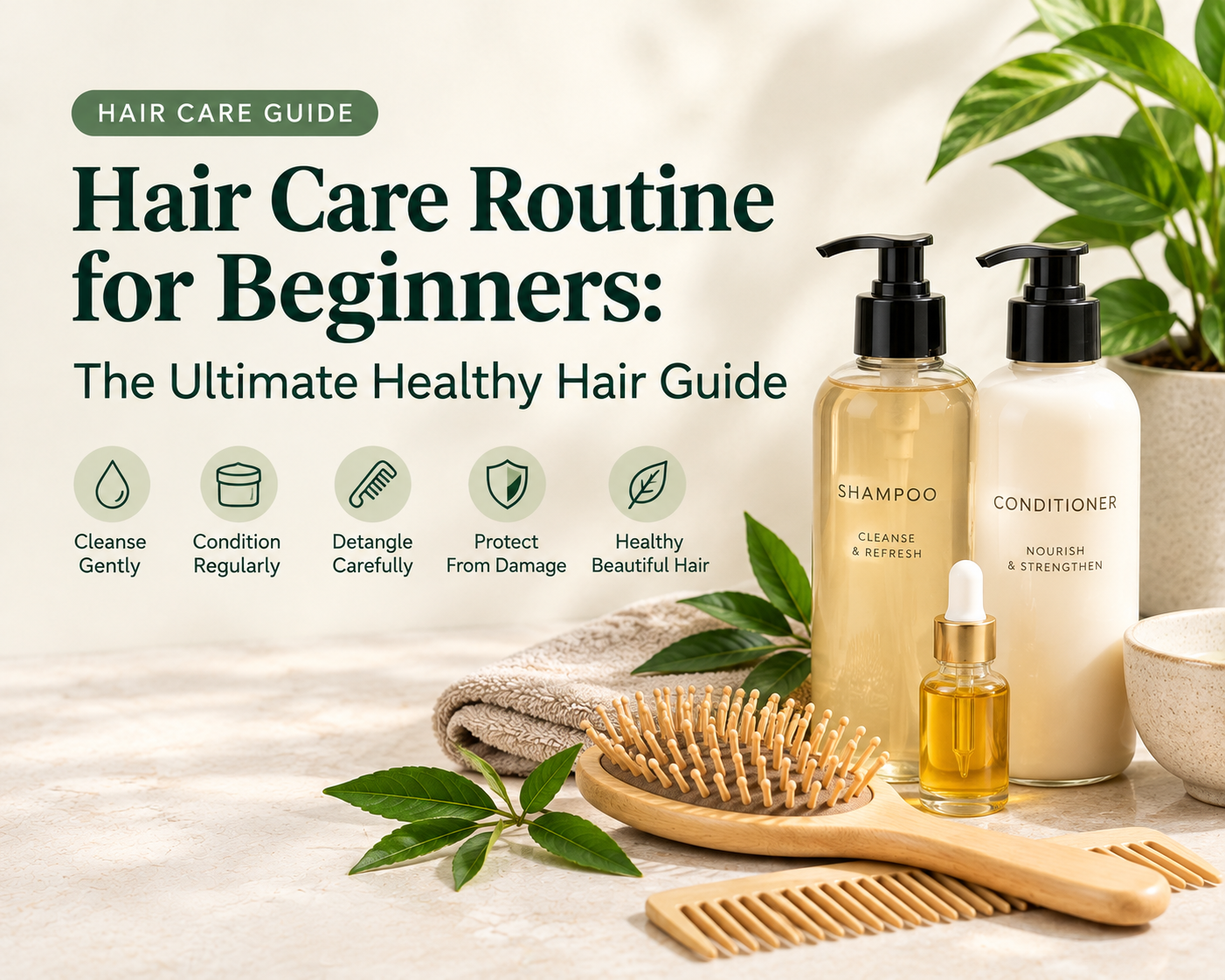
Starting a hair care routine can feel overwhelming when there are so many shampoos, conditioners, oils, masks, and treatments to choose from. The good news is that healthy-looking hair does not require dozens of products or an expensive routine.
The best hair care routine starts with understanding your hair type, keeping your scalp clean, conditioning your hair properly, and reducing damage from heat and styling.
Whether you have straight, wavy, curly, or coily hair, a simple and consistent routine can help you maintain manageable hair and reduce avoidable breakage.
In this beginner-friendly guide, you’ll learn how to start a hair care routine, which products you actually need, how often to wash your hair, and how to adjust your routine for your individual needs.
Quick Answer: What Is the Best Hair Care Routine for Beginners?
A basic hair care routine includes cleansing your scalp with a suitable shampoo, conditioning your hair after washing, detangling gently, and protecting your hair from excessive heat and friction. The right washing frequency and products depend on your scalp condition, hair texture, lifestyle, and styling habits.
Beginners can start with three essentials: a shampoo, a conditioner, and a gentle detangling method. Add products such as leave-in conditioner, heat protectant, or a hair mask only when they address a specific need.
Why Is a Hair Care Routine Important?
A good hair care routine helps keep your scalp clean and your hair easier to manage. It can also reduce damage caused by rough towel-drying, excessive heat, harsh chemical treatments, and tight hairstyles.
Hair care is not only about appearance. The way you handle your hair can affect how much breakage you experience and how well you retain length.
A consistent routine can help you:
- Keep your scalp clean and comfortable.
- Reduce tangles and friction during detangling.
- Improve softness, smoothness, and manageability.
- Minimize avoidable heat and styling damage.
- Maintain hair that looks healthier and shinier.
- Identify which products work best for your hair.
Remember that a hair care routine cannot prevent every cause of hair loss or guarantee faster growth. Persistent shedding or thinning may require professional evaluation.
Step 1: Understand Your Hair Type
Before buying hair care products, take a moment to understand your hair’s characteristics. This helps you choose products that match your needs instead of following every beauty trend.
Straight Hair
Straight hair often allows natural scalp oils to travel down the hair shaft more easily. As a result, some people with straight hair notice oily roots more quickly.
Routine tip: Choose a shampoo that cleans your scalp effectively and a lightweight conditioner if heavier products make your hair look flat.
Wavy Hair
Wavy hair falls between straight and curly hair. It may develop frizz, lose definition, or become weighed down by heavy products.
Routine tip: Try a lightweight conditioner and, if desired, a small amount of styling cream or mousse to define your waves.
Curly Hair
Curly hair tends to tangle more easily and may feel dry along its lengths. Gentle handling and suitable conditioning can help improve manageability.
Routine tip: Use a moisturizing conditioner, detangle carefully, and consider a leave-in conditioner if your hair needs extra help with slip and softness.
Coily or Textured Hair
Tightly curled and coily hair can be more vulnerable to breakage during combing and styling. Its routine may need extra attention to conditioning, gentle detangling, and reducing tension.
Routine tip: Use a conditioner that supports detangling, handle your hair gently, and avoid hairstyles that pull tightly on the roots.
Fine or Thick Hair
Hair thickness also matters. Fine strands can become weighed down by rich products, while thick hair may need more time and product to distribute conditioner evenly.
Routine tip: Choose products according to how your hair responds, not just the label. Fine hair may prefer lightweight formulas, while thick or coarse hair may benefit from richer conditioning products.
Step 2: Choose the Essential Hair Care Products
You do not need a large collection of products to build a good hair care routine. Start with a few basics and expand only if necessary.
1. Shampoo
Shampoo removes excess oil, sweat, dirt, and product buildup from your scalp.
Choose a shampoo that suits your scalp and hair needs. If your scalp becomes oily quickly, you may need to wash more often. If your hair is dry or textured, you may prefer a gentler formula.
You do not need to buy the most expensive shampoo to care for your hair effectively.
2. Conditioner
Conditioner helps smooth the hair surface, improve manageability, and reduce friction during detangling.
Use conditioner after shampooing. If your hair is fine or straight, focus mainly on the mid-lengths and ends. If your hair is dry or curly, you may benefit from conditioning more of the hair length.
3. Leave-In Conditioner (Optional)
A leave-in conditioner stays on the hair after washing. It may help with softness, frizz, and detangling, depending on the formula and your hair type.
It is optional rather than essential for everyone. Start with a small amount to avoid weighing your hair down.
4. Heat Protectant (Optional)
If you regularly use a blow-dryer, straightener, or curling iron, consider a heat-protectant product designed for your styling method.
Heat protectants may help reduce some styling damage, but they do not make hair immune to high temperatures. Use the lowest effective heat setting and limit how often you use hot tools.
5. Hair Oil or Serum (Optional)
Hair oils and serums can help improve shine, smoothness, and the feel of dry ends. Different formulas have different purposes, and they do not all work the same way.
Use a small amount and adjust based on your hair’s response. Oils and serums are not substitutes for shampoo, conditioner, or treatment for a scalp condition.
Step 3: Follow a Simple Hair Washing Routine
Washing your hair correctly is one of the most important parts of a basic hair care routine.
How to Wash Your Hair Properly
Step 1: Wet your hair thoroughly.
Use comfortable, lukewarm water. Make sure your scalp and hair are evenly wet before applying shampoo.
Step 2: Apply shampoo to your scalp.
Use an appropriate amount of shampoo and gently massage it into your scalp with your fingertips. Avoid scratching with your nails or aggressively rubbing the lengths of your hair.
Step 3: Rinse thoroughly.
Allow the shampoo to rinse away. The runoff can clean the lengths without requiring you to scrub them separately.
Step 4: Apply conditioner.
Distribute conditioner through the areas that need it most. For fine or straight hair, this is often the mid-lengths and ends. Dry or curly hair may benefit from conditioning along more of its length.
Step 5: Detangle gently.
If your hair tangles, use your fingers or a suitable wide-tooth comb. Work from the ends upward rather than pulling from the roots through knots.
Step 6: Rinse and dry carefully.
Rinse out your conditioner as directed. Gently squeeze out excess water and blot your hair with a soft towel or T-shirt instead of rubbing it vigorously.
Step 4: How Often Should You Wash Your Hair?
There is no single washing schedule that works for everyone. The right frequency depends on your scalp’s oil production, your hair texture, your activity level, and the products you use.
Here is a practical starting point:
- Oily scalp: You may need to shampoo frequently, sometimes daily, if your scalp becomes oily quickly.
- Normal scalp: Wash when your hair feels dirty, oily, sweaty, or weighed down.
- Dry or curly hair: You may need less frequent shampooing and more attention to conditioning.
- Textured or coily hair: A less frequent schedule may work well, but you still need to cleanse your scalp regularly to prevent unwanted buildup.
- Frequent exercise: Wash or rinse as needed based on sweat, oil, and scalp comfort.
These are general guidelines, not strict rules. If your scalp becomes itchy, flaky, or uncomfortable, reconsider your routine. Persistent symptoms may need advice from a dermatologist.
Step 5: Build a Simple Daily Hair Care Routine
Your daily routine does not have to involve washing your hair. Most days, gentle handling and protecting your hair from unnecessary damage are enough.
Morning Routine
- Gently detangle your hair if needed.
- Use a small amount of leave-in conditioner or styling product if your hair benefits from it.
- Avoid repeatedly pulling or brushing through knots.
- Choose a comfortable hairstyle that does not place excessive tension on your roots.
- If using hot styling tools, apply a suitable heat protectant and use a low or moderate setting.
Evening Routine
- Remove clips, accessories, or hairstyles that pull on your hair.
- Gently detangle if necessary.
- Avoid going to bed with tight hairstyles that cause tension.
- If friction contributes to tangling, consider a smooth pillowcase or a comfortable hair covering suitable for your hair type.
You do not need to apply oil every day or brush your hair a specific number of times to keep it healthy.
Step 6: Create a Simple Weekly Hair Care Routine
A weekly routine helps you keep track of your needs without overcomplicating your hair care.
On Wash Day
- Cleanse your scalp with a suitable shampoo.
- Condition your hair.
- Detangle gently.
- Use a leave-in conditioner if needed.
- Let your hair air-dry when practical, or use a low heat setting.
Between Wash Days
- Refresh your style if needed.
- Remove tangles gently.
- Avoid adding more product when your hair already feels coated.
- Pay attention to scalp comfort and buildup.
When Your Hair Needs Extra Care
You may choose an occasional conditioning mask if your hair feels dry or difficult to manage. Follow the product instructions and avoid adding several new treatments at once.
A clarifying shampoo may be useful occasionally if styling products accumulate, but how often you need one depends on your products and scalp. Overuse can leave some hair feeling dry.
Important: A weekly hair mask, scalp oil, or other treatment is optional. You do not need every product marketed as essential.
Step 7: Adjust Your Routine for Your Hair Goals
Your routine should reflect what you want to improve.
For Healthier-Looking Hair
Focus on gentle cleansing, regular conditioning, and reducing friction and excessive heat. Choose products that make your hair manageable without leaving heavy buildup.
For Longer Hair
Hair length depends on natural growth and how much length you retain. Reduce breakage by detangling gently, conditioning regularly, and avoiding tight hairstyles and damaging heat habits.
A hair care routine cannot guarantee faster growth, but minimizing breakage may help you retain more of your existing length.
For Frizzy Hair
Frizz can have several causes, including humidity, dryness, damage, and natural texture. Try conditioning products suited to your hair, avoid rough towel-drying, and limit excessive heat.
For an Oily Scalp
Cleanse according to how quickly oil builds up. Avoid applying heavy oils directly to your scalp if they make it feel greasy or uncomfortable.
For Dry Hair
Use a gentle shampoo, condition after washing, and consider a leave-in product if needed. Limit high-heat styling and be gentle when your hair is wet or tangled.
For Hair Breakage
Look at your washing, detangling, and styling habits. Reduce pulling, harsh brushing, excessive heat, and chemical processing. If breakage continues or you notice thinning, consult a dermatologist.
Common Hair Care Mistakes Beginners Should Avoid
Even a well-intentioned routine can cause problems if it is too aggressive or complicated.
1. Using Too Many Products at Once
Introducing several products simultaneously makes it difficult to identify what helps or causes irritation.
Better approach: Start with shampoo and conditioner. Add one optional product at a time if you have a clear reason to use it.
2. Shampooing the Entire Length Aggressively
Scrubbing the lengths can increase friction and leave them feeling dry.
Better approach: Concentrate shampoo on the scalp and rinse thoroughly.
3. Skipping Conditioner
Some beginners worry that conditioner will make their hair oily. However, using a suitable conditioner can improve manageability and reduce friction.
Better approach: Adjust the amount and placement to your hair type instead of automatically skipping conditioner.
4. Rubbing Hair Dry With a Towel
Vigorous rubbing can roughen the hair and contribute to breakage.
Better approach: Blot or wrap your hair gently to absorb excess water.
5. Using High Heat Too Often
Frequent high-temperature styling can damage the hair shaft.
Better approach: Air-dry when practical, use the lowest effective temperature, and reduce the frequency of hot-tool use.
6. Wearing Tight Hairstyles Every Day
Repeated tension from tight ponytails, braids, buns, or extensions can contribute to traction alopecia, a type of hair loss.
Better approach: Choose looser styles and pay attention to pain, tenderness, or broken hairs around the hairline.
7. Expecting Overnight Results
Hair-care products cannot transform hair growth overnight, and visible improvements vary.
Better approach: Focus on consistent care, realistic expectations, and changes that reduce damage.
8. Following Someone Else’s Routine Exactly
A routine that works for one person may not suit another person’s scalp, texture, or styling habits.
Better approach: Use general advice as a starting point and adjust based on your own hair’s response.
How Long Does It Take to See Results From a Hair Care Routine?
Some cosmetic improvements, such as smoother-feeling hair after conditioning, may be noticeable immediately. Other changes depend on your hair’s condition, the products you use, and whether you reduce damaging habits.
There is no universal timeline for a hair care routine to make hair thicker or grow faster. Hair grows gradually, and a routine primarily helps you maintain and protect the hair you have.
Take note of changes in tangling, breakage, scalp comfort, and manageability instead of judging your routine only by length.
If you develop sudden shedding, patchy hair loss, significant thinning, or persistent scalp symptoms, seek medical advice rather than waiting for a cosmetic routine to solve the problem.
Frequently Asked Questions About Hair Care Routines
1. What is the best hair care routine for beginners?
A simple routine includes shampooing your scalp as needed, conditioning after washing, detangling gently, and limiting excessive heat. Choose products according to your hair type and add optional treatments only when necessary.
2. How do I start a hair care routine?
First, identify whether your scalp tends to be oily, dry, or balanced and whether your hair is fine, thick, straight, wavy, curly, or coily. Start with a suitable shampoo and conditioner, establish a manageable washing schedule, and avoid introducing too many products at once.
3. What are the three essential hair care products?
For many beginners, the basics are shampoo, conditioner, and a suitable detangling tool. A heat protectant becomes useful if you use hot styling tools, while leave-in conditioners and masks are optional.
4. Should I oil my hair before or after washing?
It depends on the oil, the product instructions, and your hair’s needs. Some people use a small amount before washing, while others use a lightweight product on the lengths after washing. Oil is optional and is not necessary for everyone.
5. How often should I wash my hair?
Wash according to how quickly your scalp becomes oily or dirty and how your hair responds. Some people need frequent washing, while others with dry or textured hair can go longer between shampoos.
6. Is it better to air-dry or blow-dry hair?
Air-drying can reduce exposure to heat, but the best method depends on your hair and routine. If you blow-dry, use a suitable heat protectant and a low or moderate temperature. Avoid excessive heat and rough handling.
7. How can I make my hair grow longer?
You cannot guarantee faster growth with a cosmetic routine. You can, however, help retain length by reducing breakage, conditioning regularly, detangling gently, and avoiding excessive heat and hairstyles that pull on the roots.
8. Do I need a hair mask every week?
No. A hair mask is optional. You may find one useful if your hair needs extra conditioning, but a suitable regular conditioner may be enough for your needs.
9. Can I use the same hair care routine all year?
You can keep the same basic steps, but you may need to adjust your products or washing frequency as your scalp, weather, activity, or styling habits change.
10. When should I see a dermatologist about hair problems?
Seek professional advice if you experience sudden or persistent hair shedding, patchy loss, visible thinning, scalp pain, severe itching, or ongoing flaking that does not improve with gentle care.
Final Thoughts
The best hair care routine is not the one with the most products. It is the one that suits your hair, keeps your scalp comfortable, and helps you avoid unnecessary damage.
For beginners, start with a suitable shampoo, a good conditioner, gentle detangling, and sensible heat protection. Adjust your routine gradually and pay attention to how your hair responds.
Healthy-looking hair comes from consistent care and realistic expectations, not from buying every trending product. If you are experiencing ongoing hair loss or scalp problems, professional advice can help you find the right solution.
References
- American Academy of Dermatology. Tips for Healthy Hair.
- American Academy of Dermatology. 10 Hair Care Habits That Can Damage Your Hair.
- Cleveland Clinic. How Often Should You Really Wash Your Hair?.
Disclaimer: This article is for general educational purposes and is not a substitute for individualized medical advice.