Castor oil has become a popular ingredient in hair-care routines, especially among people looking for longer, thicker, and healthier-looking hair. From Jamaican black castor oil to homemade oil blends, many people use it to moisturize their hair and care for their scalp.
But does castor oil for hair growth really work? Can it make your hair grow faster, reduce hair fall, or improve thickness?
Castor oil may help add shine and make hair feel smoother. However, current scientific evidence does not establish that applying castor oil directly to the scalp stimulates new hair growth. Understanding its potential benefits, limitations, and side effects can help you decide whether it belongs in your hair-care routine.
What Is Castor Oil?
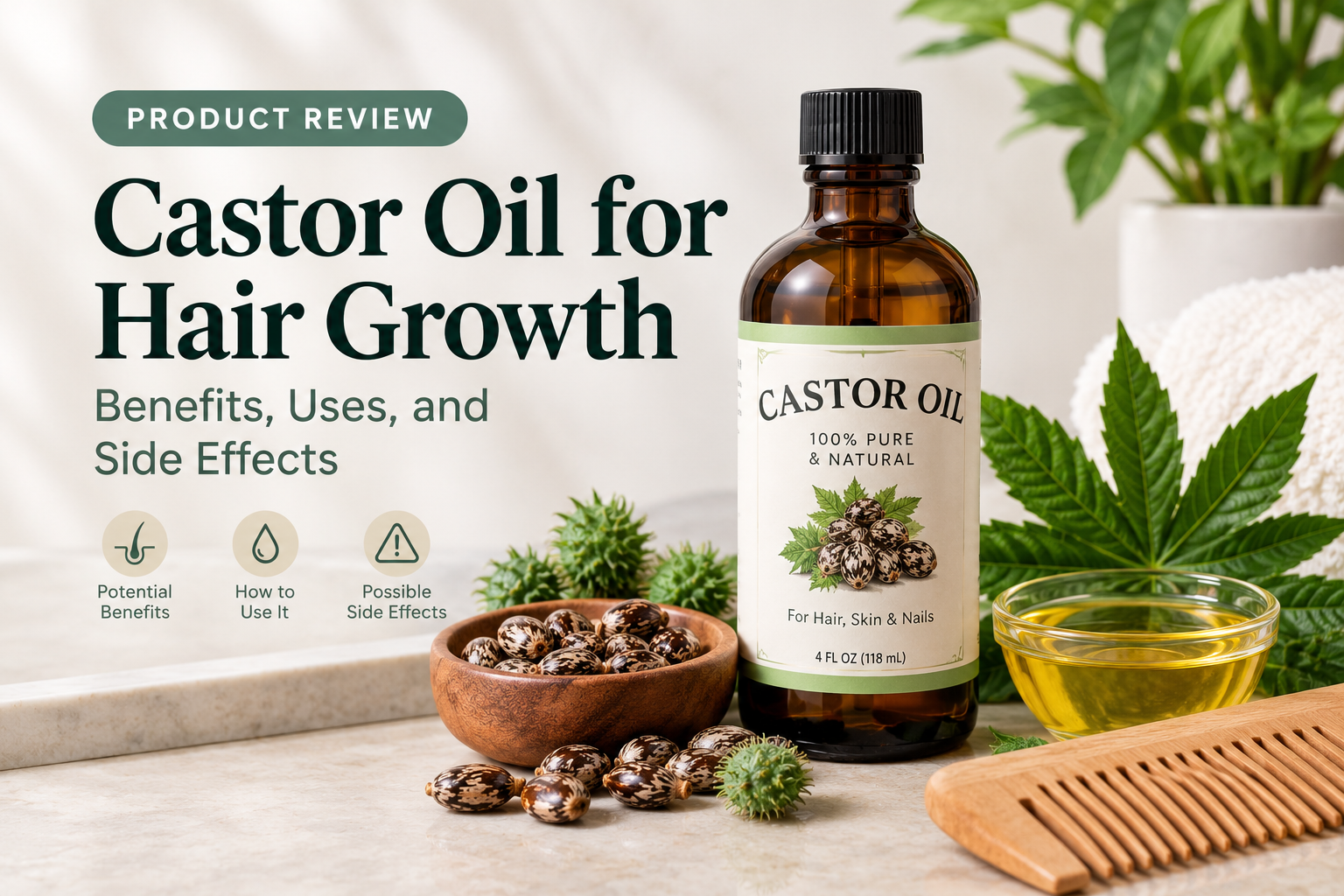
Castor oil is a vegetable oil extracted from the seeds of the castor plant, scientifically known as Ricinus communis. It has a thick consistency and is widely used in cosmetics, moisturizers, and hair-care products.
The oil contains ricinoleic acid, a fatty acid that contributes to its distinctive properties. In hair care, castor oil is commonly used to coat hair strands, improve shine, and help dry hair feel softer.
There are several types of castor oil available, including regular castor oil, Jamaican black castor oil, and cold-pressed castor oil. They differ in processing methods and appearance, but none has been conclusively proven to promote hair growth in humans.
Does Castor Oil Help Hair Growth?
Castor oil is often promoted as a natural solution for faster hair growth, but the scientific evidence is limited.
A 2022 systematic review of research on popular hair oils found weaker evidence that castor oil may improve hair luster, but no strong evidence supporting its use for hair growth.
This means castor oil may improve the appearance and feel of your hair without necessarily making new hair grow or increasing the number of hair follicles.
If your goal is longer hair, maintaining healthy hair strands and minimizing breakage can help you retain length. However, this is different from stimulating new growth at the scalp.
If you are experiencing ongoing hair thinning or excessive shedding, it is important to identify the underlying cause instead of relying on hair oil alone.
Potential Benefits of Castor Oil for Hair
Although castor oil is not a proven hair-growth treatment, it may offer some cosmetic benefits when used appropriately.
1. May Improve Hair Shine
One potential benefit of castor oil is its ability to make hair look shinier. Its oily texture can coat the hair shaft and change how light reflects from the strands.
This may help dull hair appear smoother and more glossy. However, the result is cosmetic and does not mean the oil is producing new hair.
2. Can Help Hair Feel Softer
Castor oil can act as an emollient, helping hair feel smoother and easier to manage. It may be useful for people with dry lengths who prefer heavier oils.
Because it is thick, a small amount is usually enough. Applying too much can leave hair greasy or difficult to wash.
3. May Help Reduce Friction During Styling
An oil coating may help strands glide against one another, potentially making detangling easier for some hair types. Less friction during styling may help limit mechanical damage.
However, castor oil has not been established as a treatment for hair loss, and it should not be assumed to prevent all breakage.
4. Can Be Used in a Hair-Conditioning Routine
Castor oil can be incorporated into a pre-shampoo treatment or used sparingly on dry hair lengths. Some people prefer blending it with a lighter oil because its thick consistency can make application and removal easier.
Choose an application method based on your hair type and how your scalp responds.
Jamaican Black Castor Oil for Hair Growth
Jamaican black castor oil is a popular variety used in hair-care routines. It is generally produced by roasting castor beans before extracting the oil, giving it a darker appearance.
People often choose it for its thick texture and use it on their scalp, hair lengths, or edges. However, there is not enough strong clinical evidence to conclude that Jamaican black castor oil grows hair faster than regular castor oil.
If you want to try it, focus on whether it makes your hair feel manageable and comfortable rather than expecting guaranteed growth results.
How to Use Castor Oil for Hair Growth
If you want to try castor oil, use it as a cosmetic hair-care product rather than a proven treatment for hair loss.
Step 1: Choose a Suitable Product
Select a reputable product intended for cosmetic use. Check the ingredient list, especially if you have a sensitive scalp or known oil allergies.
Cold-pressed and Jamaican black castor oils are popular options, but neither is proven to produce better hair growth.
Step 2: Perform a Patch Test
Before applying castor oil widely, test a small amount on a small area of skin according to the product’s directions. Watch for itching, redness, burning, or a rash.
Do not use the product if irritation develops.
Step 3: Apply a Small Amount
If your skin tolerates the product, start with a small amount. You can spread it sparingly over your hair lengths or apply a little to a limited area of the scalp if that is how you prefer to use it.
Avoid saturating your scalp, as the thick oil can be difficult to remove and may contribute to buildup.
Step 4: Leave It on Briefly
You can use castor oil as a pre-shampoo treatment, following the product’s instructions. There is no scientifically established application time that makes castor oil grow hair.
You do not need to leave it on overnight. Avoid overnight use if it causes itching, irritation, discomfort, or excessive greasiness.
Step 5: Wash It Out Thoroughly
Use shampoo to remove the oil and rinse well. You may need to shampoo more than once, depending on the amount used and your hair type.
If your scalp feels irritated or your hair becomes heavily coated, discontinue use.
How Often Should You Use Castor Oil on Your Hair?
There is no evidence-based schedule for using castor oil to stimulate hair growth because it has not been established as a hair-growth treatment.
If you use it only for shine or conditioning, start occasionally and see how your hair and scalp respond. People with fine hair or an oily scalp may find that heavy oils weigh their hair down, while others may prefer using a small amount on their lengths.
Stop using it if you notice irritation, itching, pimples, or unusual scalp discomfort.
Castor Oil for Hair Growth and Thickness: What to Expect
Castor oil is frequently advertised as a way to make hair thicker. It is important to understand the difference between the appearance of thicker hair and actual increases in hair density.
An oil coating may make strands look glossier and feel smoother. Reducing friction during grooming may also help some people manage their hair with less mechanical stress.
However, these cosmetic effects do not prove that castor oil increases the number of hair follicles, makes individual follicles produce thicker strands, or reverses hair thinning.
If your hair is becoming noticeably thinner, consider speaking with a dermatologist or healthcare professional to determine the cause and discuss treatments supported by evidence.
Castor Oil Side Effects for Hair
Castor oil is not suitable for everyone. Although some people tolerate it well, there are potential side effects to consider.
1. Scalp Irritation
Castor oil may cause itching, redness, or irritation in some people. Stop using it if your scalp reacts negatively.
2. Allergic Reactions
Some people may develop contact dermatitis from castor oil or another ingredient in a hair product. Symptoms can include redness, itching, swelling, and a rash.
Seek medical advice if symptoms are persistent or severe.
3. Greasy Hair and Product Buildup
Because castor oil is thick, applying too much can leave hair greasy and difficult to wash. Heavy buildup can also make your scalp feel uncomfortable.
Using a smaller amount and washing thoroughly can help reduce this problem.
4. Clogged Pores and Scalp Pimples
Applying heavy oils to the scalp may contribute to clogged pores or acne-like bumps in susceptible individuals. If you notice new bumps or worsening scalp symptoms, discontinue use.
5. Severe Hair Matting in Rare Cases
Rare cases of acute hair felting, a condition involving severe tangling and matting, have been associated with hair-care practices involving castor oil. Its thick consistency may make already tangled hair harder to separate.
Avoid saturating tangled hair with heavy oil, and seek professional help if severe matting develops.
Who Should Avoid Using Castor Oil on the Scalp?
Consider avoiding castor oil or speaking with a healthcare professional before use if you:
- Have a known allergy or have previously reacted to the product.
- Have an irritated, inflamed, or damaged scalp.
- Develop pimples or clogged pores after using heavy hair oils.
- Experience persistent hair loss and are considering castor oil instead of medical evaluation.
Do not put castor oil in your eyes. Also, do not drink hair-care castor oil or use it internally as a hair-growth remedy.
Castor Oil vs. Jamaican Black Castor Oil
Regular castor oil and Jamaican black castor oil are both used in cosmetic hair care. The main differences relate to processing, appearance, and texture.
Regular castor oil is typically pale yellow or nearly clear, while Jamaican black castor oil is darker because of its production process. Both can feel thick and heavy.
Neither has strong clinical evidence proving that it stimulates hair growth. Choose between them based on product quality, personal preference, ease of washing, and how your scalp responds.
Tips for Healthier-Looking Hair
If your goal is stronger, healthier-looking hair, a gentle routine may be more useful than relying on one oil.
- Use a shampoo and conditioner suited to your hair and scalp.
- Detangle gently, especially when your hair is wet or prone to knots.
- Limit excessive heat styling and harsh chemical treatments.
- Avoid tight hairstyles that pull repeatedly on the hairline.
- Eat a balanced diet with adequate protein and essential nutrients.
- Seek medical advice for persistent shedding, bald patches, or noticeable thinning.
Hair loss can have many causes, including hereditary factors, illness, hormonal changes, medications, and nutritional deficiencies. Treatment depends on the cause.
Frequently Asked Questions
Does castor oil really help hair grow?
There is no strong clinical evidence that applying castor oil to the scalp promotes hair growth. It may improve hair shine, but cosmetic benefits are not the same as stimulating new growth.
How do you use castor oil for hair growth?
You can use a small amount as a pre-shampoo hair-conditioning treatment, following the product’s instructions. Patch-test first, avoid excessive application, and wash it out thoroughly. Do not rely on it as a proven treatment for hair loss.
Can castor oil make hair thicker?
Castor oil may make hair look shinier or feel smoother, which can change its appearance. There is not enough evidence that it increases hair density or makes follicles produce thicker hair.
Is Jamaican black castor oil better for hair growth?
There is no strong clinical evidence that Jamaican black castor oil promotes hair growth or works better than regular castor oil for this purpose.
Can I leave castor oil in my hair overnight?
You do not need to leave castor oil in overnight. Its thick texture can make it difficult to wash out, and prolonged contact may cause irritation in susceptible people. Follow the product directions and stop if you experience discomfort.
Can castor oil cause hair loss?
Castor oil has not been proven to cause hair loss in typical use, but irritation, scalp problems, or severe matting can occur in rare cases. If you notice increased shedding or persistent scalp symptoms, stop using it and seek professional advice.
How long does castor oil take to grow hair?
There is no established timeline because castor oil has not been proven to stimulate hair growth. Be cautious of products or social media posts promising guaranteed results within a specific number of days or weeks.
Is castor oil suitable for all hair types?
Not necessarily. Its thick consistency may work better for some hair routines than others. Fine hair or oily scalps may become weighed down, while other people may prefer a small amount on dry lengths. Individual tolerance varies.
Final Thoughts
Castor oil for hair growth is a popular topic, but the scientific evidence does not currently establish it as a treatment for growing new hair or increasing hair density.
It may help hair look shinier and feel smoother, making it an option for people who enjoy oil-based conditioning treatments. Use it sparingly, patch-test first, and stop if you develop irritation or scalp problems.
If you are experiencing ongoing hair loss or thinning, identifying the cause and discussing evidence-based options with a healthcare professional is a better approach than relying on castor oil alone.