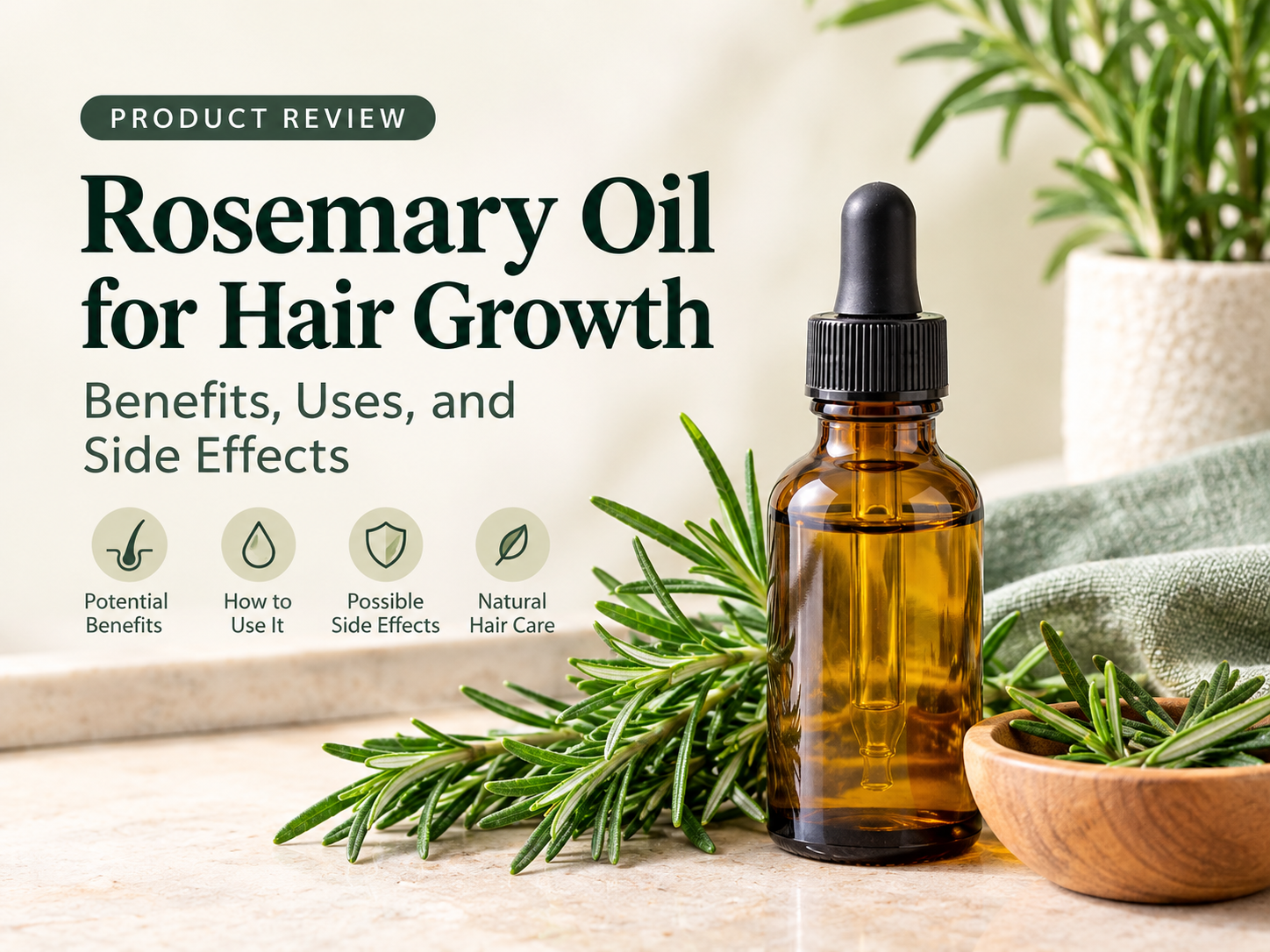
Rosemary oil has become a popular ingredient in hair-care routines for people who want healthier-looking, fuller hair. From scalp massages to homemade hair oil blends, many people use this aromatic essential oil in the hope of reducing hair fall and encouraging new growth.
But does rosemary oil for hair growth really work? Is it better than other hair oils, and how should you use it safely?
Some research suggests rosemary oil may have potential for certain types of hair loss, but the evidence is still limited. It is also important to know that rosemary essential oil is concentrated and should not be applied directly to the scalp without appropriate dilution.
In this guide, we will explore the potential benefits of rosemary oil, how to use and dilute it, possible side effects, and what scientific research actually says.
What Is Rosemary Oil?
Rosemary oil is an aromatic essential oil extracted from rosemary, an herb scientifically known as Salvia rosmarinus, formerly called Rosmarinus officinalis.
Rosemary has a long history of use in cooking, fragrance, and personal-care products. Its essential oil contains naturally occurring compounds that are being studied for their potential biological effects.
In hair care, rosemary oil is commonly added to scalp oils, shampoos, conditioners, and other hair products. It is especially popular among people looking for plant-based options for their hair-care routine.
However, rosemary essential oil is different from rosemary-infused oil. Essential oil is highly concentrated, while an infused oil is made by soaking rosemary in a carrier oil. The two products should not automatically be used in the same way.
Does Rosemary Oil Help Hair Growth?
There is some scientific evidence suggesting that rosemary oil may help with certain types of hair loss, but more research is needed before its effectiveness can be established confidently.
A randomized comparative study published in 2015 examined rosemary oil and 2% minoxidil in people with androgenetic alopecia, a common form of hereditary hair loss. The study found no significant improvement in hair count at three months, while both groups showed an increase at six months. The researchers reported no statistically significant difference between the groups at the six-month assessment.
However, one study is not enough to establish that rosemary oil works as well as standard hair-loss treatments for everyone. More large, high-quality clinical trials are needed. Read the study on PubMed.
It is therefore more accurate to say that rosemary oil is a promising area of research rather than a guaranteed solution for hair growth.
If you are experiencing persistent hair loss, a dermatologist can help identify the cause and discuss treatments supported by stronger evidence.
Potential Benefits of Rosemary Oil for Hair
Rosemary oil is popular in hair care for several reasons. Some proposed benefits are still being researched, while others relate to how it is used in cosmetic products.
1. May Support Hair Growth
One of the main reasons people search for rosemary oil for hair growth is its potential role in managing hair thinning.
The 2015 comparative study described above reported increased hair counts after six months of use in both the rosemary oil and minoxidil groups. However, further research is needed to confirm these findings and determine which people may benefit.
Rosemary oil should not be considered a proven replacement for prescribed or established hair-loss treatments.
2. May Help With Certain Types of Hair Thinning
Hereditary hair loss can gradually affect hair density and thickness. Researchers have investigated rosemary oil as a possible topical option for people with this condition.
However, hair thinning can also be caused by nutritional deficiencies, hormonal changes, illness, stress, medication, or scalp conditions. Rosemary oil will not necessarily address these underlying causes.
If your hair is thinning noticeably, identifying the cause is more useful than relying on a single oil.
3. Can Be Part of a Scalp Massage Routine
Some people combine diluted rosemary oil with a gentle scalp massage.
A massage can be a relaxing addition to a hair-care routine, but it is not proof that rosemary oil stimulates hair growth. Avoid aggressive rubbing or scratching, as excessive friction may irritate the scalp and damage fragile strands.
4. Adds an Herbal Aroma to Hair Care
Rosemary essential oil has a fresh, herbal scent that many people enjoy. It is often included in hair oils and shampoos for fragrance.
This cosmetic benefit does not mean that the product will increase hair density or reduce hair loss.
5. Offers a Plant-Based Hair-Care Option
People interested in botanical ingredients may prefer products containing rosemary oil.
Natural ingredients can still cause irritation or allergic reactions, however. Choose a reputable product and check the ingredient list, especially if your skin is sensitive.
How to Use Rosemary Oil for Hair Growth
If you want to try rosemary oil, use it carefully and follow the product’s instructions. Rosemary essential oil is concentrated and should not be applied neat, or undiluted, to your scalp.
Step 1: Choose the Right Product
Look for a reputable rosemary essential oil or a ready-to-use hair product formulated with rosemary.
Check whether the product is a concentrated essential oil, a diluted scalp oil, or a rosemary-infused carrier oil. These products have different concentrations and instructions.
Step 2: Dilute Rosemary Essential Oil
If you are using pure rosemary essential oil, mix it with a suitable carrier oil according to the product’s directions or advice from a qualified professional.
Common carrier oils include:
- Jojoba oil
- Coconut oil
- Sweet almond oil, if suitable for your skin
- Olive oil
Do not assume that all carrier oils are suitable for every scalp. If you are prone to clogged pores or irritation, choose carefully.
There is no single dilution that is ideal for every person and every product. Follow the label and never apply concentrated essential oil directly to your scalp.
Step 3: Perform a Patch Test
Before using a new rosemary oil blend, test a small amount on a small area of skin according to the product’s directions.
Watch for redness, itching, burning, swelling, or a rash. If irritation develops, wash the product off and do not continue using it.
A patch test can reduce uncertainty but cannot guarantee that you will never develop a reaction.
Step 4: Apply a Small Amount to Your Scalp
If your skin tolerates the diluted product, part your hair into sections and apply a small amount to the intended area.
Use your fingertips to spread it gently. Avoid getting the oil in your eyes, nose, or other sensitive areas.
Do not apply it to broken, inflamed, or irritated skin.
Step 5: Massage Gently
If comfortable, massage the scalp gently with your fingertips. Avoid scratching with your nails or pulling at your hair.
There is no established massage duration or technique that guarantees better hair growth.
Step 6: Follow the Product’s Instructions
Some formulated scalp products are intended to be left on, while others are designed to be washed out. Follow the label rather than assuming that every rosemary oil product can be used in the same way.
Stop using the product if your scalp becomes irritated or uncomfortable.
How Often Should You Use Rosemary Oil for Hair Growth?
There is no universally established frequency for rosemary oil as a hair-growth treatment.
The appropriate schedule depends on the product’s concentration, its formulation, and your skin’s tolerance. Follow the manufacturer’s directions and start cautiously rather than applying more frequently in the hope of faster results.
Using a concentrated essential oil more often does not necessarily improve results and may increase the risk of irritation.
If you are treating hair loss, discuss an appropriate plan with a dermatologist instead of relying on a DIY oil routine alone.
Rosemary Oil for Hair Growth Before and After: What Should You Expect?
Online before-and-after pictures often show people claiming that rosemary oil made their hair thicker or longer. However, photographs alone cannot establish that rosemary oil caused the change.
Hair appearance can vary because of lighting, styling, hair length, camera angles, and other hair-care products. Hair also changes naturally over time.
If you decide to try rosemary oil, take photographs under similar lighting and styling conditions to document your hair’s appearance. Avoid expecting dramatic results within a few days or weeks.
The available clinical evidence does not establish a guaranteed timeline for improvement, and results may vary depending on the cause of hair loss.
Rosemary Oil vs. Minoxidil
Rosemary oil and minoxidil are often compared because both are discussed in relation to hair thinning.
Minoxidil is an established treatment option for certain types of hair loss. Rosemary oil has some encouraging research, but the overall evidence base is much smaller.
A single 2015 study found no significant difference in hair count between its rosemary oil and 2% minoxidil groups after six months. This does not prove that rosemary oil is equivalent to minoxidil in all settings, or that the same results will occur in other people.
If you are considering treatment for hereditary hair loss, speak with a healthcare professional about the options appropriate for you.
Rosemary Oil Side Effects
Rosemary oil is not suitable for everyone. As with other essential oils, improper use can lead to unwanted reactions.
1. Scalp Irritation
Undiluted or unsuitable rosemary oil products can cause burning, redness, itching, or discomfort.
Always follow the product’s dilution and application instructions, and stop using it if irritation develops.
2. Allergic Reactions
Some people may develop an allergic skin reaction, including a rash, swelling, or persistent itching.
Wash the product off if you develop a reaction. Seek medical care for severe symptoms, and get emergency help if you experience breathing difficulties or swelling of the face or throat.
3. Dryness or Discomfort
Depending on the formulation and your skin, a rosemary oil product may leave your scalp feeling dry or uncomfortable.
If this happens, discontinue use rather than adding more oil or increasing the frequency of application.
4. Eye Irritation
Rosemary essential oil can irritate the eyes and sensitive areas. Apply it carefully and wash your hands after handling it.
If it gets into your eyes, rinse thoroughly with clean water and seek medical advice if irritation persists.
5. Risks From Swallowing Essential Oil
Rosemary essential oil is intended for appropriate external or product-specific use, not as a DIY drink or supplement. Swallowing essential oils can be harmful.
Keep the bottle away from children and pets, and follow the label’s storage and safety instructions.
Who Should Be Careful With Rosemary Oil?
Speak with a healthcare professional before using rosemary essential oil if you are pregnant or breastfeeding, have a relevant medical condition, have a history of allergies, or are unsure whether the product is suitable for you.
Avoid applying it to broken or inflamed skin, and do not use it around the eyes or other sensitive areas.
Children should not use concentrated essential oils unless a qualified healthcare professional has confirmed that the specific product is appropriate for their age.
If you have sudden hair loss, bald patches, scalp pain, significant redness, or persistent shedding, seek medical advice rather than trying to manage the problem with oils alone.
Rosemary Oil vs. Rosemary-Infused Oil
These two products may sound similar, but they are different.
Rosemary essential oil is a concentrated aromatic oil that needs to be used according to specific dilution and safety instructions.
Rosemary-infused oil is generally made by soaking rosemary in a carrier oil. Its composition and concentration can vary depending on how it is prepared.
A ready-to-use rosemary hair oil may also contain a blend of carrier oils and other ingredients. Always read the label to understand what you are applying.
Do not assume that a homemade infusion has the same properties or evidence as a concentrated essential oil used in a clinical study.
Tips for a Healthier Hair-Care Routine
Rosemary oil is only one possible part of a hair-care routine. Other habits can help you care for your hair and reduce avoidable damage.
- Use shampoo and conditioner suited to your hair and scalp.
- Detangle gently, especially when your hair is wet or prone to knots.
- Reduce excessive heat styling and harsh chemical treatments.
- Avoid tight hairstyles that repeatedly pull on the hairline.
- Eat a balanced diet with adequate protein and essential nutrients.
- Avoid taking high-dose supplements unless a healthcare professional recommends them.
- Seek advice if you notice persistent hair thinning or unusual shedding.
Hair loss has many possible causes, and the most appropriate treatment depends on the underlying condition.
Frequently Asked Questions
Does rosemary oil really help hair grow?
A small body of clinical research suggests rosemary oil may have potential for certain types of hair loss. However, more high-quality studies are needed to establish how effective it is. It is not a guaranteed hair-growth treatment.
How do you use rosemary oil for hair growth?
If you use concentrated rosemary essential oil, dilute it according to the product’s instructions before applying it to your scalp. Patch-test first, apply cautiously, and stop if irritation develops. Ready-to-use products may have different instructions.
Can I apply rosemary essential oil directly to my scalp?
No. Do not apply concentrated rosemary essential oil directly to your scalp unless a product is specifically formulated and labeled for that use. Follow dilution and safety instructions to reduce the risk of irritation.
How often should I use rosemary oil for hair growth?
There is no universally proven frequency. Follow the directions for your particular product and consider professional advice if you are using it for hair loss.
Can I leave rosemary oil in my hair overnight?
Do not assume that overnight use is safe or more effective. Follow the product’s instructions, and avoid prolonged use if you develop irritation or discomfort.
How long does rosemary oil take to work?
There is no guaranteed timeline. In the 2015 comparative study, no significant change in hair count was observed at three months, while an increase was reported at six months in both study groups. This does not mean everyone using rosemary oil will see results.
Is rosemary oil better than minoxidil?
The evidence is not strong enough to conclude that rosemary oil is generally better than minoxidil. Minoxidil is an established treatment for certain types of hair loss, while rosemary oil requires further research. A healthcare professional can help you compare options.
Can rosemary oil cause hair loss?
Rosemary oil is not established as a typical cause of hair loss, but irritation or an allergic reaction may occur. Stop using it if you develop a rash, persistent itching, or worsening scalp symptoms.
Can I mix rosemary oil with coconut oil?
A suitable carrier oil, such as coconut oil, can be used to dilute rosemary essential oil when appropriate for your skin and the product’s instructions. Coconut oil itself can be unsuitable for some people, so patch-test the blend and stop if irritation occurs.
Is rosemary oil suitable for all hair types?
Not necessarily. Suitability depends on the product, its concentration, and your scalp’s sensitivity. Choose a formulation that fits your hair-care needs and follow its safety instructions.
Final Thoughts
Rosemary oil for hair growth has attracted attention because of its popularity in natural hair care and some encouraging early research. However, the available evidence is still limited, and it should not be treated as a guaranteed solution for hair loss.
If you choose to try rosemary oil, use a suitable product, dilute concentrated essential oil correctly, patch-test first, and stop if irritation occurs.
For persistent thinning or excessive shedding, identifying the cause and discussing evidence-based treatment options with a dermatologist is the best next step.