With thousands of products claiming to transform your skin overnight, building a daily skincare routine can quickly feel overwhelming. Between 10-step Korean skincare regimens, viral social media trends, and complex chemical active ingredients, it is easy to end up with a cluttered bathroom counter and a compromised skin barrier.
Dermatologists agree that the most effective skincare routine is not the most complicated one—it is the one you can stick to consistently.
This comprehensive guide breaks down how to build a streamlined, science-backed skincare routine tailored to your skin’s natural physiological needs, whether you are a complete beginner or looking to reset your daily regimen.
The Three Pillar Philosophy: Cleanse, Moisturize, Protect
Before adding specialized serums, eye creams, or chemical peels, every effective routine relies on three foundational pillars:
- Cleansing: Removes surface dirt, sweat, pollution, and excess sebum without stripping natural protective lipids.
- Moisturizing: Hydrates the stratum corneum (outer layer of skin) and fortifies the lipid barrier to lock in water.
- Protecting: Shields skin cells from ultraviolet (UV) radiation, which is responsible for up to 80% of visible skin aging.
Once these basics are established, targeted active ingredients (like retinoids, vitamin C, or hydroxy acids) can be layered in to address specific concerns like acne, hyperpigmentation, or fine lines.
The Morning (AM) Skincare Routine: Protect & Preserve
Your morning routine is all about defense. During the day, your skin is exposed to UV radiation, environmental pollution, and blue light. The goal is to hydrate and shield.
Step 1: Gentle Cleanser (or Water Rinse)
- Goal: Wash away sweat, excess nighttime oils, and metabolic waste produced while sleeping.
- How-To: Use lukewarm water and a non-stripping gel or cream cleanser. If you have extremely dry or sensitive skin, rinsing thoroughly with plain water in the morning is often sufficient.
Step 2: Antioxidant Serum (Optional Active)
- Goal: Neutralize free radicals caused by environmental pollution and UV exposure.
- Key Ingredient: Vitamin C (L-Ascorbic Acid or derivatives). Applied in the morning, Vitamin C works synergistically with sunscreen to boost photoprotection and brighten hyperpigmentation over time.
Step 3: Lightweight Moisturizer
- Goal: Prevent hydration loss throughout the day and create a smooth base for sunscreen or makeup.
- Key Ingredients: Hyaluronic acid, glycerin, niacinamide, or light ceramides.
Step 4: Broad-Spectrum Sunscreen (SPF 30+)
- Goal: Protect against UVA (aging) and UVB (burning) rays.
- How-To: Apply a generous nickel-sized amount (or the “two-finger rule”) as the final step of your morning routine. Reapply every 2 hours if spending prolonged time outdoors.
The Evening (PM) Skincare Routine: Cleanse & Repair
Your evening routine is focused on recovery and repair. At night, cellular turnover rates increase, making it the ideal window for applying active treatment ingredients and richer barrier creams.
Step 1: Double Cleansing
- Goal: Thoroughly remove waterproof sunscreen, makeup, and daily surface grime without harsh scrubbing.
- Method:
- Start with an oil-based cleanser or micellar water on dry skin to dissolve oil-soluble SPF and cosmetics.
- Follow with a gentle water-based cleanser to wash away residual impurities.
Step 2: Targeted Active Treatment (Pick ONE per Night)
- Goal: Address specific skin concerns at a cellular level.
- Key Ingredients:
- Retinoids (Retinol, Tretinoin, Adapalene): The gold standard for stimulating collagen production and unclogging pores.
- Exfoliating Acids (AHAs like Glycolic Acid / BHAs like Salicylic Acid): Sweeps away dead skin cells and clears pore congestion.
- Important Rule: Do not mix retinoids and strong exfoliating acids in the same night to avoid severe barrier damage. Alternate them across different evenings (e.g., “Skin Cycling”).
Step 3: Barrier-Repairing Night Moisturizer
- Goal: Seal in active treatments and repair the skin barrier overnight.
- Key Ingredients: Ceramides, fatty acids, cholesterol, squalane, or panthenol. Richer, occlusive creams work best at night to prevent transepidermal water loss while you sleep.
Customizing by Skin Type
Not all skin responds to the same formulas. Use this quick guide to select the right textures for your skin type:
| Skin Type | Cleanser Texture | Active Focus | Moisturizer Texture |
| Oily / Acne-Prone | Foaming Gel / BHA Cleanser | Salicylic Acid, Niacinamide | Oil-Free Gel-Cream |
| Dry / Flaky | Hydrating Cream / Lotion | Hyaluronic Acid, Lactic Acid | Rich Barrier Cream |
| Combination | Balanced Gentle Gel | Niacinamide, Low-dose BHA | Lightweight Lotion |
| Sensitive / Reactive | Non-foaming Milk Cleanser | Azelaic Acid, Centella Asiatica | Fragrance-Free Soothing Balm |
Common Mistakes to Avoid
Mistake #1: Introducing multiple new products at once. If your skin reacts poorly, you won’t know which product caused the flare-up. Introduce one new formula every 2 to 3 weeks.
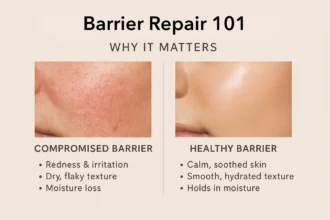
Mistake #2: Over-exfoliating. Using scrubs, acid toners, and retinoids simultaneously strips the skin barrier, causing increased redness, unexpected breakouts, and stinging.
Mistake #3: Expecting overnight results. Skin cells take roughly 28 to 40 days to turn over. Most active treatments require 8 to 12 weeks of consistent use before visible changes occur.
Frequently Asked Questions
How long should I wait before changing my skincare routine?
Give a new routine or active product at least 8 to 12 weeks before evaluating its results. Skin cell renewal takes roughly 28 days for young adults and up to 45 days for older adults, so true clinical changes in texture, tone, and fine lines take time to manifest.
Do I need to adjust my skincare routine based on the season?
Yes, seasonal tweaks are often helpful. In the winter, lower humidity levels require richer, ceramide-dense creams and hydrating serums to prevent barrier damage. In the summer, switching to lighter gel moisturizers and non-greasy sunscreens helps prevent clogged pores from sweat and increased oil production.
Is double cleansing necessary if I don’t wear makeup?
If you wear modern, water-resistant sunscreen or spend time in high-pollution urban environments, double cleansing in the evening is still highly beneficial. Oil-based cleansers break down water-proof SPF filters far more effectively than standard water-based cleansers alone.
What is the rule of thumb for layering skincare ingredients?
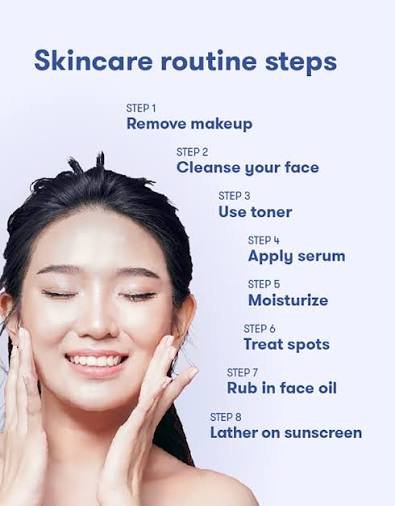
Always layer products from thinnest to thickest consistency: Liquid Toners → Watery Serums → Emulsions → Heavy Creams → Oils. In the morning, sunscreen is always the absolute final step before makeup.
External References
- American Academy of Dermatology (AAD): Skin Care Basics: How to Build a Routine
- Journal of Investigative Dermatology: The Role of the Skin Barrier and Epidermal Lipids in Dermatological Care
- Harvard Health Publishing: The Science Behind Retinoids and Vitamin C in Anti-Aging Routines