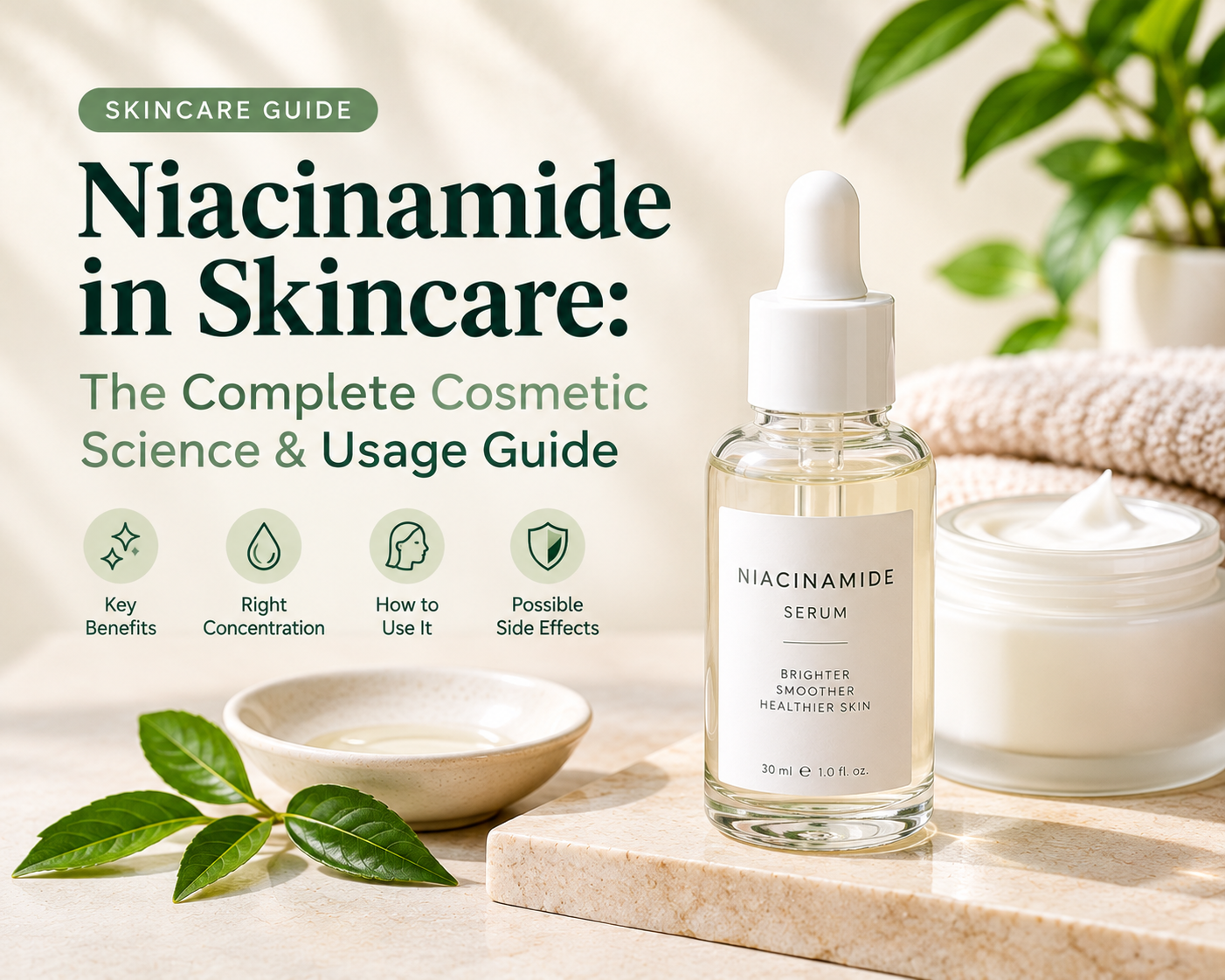
Niacinamide benefits for skin include supporting the skin barrier, improving the appearance of uneven skin tone, balancing excess oil, and helping skin look smoother. This versatile skincare ingredient is a form of vitamin B3 found in many serums, moisturizers, and other skincare products.
Whether you have oily, dry, combination, or sensitive skin, niacinamide may be a useful addition to your routine. However, choosing the right concentration and applying it correctly can help you get the most from this ingredient.
In this guide, you will learn how niacinamide works, how to use niacinamide serum, which ingredients pair well with it, and what to know about possible side effects.
What Is Niacinamide in Skincare?
Niacinamide, also called nicotinamide, is a form of vitamin B3. It supports several normal functions in the skin and is widely used in cosmetic products because it can address multiple skincare concerns.
Niacinamide helps support the skin’s natural barrier, which reduces moisture loss and helps protect against everyday environmental stressors. Research also suggests that topical niacinamide may improve the appearance of uneven skin tone, fine lines, and excess oil.
Unlike some exfoliating ingredients, niacinamide does not work by removing layers of dead skin. Instead, it supports normal skin functions and can be used in many different types of skincare routines.
Niacinamide Benefits for Skin
The main niacinamide benefits for skin depend on the product’s concentration, formulation, and your individual skin concerns. Here are the most important potential benefits.
1. Supports the Skin Barrier
A healthy skin barrier helps retain moisture and protect the skin from external irritants. Niacinamide supports the production of skin lipids, including ceramides, that help maintain this protective barrier.
When the skin barrier functions well, skin may feel softer, smoother, and less dry. Niacinamide can be especially helpful when paired with a moisturizer containing ingredients such as ceramides or glycerin.
2. Improves the Appearance of Uneven Skin Tone
Niacinamide may help reduce the appearance of dark spots and uneven pigmentation over time. Research suggests it can influence the transfer of melanin, the pigment responsible for skin color, within the skin.
This makes niacinamide a useful ingredient for people concerned about post-acne marks and uneven-looking skin tone. Results are gradual, and consistent sunscreen use is important when treating visible pigmentation.
3. Helps Manage Excess Oil
Niacinamide may help reduce the appearance of oily skin for some people. It is often included in lightweight serums and moisturizers designed for oily or combination skin.
It is not a substitute for acne treatment, but it may complement a routine designed to manage excess oil and maintain a healthy skin barrier.
4. Makes Skin Look Smoother
Some studies suggest that topical niacinamide can improve the appearance of fine lines, texture, and other visible signs of skin aging.
By supporting the skin barrier and helping maintain hydration, niacinamide may contribute to a smoother and more even-looking complexion. It will not remove deep wrinkles, and results vary between individuals.
5. Supports Hydration
Niacinamide helps the skin maintain its protective barrier, which plays a role in reducing moisture loss. Better barrier function can help skin feel more comfortable and less rough.
For additional hydration, combine niacinamide with a moisturizer containing hyaluronic acid, glycerin, or ceramides.
How to Use Niacinamide Serum
Learning how to use niacinamide serum is straightforward. Most people can introduce it into their morning or evening skincare routine.
Follow these steps for a simple application method.
- Cleanse your face. Use a gentle cleanser suitable for your skin type.
- Apply niacinamide serum. Follow the product label and apply the recommended amount to clean skin.
- Use moisturizer. Apply a moisturizer to help maintain hydration and support the skin barrier.
- Apply sunscreen in the morning. Finish your daytime routine with broad-spectrum SPF 30 or higher.
If your niacinamide product is a moisturizer rather than a serum, use it according to its instructions. There is no need to purchase several products containing the same ingredient.
Should You Use Niacinamide in the Morning or at Night?
Niacinamide can generally be used in either your morning or evening skincare routine. You do not need to apply it twice daily to see whether it works for your skin.
A morning routine can include niacinamide, moisturizer, and sunscreen. An evening routine can include cleanser, niacinamide, and moisturizer.
If you are new to the ingredient or have sensitive skin, begin once daily or follow the product’s specific directions. Increase frequency only if your skin tolerates it.
What Concentration of Niacinamide Is Best?
Niacinamide products are available in different concentrations. A higher percentage is not automatically better for every skin type.
- 2% niacinamide: A lower concentration that may suit people seeking a gentle introduction.
- 4–5% niacinamide: A commonly used range in skincare products for supporting the skin barrier and improving the appearance of uneven skin tone.
- 10% niacinamide: A higher concentration that some people tolerate well, although it may cause irritation in others.
- Above 10%: Higher-strength products are available, but there is not enough reason to assume that they will always produce better results.
For many beginners, a well-formulated product in the 2–5% range is a reasonable starting point. Choose based on your skin’s needs and tolerance rather than the highest percentage available.
Can You Use Niacinamide With Other Skincare Ingredients?
Niacinamide works well with many common skincare ingredients. The best combination depends on your routine and how sensitive your skin is.
Niacinamide and Hyaluronic Acid
These ingredients can be used together. Hyaluronic acid helps attract and retain moisture, while niacinamide supports the skin barrier. Apply your products according to their labels, then use moisturizer as needed.
Niacinamide and Vitamin C
Niacinamide and vitamin C can generally be used in the same skincare routine. You do not necessarily need to separate them into morning and evening applications.
If you experience irritation when combining products, simplify your routine or introduce one ingredient at a time.
Niacinamide and Retinol
Niacinamide can complement a retinol routine because it supports the skin barrier. If you are new to retinol, introduce it gradually and avoid adding several strong products at once.
Apply each product according to its instructions. Use moisturizer and wear sunscreen during the day.
Niacinamide and Salicylic Acid
These ingredients may suit people with oily or blemish-prone skin. Salicylic acid helps exfoliate inside pores, while niacinamide supports the skin barrier and may help manage the appearance of excess oil.
Start slowly if you have sensitive skin, as using too many active ingredients can cause dryness or irritation.
Is Niacinamide Suitable for Every Skin Type?
Niacinamide is commonly used in products for different skin types, but individual results can vary.
- Oily skin: Lightweight niacinamide serums may help manage the appearance of excess oil.
- Dry skin: Pair niacinamide with a nourishing moisturizer to support hydration and barrier function.
- Combination skin: A lightweight formula may fit well into a routine for both oily and dry areas.
- Sensitive skin: Start with a lower concentration, introduce it gradually, and patch-test before applying it to your face.
- Blemish-prone skin: Niacinamide may complement an acne-focused routine, but it does not replace proven acne treatments when those are needed.
If you have a persistent skin condition or ongoing irritation, consult a qualified dermatologist for personalized advice.
Possible Niacinamide Side Effects
Niacinamide is generally well tolerated when used topically, but side effects are possible. Some people experience redness, itching, burning, dryness, or irritation.
To reduce the risk of a reaction:
- Patch-test the product before regular use.
- Begin with a lower concentration if you are new to niacinamide.
- Follow the product’s directions and avoid applying more than recommended.
- Introduce new active ingredients one at a time.
- Stop using the product if it causes persistent irritation.
Seek medical advice if you develop a severe reaction, swelling, or symptoms that do not improve after discontinuing the product.
How Long Does Niacinamide Take to Work?
The time needed to notice changes depends on the product, concentration, and skin concern.
Some people notice improvements in skin comfort or oiliness within a few weeks. Visible changes in uneven skin tone or fine lines may take several weeks or longer.
Use the product consistently as directed, protect your skin from the sun, and avoid expecting overnight results. If your skin becomes irritated, stop and reassess your routine instead of increasing the concentration.
Common Mistakes to Avoid When Using Niacinamide
Avoid these common mistakes to make your skincare routine simpler and more comfortable.
- Choosing the highest concentration: Stronger products are not necessarily more effective for your skin.
- Using too many new products at once: Introduce one product at a time so you can identify the cause of any reaction.
- Skipping moisturizer: Niacinamide can support the skin barrier, but moisturizer still plays an important role in reducing moisture loss.
- Ignoring sunscreen: Daily sun protection is important for preventing further sun-related skin damage and helping manage uneven pigmentation.
- Expecting instant results: Most visible skincare changes require consistent use over time.
- Ignoring irritation: Stop using a product that causes persistent redness, burning, or discomfort.
Frequently Asked Questions About Niacinamide
What are the main niacinamide benefits for skin?
Niacinamide may support the skin barrier, improve the appearance of uneven skin tone, help manage excess oil, and reduce the appearance of fine lines. Results depend on the formulation and individual skin needs.
Can I use niacinamide every day?
Many people can use topical niacinamide daily. Start according to the product instructions and reduce use or stop if irritation develops.
Is 10% niacinamide better than 5%?
Not necessarily. A 10% product is more concentrated, but that does not mean it will work better for everyone. A lower concentration may provide useful benefits with less risk of irritation for some people.
Can niacinamide help with dark spots?
Niacinamide may help improve the appearance of dark spots and uneven skin tone over time. Consistent sunscreen use is also important, and stubborn pigmentation may need professional treatment.
Can I use niacinamide with retinol?
Yes, these ingredients can generally be used together. If you are new to retinol or have sensitive skin, introduce products gradually and monitor your skin’s response.
Is niacinamide suitable for sensitive skin?
Many people with sensitive skin tolerate niacinamide, but reactions can still occur. Consider a lower concentration, patch-test the product, and discontinue use if irritation develops.
Final Thoughts
Niacinamide is a versatile skincare ingredient that may help support the skin barrier, improve the appearance of uneven skin tone, and make skin look smoother. It can fit into many routines because it is compatible with several common skincare ingredients.
To get the most from niacinamide, choose a suitable concentration, introduce the product gradually, moisturize regularly, and use sunscreen during the day. Consistency and a routine suited to your skin are more important than choosing the strongest serum.
References for further reading