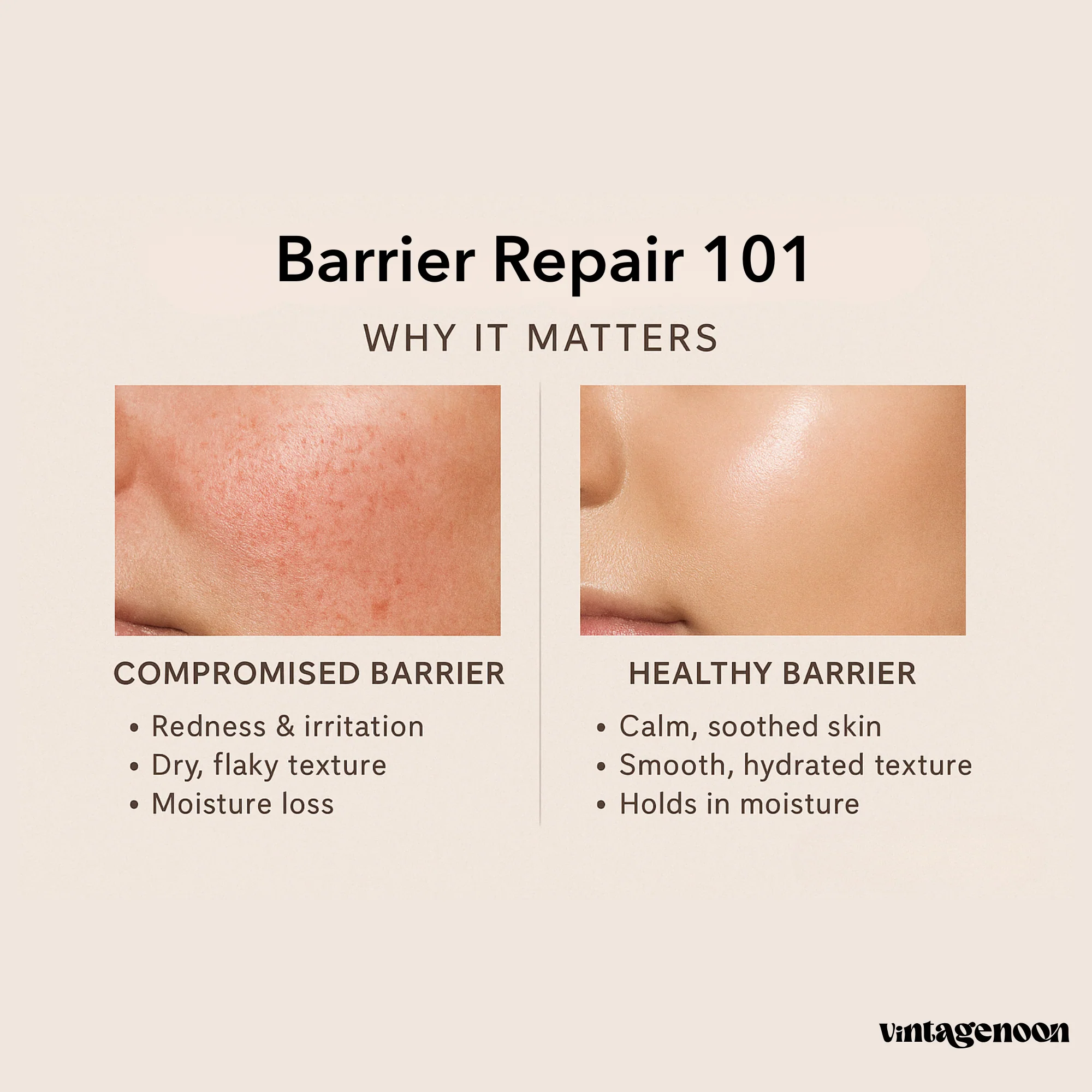
If your skin suddenly feels tight, raw, flushed, or burns when applying even the gentlest moisturizer, you are likely dealing with a compromised skin barrier.
With the surge in popularity of potent active ingredients—like high-percentage retinoids, daily chemical exfoliants, and multi-step routine stacking—skin barrier damage has become one of the most common dermatological complaints today.
Fortunately, your skin barrier is remarkably resilient. By stripping back your skincare routine and focusing on lipid replenishment, you can repair your barrier and restore calm, healthy skin. Here is your ultimate step-by-step guide to executing a skin barrier reset routine.
What Is the Skin Barrier and How Does It Get Damaged?
The skin barrier—scientifically known as the stratum corneum—is the outermost layer of your skin. It is often described as a “brick-and-mortar” structure:
- The Bricks: Corneocytes (dead skin cells filled with keratin and natural moisturizing factors).
- The Mortar: A dense lipid matrix composed of ceramides, cholesterol, and free fatty acids.
When healthy, this barrier keeps vital moisture inside while blocking external irritants, bacteria, and environmental pollutants. When damaged, microscopic cracks form in the lipid mortar, allowing hydration to evaporate rapidly (known as transepidermal water loss or TEWL) and letting irritants penetrate easily.
Common Causes of Barrier Damage:
- Over-exfoliation: Using AHAs, BHAs, or physical scrubs too frequently.
- Overusing Actives: Layering retinoids, strong Vitamin C formulas, and acne treatments simultaneously.
- Harsh Cleansers: Using high-pH, stripping soaps or hot water that wash away natural lipids.
- Environmental Stressors: Cold winds, low humidity, dry indoor heating, and unprotected sun exposure.
5 Clear Signs Your Skin Barrier Is Compromised
- Stinging or Burning: Mild, non-active products (like basic cleansers or simple moisturizers) suddenly sting upon application.
- Persistent Redness and Flushing: Your skin looks blotchy, inflamed, or constantly reactive.
- Dehydrated Tightness: Your face feels uncomfortably tight, even when it looks oily on the surface.
- Flaking and Rough Texture: Dry patches or fine peeling that doesn’t disappear with standard hydration.
- Sudden Breakouts: Micro-cracks in the barrier allow acne-causing bacteria to enter, leading to unexpected surface bumps.
The Skin Barrier Reset Routine (Step-by-Step)
During a barrier repair cycle, all active ingredients must be put on pause. Your goal for the next 2 to 4 weeks is strict simplicity: hydrate, replenish lipids, and protect.
The Morning (AM) Routine
- Step 1: Lukewarm Water Rinse (or Ultra-Gentle Cleanser)Skip foaming cleansers in the morning. A rinse with lukewarm water prevents stripping your skin’s natural overnight oil production.
- Step 2: Hydrating / Soothing Serum (Optional)Apply a simple, fragrance-free hydrating serum containing hyaluronic acid, panthenol (Vitamin B5), or centella asiatica to calm inflammation.
- Step 3: Ceramide CreamApply a generous layer of a moisturizer formulated with skin-identical lipids (ceramides, fatty acids, and cholesterol).
- Step 4: Mineral Sunscreen (SPF 30+)UV rays worsen barrier damage. Opt for a zinc oxide or titanium dioxide mineral sunscreen, as mineral filters are less likely to sting reactive skin than chemical filters.
The Evening (PM) Routine
- Step 1: Gentle, Non-Foaming CleanserUse a lotion-based, milk, or cream cleanser that cleanses without leaving skin feeling tight or dry.
- Step 2: Barrier Repair CreamApply a rich, restorative moisturizer. Look for ingredients like ceramides, squalane, and colloidal oatmeal.
- Step 3: Occlusive Sealing (“Slugging” – Optional for Dry Skin)For non-acne-prone skin, apply a tiny, paper-thin layer of an occlusive ointment (like 100% petrolatum or squalane oil) over your moisturizer to lock in moisture overnight.
Ingredients to Embrace vs. Ingredients to Pause
While repairing your skin barrier, streamline your shelf by focusing on restorative compounds and avoiding active irritants:
| Embrace (Barrier Rebuilders) | Pause (Active Irritants) |
| Ceramides (1, 3, 6-II): Restores lipid matrix. | Retinoids: Retinol, Tretinoin, Adapalene. |
| Panthenol (Vitamin B5): Soothes stinging & inflammation. | AHAs: Glycolic, Lactic, Mandelic Acids. |
| Centella Asiatica / Madecassoside: Calms redness. | BHAs: Salicylic Acid. |
| Colloidal Oatmeal: Relieves itching & discomfort. | L-Ascorbic Acid: High-dose Vitamin C serums. |
| Squalane & Glycerin: Draws and locks in hydration. | Fragrances & Essential Oils: Synthetic perfumes, citrus oils. |
Common Mistakes During Barrier Repair
Mistake #1: Reintroducing actives too early. Just because your skin stops stinging after 3 days does not mean the lipid layer has fully healed. Maintain the reset routine for at least 2 to 4 weeks before slowly reintroducing one active at a time.
Mistake #2: Exfoliating to remove “flaky skin.” Flaking during barrier damage is caused by a lack of cohesive lipids, not a buildup of dead skin that needs scrubbing. Scrubbing will only worsen the damage.
Mistake #3: Switching to multiple new products at once. If your skin is already reactive, testing several new “healing” creams simultaneously makes it hard to identify what works or what might cause an allergic reaction.
Frequently Asked Questions
How long does it take to fully repair a damaged skin barrier?
For mild irritation, barrier function can improve in 2 to 3 weeks. For severe damage caused by prolonged over-exfoliation or harsh chemical treatments, complete lipid restoration can take 4 to 8 weeks of consistent, gentle care.
Can I still use sunscreen if my skin stings when applying it?
Yes, sun protection is critical because UV radiation further breaks down skin proteins and lipids. If chemical sunscreens sting, switch temporarily to a 100% mineral sunscreen (featuring Zinc Oxide), which sits on top of the skin rather than absorbing into it. Alternatively, wear a wide-brimmed hat and minimize direct sun exposure.
Is “slugging” safe for acne-prone skin during barrier repair?
Slugging (applying a petroleum-based occlusive over moisturizer) is exceptional for dry, damaged barriers, but it can trap sebum and trigger breakouts in oilier or acne-prone skin types. If you get clogged pores easily, use a high-ceramide cream or squalane oil instead of pure petrolatum.
How should I reintroduce active ingredients once my barrier is healed?
Reintroduce actives one at a time, once or twice a week. For example, use your retinoid on Monday night only and monitor your skin for 48 hours. If no stinging or redness occurs, gradually increase frequency over 4 to 6 weeks. Never restart all your previous exfoliants and actives at the same time.
External References
- Journal of Clinical and Aesthetic Dermatology: Epidermal Barrier Function and the Role of Ceramides in Skincare
- American Academy of Dermatology (AAD): How to Heal Damaged, Dry, and Irritated Skin
- British Journal of Dermatology: Transepidermal Water Loss and Lipid Recovery Mechanisms in Human Skin