Quick Answer
Squalane for skin is a lightweight emollient that seals in moisture, softens dry skin and supports the skin barrier, without the heavy or greasy feel of most face oils.
Use two to four drops after a water-based serum and before, or mixed into, your moisturiser. In winter, that sealing step matters most, because cold air and indoor heating pull water out of skin faster. Squalane for skin will not clear acne, fade dark spots or erase wrinkles on its own, and it is not a substitute for sunscreen.
What Is Squalane?
Squalane is the stable, hydrogenated form of squalene, a lipid your skin already makes as part of sebum. Your body produces less squalene after your twenties, so a squalane product simply tops up a lipid your skin recognises. That recognition is the basic idea behind squalane for skin. Because it is skin-identical in that sense, most people tolerate it well, including people with sensitive skin.
Squalane vs Squalene: One Letter, a Real Difference
Squalene, spelled with an e, is the unsaturated lipid your sebaceous glands produce. It oxidises easily in air and light, and oxidised squalene can irritate skin and clog pores. Squalane, spelled with an a, has all six double bonds hydrogenated, so it cannot oxidise in the same way. That stability is why skincare uses squalane, not squalene, and why squalane keeps for years rather than months.
Where Squalane Comes From
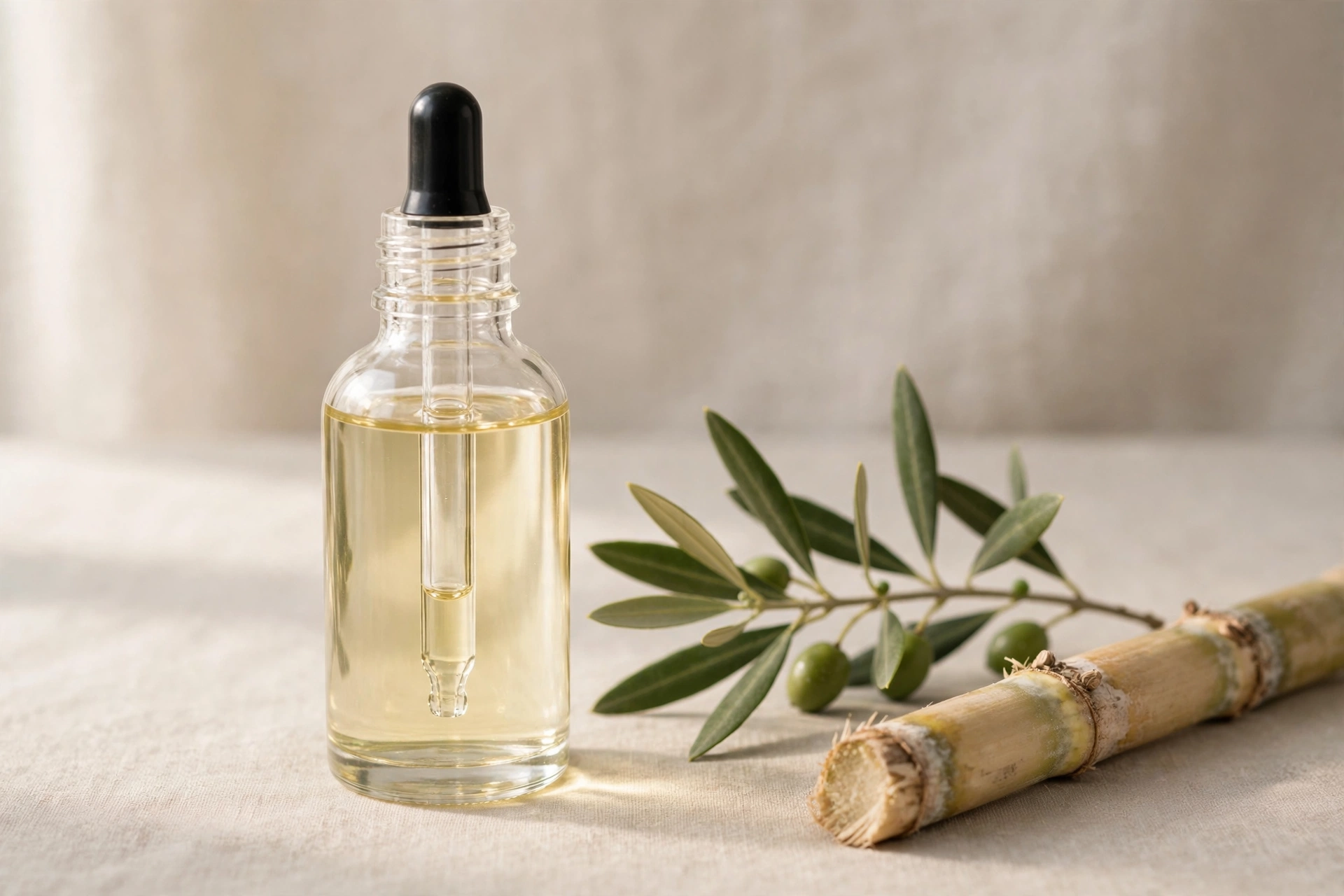
Squalane was once sourced mainly from shark liver oil. Today, most cosmetic-grade squalane comes from plants, either olive oil or sugarcane fermented with engineered yeast. The two plant sources produce the same molecule, so the difference is about sustainability and texture, not skin performance. Sugarcane squalane tends to feel lighter and more consistent from batch to batch, while olive squalane can feel slightly richer. Check the label if animal-free sourcing matters to you, and choose a product that names its source.
What the Evidence Actually Shows
Squalane is popular, and the honest evidence is thinner than the marketing suggests. There are no large, long-term trials that test squalane alone on the face, so this section separates what is solid from what is still thin.
What Is Solid
A 2018 review in PubMed Central, covering squalene and related compounds, describes the molecule family as a skin emollient and antioxidant with established use in topical lipid emulsions. A separate clinical review of topical emollients for dry skin confirms the general mechanism: a surface lipid layer traps water and supports a damaged barrier. Squalane fits squarely into that established emollient category, even where squalane-specific trial data remains thinner than the marketing around it suggests.
Dermatologists quoted in mainstream health coverage are more confident on safety than on dramatic benefit claims. Dr Alok Vij, a board-certified dermatologist at Cleveland Clinic, explains that squalane comes from a lipid that occurs naturally in skin, and describes it as non-comedogenic, so it will not clog pores. Dr Charlotte Birnbaum, a board-certified dermatologist in New York, says the same in Byrdie: while most oils clog pores, squalane is one of the few that may be used even on acne-prone skin.
What Is Still Thin
Direct, large-scale trials isolating squalane alone are hard to find. One often-cited study tested an emollient containing squalane, ceramides and 5 percent urea on 21 volunteers over 60 with severe dry skin, for 28 days. It found lower water loss, higher hydration and a small shift in skin pH, yet the formula contained three active ingredients, so the result cannot be credited to squalane alone. A 2023 study of a bakuchiol and squalane serum reported an 11.9 percent rise in skin elasticity after 28 days, yet again the serum contained bakuchiol too, so squalane alone did not earn that number.
Antioxidant claims deserve the same careful read. Some sources describe squalane as protecting against UV-related oxidative stress, pointing to squalene in natural skin. That claim is less established in clinical terms than the hydration mechanism, and squalane is never a substitute for a dedicated, broad-spectrum sunscreen. This draft does not repeat the 40 percent moisture claim found in some shopping guides, because no primary trial was available to check it against.
Squalane for Skin: Benefits
The benefits of squalane for skin below follow from the emollient mechanism and dermatologist guidance, not from marketing copy. Where the evidence is indirect, this draft says so.
It Seals In Moisture
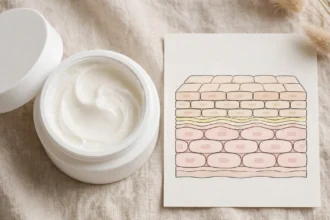
Squalane is an emollient, not a humectant. It does not pull water into skin the way hyaluronic acid does. Instead, it sits on the surface, fills rough patches and slows transepidermal water loss, the evaporation that leaves skin tight and flaky. That is why it works best as a last step, after a water-based serum, rather than as the only hydrating product in a routine. That sealing action is the core of squalane for skin in winter.
It Supports the Skin Barrier
Because squalane slots into the lipid layer of skin, it helps a weakened barrier hold together. Westlake Dermatology notes that it reinforces the lipid layer, helping to restore barrier function, and that it reduces dryness, flaking and irritation, especially in skin that is compromised or recovering. Our Skin Barrier Repair guide explains the same barrier logic in more detail, and squalane fits naturally into that routine as the sealing oil.
It Calms Redness Without Clogging Pores
Squalane has anti-inflammatory properties. Cleveland Clinic notes that research shows those properties may help reduce redness and swelling in acne and even other skin conditions like eczema. It will not treat eczema or acne on its own, because that is a dermatologist job, yet it will not make them worse, which is more than most oils can say. On the standard comedogenic scale, squalane is commonly rated 0, against 2 for jojoba oil and 4 for coconut oil, though that scale is informal and based on older testing, not a modern clinical standard.
It Softens Skin Fast
The one visible effect you will notice quickly is softness. Squalane slips between skin cells and makes skin feel smoother within a day or two. It will not erase wrinkles, because it plumps the surface slightly, so fine lines look softer while it is on. That is hydration, not anti-ageing, and any guide that promises wrinkle removal from squalane alone is overselling it.
Who Should Try Squalane, and Who Should Skip It
- Dry or tight skin: try it first. If your moisturiser alone is not enough, Dr Vij says squalane may help in those cases, and winter is the season when that gap shows most.
- Sensitive skin: try it, with a patch test. Squalane is not a common irritant or allergen, so even very sensitive skin is unlikely to react, yet a patch test still costs nothing and rules out a rare reaction.
- Oily or acne-prone skin: try a small amount. Squalane is non-comedogenic, so a few drops will not add the congestion that heavier oils cause, though it will not clear breakouts either. Salicylic Acid for Skin covers the exfoliant that actually targets breakouts, while squalane only seals.
- Eczema or rosacea: ask a clinician first. Squalane may soothe a compromised barrier, yet it is not a treatment for either condition, and a flare needs medical advice, not a new oil.
- Anyone expecting a treatment: skip it as a treatment. Squalane moisturises and seals. For dark spots, our Best Ingredient for Dark Spots guide compares the ingredients that actually target pigment, and squalane is not among them.
How to Use Squalane for Skin in Winter
Order matters more than brand. Squalane works as a seal, so it goes near the end of a routine, after water-based products and before, or mixed into, a heavier cream on very cold days.
- Cleanse, then apply a water-based serum while skin is still slightly damp. Our What Is Hyaluronic Acid guide explains why a humectant first gives squalane something to seal in.
- Warm two to four drops between your palms, then press, do not rub, over face and neck. Start with two drops, and add a third only if skin still feels tight after ten minutes.
- Follow with moisturiser if your skin is very dry, or mix the drops into your moisturiser instead. In a humid room, skip the extra cream, because the same amount can feel heavy.
- Use it morning and night in winter, and once a day, or every other day, in summer. Adjust month to month, rather than locking into one amount all year.
- Use it after Vitamin C Serum for Sensitive Skin in the morning, because vitamin C goes on clean skin first and squalane seals after it. At night, it also sits well after retinol or retinal, once skin has adjusted to the active.
- Keep it away from eyes in pure-oil form, and store the bottle away from direct light, even though squalane itself is stable.
A little goes a long way. Most people use too much oil at first, then blame the product for shine. Two drops cover a face, four cover face and neck, and any more mostly sits on the surface. If your skin looks glossy an hour later, use one drop less next time, rather than changing products.
Squalane vs Other Face Oils
Squalane is not the only light oil, yet it is the easiest to place in a routine. The table below compares the common choices on the points that matter in winter.
| Oil | Feel | Comedogenic rating* | Best for |
|---|---|---|---|
| Squalane | Light, fast-absorbing, no scent | 0 | All skin types, winter sealing |
| Jojoba oil | Light, closest to sebum | 2 | Oily and combination skin |
| Rosehip oil | Light to medium, absorbs well | 1 | Dry skin, uneven tone |
| Coconut oil | Heavy, slow to absorb | 4 | Body skin, not the face for most people |
*Comedogenic ratings are commonly cited informal scores, not a modern clinical standard. They help compare oils, yet they do not guarantee how any one person will react.
What Pairs Well With Squalane
| Pairing | Why it works | How to layer it |
|---|---|---|
| Hyaluronic acid | Humectant pulls water in, squalane seals it in | Hyaluronic acid first, squalane second |
| Niacinamide | Supports the barrier from a different route | Niacinamide serum first, squalane after |
| Vitamin C | Brightening active, squalane adds comfort | Vitamin C first, squalane after |
| Retinol or retinal | Active can dry skin, squalane buffers that dryness | Active first, squalane after, once skin adjusts |
| Ceramides | Both support the lipid barrier | Either order, or mixed into one cream |
Niacinamide Benefits for Skin explains the niacinamide side of that pairing in full, and Glycolic Acid for Skin covers the exfoliant to use on a different night, not layered under squalane in the same routine.
Mistakes to Avoid
- Using squalane instead of moisturiser. Squalane seals water in, yet it does not add water, so dry skin still needs a humectant or a moisturiser underneath it.
- Applying it to dry skin. A damp base helps the seal work, so apply serums first, then squalane, rather than starting with oil on a dry face.
- Using too much. More oil does not mean more hydration, and excess squalane can pill under sunscreen or makeup.
- Expecting it to fade dark spots or clear acne. Squalane will not do either, and waiting for it to work wastes months that a targeted ingredient could use.
- Skipping sunscreen because squalane feels protective. It is not sun protection, and winter sun still needs a broad-spectrum product.
- Buying a blend and calling it pure squalane. Check the ingredient list, because some oils labelled squalane blends contain heavier oils that change how the product behaves.
Frequently Asked Questions
Is squalane good for acne-prone skin?
Yes, in small amounts. Squalane is non-comedogenic, with a commonly cited rating of 0, and dermatologists describe it as one of the few oils that may be used even on acne-prone skin. It will not clear acne, yet it will not add congestion the way heavier oils can.
Can I use squalane every day?
Yes. Squalane is gentle enough for daily use, morning and night, and most people use it daily through winter. If your skin feels heavy in summer, cut back to once a day or every other day, rather than stopping it altogether.
Should I use squalane before or after moisturiser?
After a water-based serum, and before or mixed into moisturiser. The usual order is cleanser, serum, squalane, then moisturiser on very dry days. On normal days, squalane alone after serum is often enough.
Is squalane the same as olive oil?
No. Squalane is a single, purified lipid fraction taken from sources like olives or sugarcane. Olive oil is a whole oil containing many compounds, some of which can clog pores. That is why squalane suits the face while plain olive oil often does not.
Does squalane help with wrinkles?
Only by hydration. Squalane plumps the surface slightly, so fine lines look softer while it is on, yet it does not change collagen or erase wrinkles. A 2023 serum study that reported better elasticity contained bakuchiol as well, so that result cannot be credited to squalane alone.
Can I use squalane with retinol?
Yes, once your skin has adjusted to retinol. Apply retinol first, wait a few minutes, then press squalane over it to buffer dryness. If you are new to retinol, read our Retinal vs Retinol guide first, because retinal is stronger than retinol and needs a slower start.
Key Takeaways
- Squalane for skin is a light emollient that seals in moisture and supports the barrier, not a humectant and not a treatment.
- It is the stable form of squalene, it cannot oxidise like squalene, and it is commonly rated 0 for comedogenicity.
- Large squalane-only trials do not exist yet, so benefit claims rest on emollient science and dermatologist guidance, not on a single strong trial.
- Use two to four drops after a serum, before or mixed into moisturiser, and adjust the amount with the season.
- It suits dry, sensitive and acne-prone skin, yet it will not fade dark spots, clear acne or replace sunscreen.
Sources
- Cleveland Clinic, quoted via Glaminest: Dr Alok Vij on squalane as a lipid that occurs naturally in skin, and on its non-comedogenic nature.
- MissBiotic, Squalane for Skin: What Dermatologists Say It Actually Does, 29 October 2026, on the 2018 review and the thin squalane-specific trial base.
- Typology, Squalane: what benefits does it provide to the skin?, on the Cork et al. 2016 emollient study and the Gholap et al. 2023 bakuchiol and squalane serum study.
- Skinventry, Squalane vs Squalene: The One Letter That Matters, on hydrogenation, sugarcane versus olive sourcing, and oxidised squalene.
- Huang ZR, Lin YK, Fang JY, Biological and pharmacological activities of squalene and related compounds, Molecules, 2009, cited via the reviews above.
Medical disclaimer: This article is for general information only and is not medical advice. If you have eczema, rosacea, acne that does not improve, or any skin condition that worries you, ask a dermatologist or another clinician before changing your routine.