Quick Answer
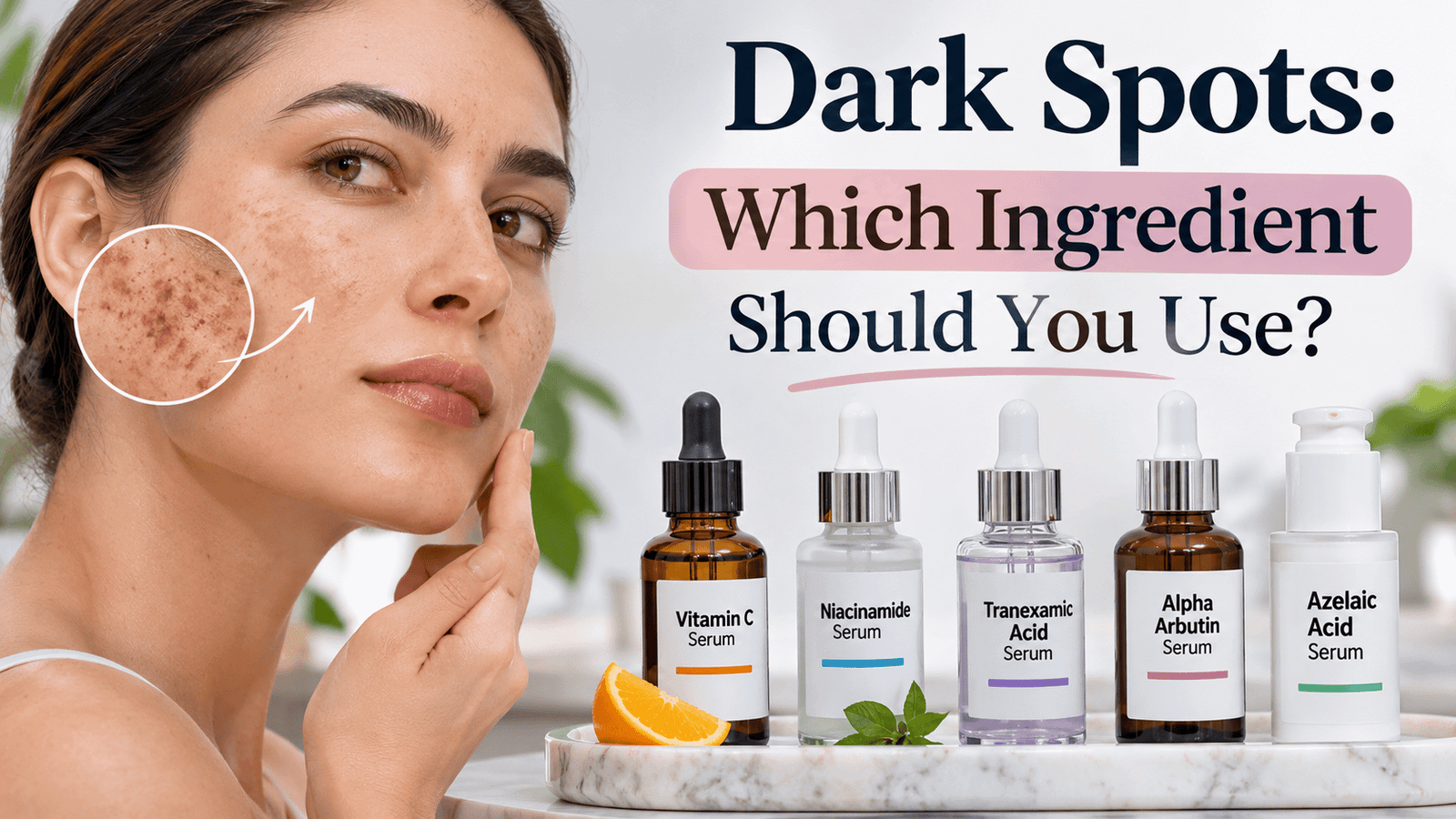
Dark spots have many causes, so no single ingredient works best for everyone. For most people, start with niacinamide or azelaic acid. Both are gentle, and both help with brown spots and red marks. Stubborn spots need tranexamic acid, in addition to niacinamide. Dull skin with spots needs glycolic acid once or twice a week. Spots plus fine lines may need retinal at night. However, sunscreen matters more than any of these. Without daily sunscreen, spots come back, even if a serum fades them first.
What Causes Dark Spots?
Dark spots form when skin makes extra melanin in one place. Sun is the most common cause. Hormones can also trigger spots, for example melasma in pregnancy. Acne, eczema, and picking at skin can leave dark marks after the spot heals. Age and genetics also play a role. Therefore, the best ingredient depends on your cause, not on the trend of the month.
First, ask three questions. Where are your spots? How long have you had them? What caused them? A new brown spot after summer sun is different from a red mark after acne. In addition, a spot that changes shape or colour needs a clinician, not a serum. This guide helps you pick an ingredient for common, stable dark spots. It does not replace medical care.
The 6 Ingredients Compared
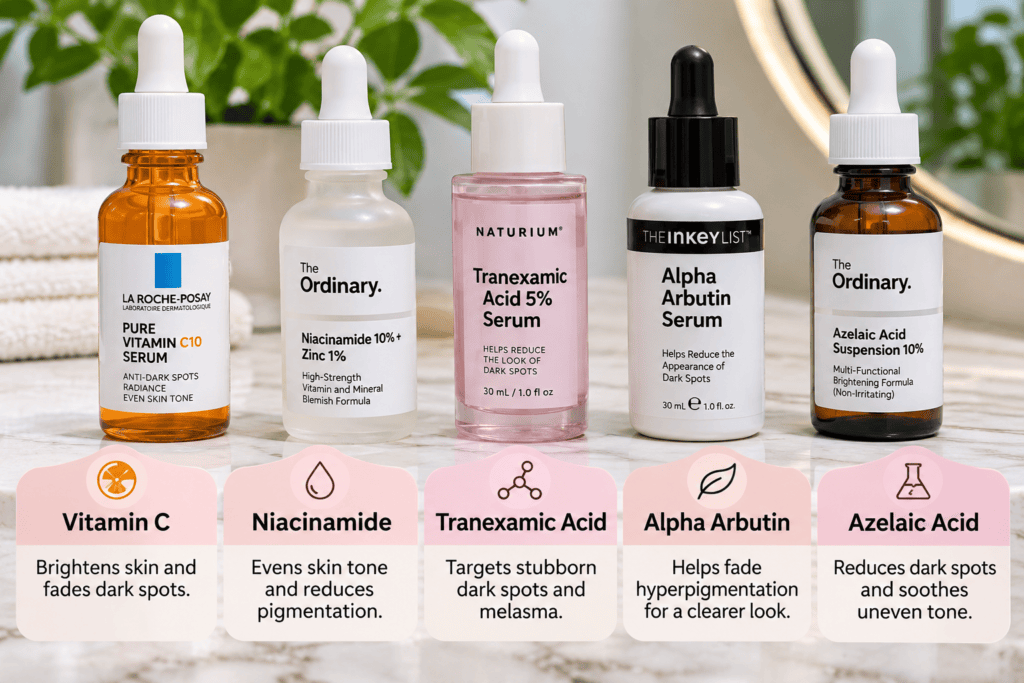
The table below gives a fast answer. Read the sections after it for detail, because the right choice depends on your skin type and your routine.
Azelaic acid suits sensitive skin and red marks. Tranexamic acid suits stubborn brown spots. Glycolic acid suits dull skin. Niacinamide suits almost everyone. Retinal suits spots plus ageing. Vitamin C suits brightening. For full detail, see our azelaic acid guide, our tranexamic acid guide, and our glycolic acid guide.
Azelaic Acid: Best for Sensitive Skin and Red Marks
Azelaic acid calms redness and fades brown spots at the same time. It suits sensitive skin, rosacea-prone skin, and acne-prone skin. In addition, most people use it once or twice a day, at 10% in over-the-counter products. It rarely causes strong irritation. For example, if your skin stings with vitamin C or retinol, try azelaic acid first. Give it eight to twelve weeks, because dark spots fade slowly.
Tranexamic Acid: Best for Stubborn Brown Spots
Tranexamic acid targets melanin production. It works well for melasma and for spots that do not fade with niacinamide alone. Most products use 2% to 5%. It is usually gentle, and it pairs well with niacinamide and vitamin C. However, it works slowly. Expect visible change after eight to twelve weeks, not after one week. Do not expect it to erase a spot completely. Instead, expect it to look lighter and less obvious.
Glycolic Acid: Best for Dull Skin With Spots
Glycolic acid is an exfoliant. It removes dead skin cells from the surface, so spots look lighter and skin looks brighter. It suits normal and oily skin best. Start at 5% once or twice a week. Do not use it every day at first. In addition, always use sunscreen with glycolic acid, because it makes skin more sensitive to sun. If your skin is dry or sensitive, choose lactic acid, mandelic acid, or azelaic acid instead.
Niacinamide: Best First Step for Almost Everyone
Niacinamide is vitamin B3. It supports the skin barrier, calms redness, and reduces melanin transfer to skin cells. Most people tolerate 2% to 5% well. It pairs with almost every other ingredient. Therefore, if you feel lost, start here. Use it morning and night, under moisturiser. It will not fade a deep spot on its own, but it makes every other ingredient work better.
For a full guide to niacinamide, with strengths, pairings, and side effects, see our niacinamide benefits guide.
Retinal: Best for Spots Plus Fine Lines
Retinal is a form of vitamin A. Skin converts it to retinoic acid faster than retinol, so it often works faster. It helps with dark spots, fine lines, and uneven texture. However, it can irritate skin, especially at first. Start twice a week at night, and use moisturiser after it. Do not use retinal with glycolic acid on the same night. If you are pregnant, do not use retinal or retinol. Ask a clinician first.
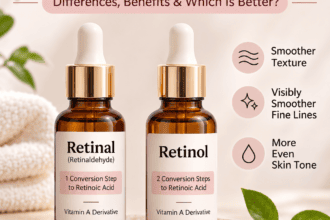
Retinal and retinol sound similar, but they are not the same. Our retinal vs retinol guide explains the difference, the strengths, and who should choose which one.
Vitamin C: Best for Brightening
Vitamin C is an antioxidant. It brightens skin, supports collagen, and helps prevent new spots from sun damage. For example, most serums use 10% to 15% L-ascorbic acid. It works best in the morning, under sunscreen. However, some formulas can sting, and some turn orange over time. If your skin is sensitive, choose a gentler form, or choose niacinamide instead. Store vitamin C away from light and heat.
If your skin is sensitive, read our vitamin C serum for sensitive skin guide before you buy a vitamin C serum.
Which Ingredient Should You Pick?
New brown spots after sun? Start with niacinamide, then add vitamin C in the morning.
Red marks after acne? Choose azelaic acid first, because it calms redness and fades marks.
Stubborn spots that will not fade? Add tranexamic acid to niacinamide, and give it twelve weeks.
Another option for stubborn brown spots is Kojic Acid for Skin, which works by slowing excess melanin production.
Dull skin with spots? Add glycolic acid once or twice a week, plus daily sunscreen.
Spots plus fine lines? Try retinal at night, twice a week to start, with moisturiser.
Sensitive skin? Start with niacinamide or azelaic acid only. Add one ingredient at a time. For a gentler retinoid alternative, some people consider bakuchiol.
How to Combine Them Safely
Do not start three new ingredients on the same day. Start with one. Use it for two weeks. If your skin stays calm, add a second one. A simple routine looks like this: morning, gentle cleanser, niacinamide, vitamin C, moisturiser, sunscreen. Night, gentle cleanser, tranexamic acid or azelaic acid, moisturiser. Add glycolic acid or retinal on separate nights, not together. In addition, keep a simple routine for at least eight weeks before you judge it.
A weak skin barrier makes dark spots worse, because irritated skin makes more melanin. If your skin feels tight, dry, or stingy, stop the strong ingredients and repair the barrier first. Our skin barrier repair guide explains how to do that in plain steps.
Sunscreen: The Step That Decides Everything
Sunscreen is not optional for dark spots. Sunlight triggers melanin, so a spot fades in winter and returns in summer if you skip sunscreen. Use broad-spectrum sunscreen, SPF 30 or higher, every morning. Reapply it if you spend a long time outside. No serum can beat daily sun exposure. For that reason, buy sunscreen before you buy another brightening serum.
Common Mistakes
Starting three new actives at once, then not knowing which one irritated your skin.
Using glycolic acid every day at first, then getting red, peeling skin.
Skipping sunscreen, then wondering why spots come back.
Expecting a spot to vanish in one week, then giving up too soon.
Picking at spots, which leaves a darker mark that lasts for months.
Buying the strongest product, not the right product for your skin type.
When to See a Clinician
See a clinician promptly if a spot changes shape, colour, or size, if it bleeds, itches, or does not heal, or if you have a large number of new spots. A clinician can check whether a spot is harmless, and can offer stronger treatments, such as prescription creams or in-clinic procedures. Do not try to treat a changing spot with a serum at home. Early care is safer and simpler.
The Short Answer
Start simple. Pick niacinamide or azelaic acid first. Add tranexamic acid for stubborn spots, glycolic acid for dull skin, or retinal for spots plus fine lines. Use vitamin C in the morning for brightening. Above all, use sunscreen every day. Give your routine eight to twelve weeks. Dark spots fade slowly, but a simple, steady routine works better than a shelf full of strong products.