Dark spots can be frustrating, especially when acne marks, sun exposure, or melasma leave uneven patches that take months to fade. If you have been exploring skincare ingredients for hyperpigmentation, you may have come across tranexamic acid.
Tranexamic acid, often called TXA, is an ingredient used in some topical skincare products to help improve the appearance of discoloration. It has attracted attention as an option for people dealing with dark spots and uneven skin tone.
But what does it actually do? Can a tranexamic acid serum help with melasma or post-acne marks? And how should you use it without irritating your skin?
This guide explains the potential benefits of topical tranexamic acid, how to add it to a skincare routine, what ingredients it can be combined with, and the precautions worth knowing before you start.
Quick Answer: What Does Tranexamic Acid Do for Dark Spots?
Topical tranexamic acid is a skincare ingredient that may help reduce the appearance of dark spots, melasma, and post-inflammatory hyperpigmentation. It is thought to influence processes involved in excess pigment production and inflammation.
It is available in some serums, creams, and other cosmetic formulations. Results are not immediate, and the evidence for topical TXA is still developing. Daily sun protection is essential when managing pigmentation.
Important: Topical tranexamic acid skincare is different from oral tranexamic acid, which is a prescription medicine. This guide discusses topical skincare only.
What Is Tranexamic Acid?
Tranexamic acid is a synthetic derivative of the amino acid lysine. In medicine, it is used to help control excessive bleeding by slowing the breakdown of blood clots.
In skincare, topical tranexamic acid is used in cosmetic formulations designed to improve the appearance of uneven skin tone and discoloration.
You may see it listed as:
- Tranexamic acid
- TXA
- Tranexamic acid serum
- Topical tranexamic acid
Although the ingredient has a medical history, a cosmetic serum is not the same as a prescription treatment. The formulation, concentration, and way it is used are different.
Topical tranexamic acid has been studied for pigmentation concerns, particularly melasma. Research suggests it may be a useful option for some people, although larger and longer-term studies are still needed.
How Does Tranexamic Acid Work on Dark Spots?
To understand how TXA may help with discoloration, it helps to understand melanin.
Melanin is the pigment that gives skin its natural color. Skin produces more melanin in response to different triggers, including ultraviolet exposure, inflammation, and hormonal changes.
Sometimes pigment production becomes uneven, leaving darker areas on the skin.
Tranexamic acid is thought to influence the plasminogen-plasmin pathway, which is involved in inflammatory signaling in the skin. By affecting this pathway, topical TXA may help reduce some signals associated with excess pigmentation.
In simple terms, it may help make certain dark patches look less noticeable over time.
However, it does not bleach skin, instantly erase existing pigment, or change your natural skin color.
Benefits of Tranexamic Acid for Skin
Topical tranexamic acid is mainly used in skincare for uneven pigmentation. Here are the concerns it may help address.
1. May Help Fade Dark Spots
Dark spots can develop after sun exposure, inflammation, or skin injuries. They may appear on the cheeks, forehead, chin, or other areas.
Topical tranexamic acid may help improve the appearance of some forms of discoloration by influencing pigment-related pathways.
It is not a guaranteed treatment, and the results depend on the cause and depth of the pigmentation, the product formulation, and how consistently it is used.
2. May Improve the Appearance of Melasma
Melasma is a pigmentation condition that creates brown or gray-brown patches, often on the cheeks, forehead, nose, and upper lip.
It can be influenced by sun exposure, visible light, hormonal changes, and heat. It is also known to return even after improvement.
Topical tranexamic acid has been studied as one possible option for managing melasma. Some research suggests it may help reduce pigmentation, but it should not be presented as a guaranteed replacement for dermatologist-directed treatment.
If your melasma is persistent or worsening, a dermatologist can help identify suitable treatment options.
3. May Help With Post-Acne Dark Marks
Post-inflammatory hyperpigmentation, often shortened to PIH, is discoloration that remains after inflammation.
For example, a pimple may disappear but leave a flat brown or dark mark behind. Picking at acne or irritating the skin can make these marks more noticeable.
Topical TXA may be useful as part of a broader pigmentation routine. It does not treat the acne itself, so you may also need an appropriate acne treatment.
4. May Support a More Even-Looking Skin Tone
When several areas of discoloration appear on the face, skin can look uneven.
A topical tranexamic acid product may help improve the appearance of some pigmentation over time. Consistent sun protection and a gentle skincare routine are important parts of managing uneven tone.
Tranexamic Acid vs. Other Brightening Ingredients
Tranexamic acid is not the only ingredient used for dark spots. Other options include vitamin C, niacinamide, azelaic acid, and hydroquinone.
Each ingredient works differently, and the best choice depends on your skin concern and tolerance.
| Ingredient | Main skincare purpose | What to consider |
|---|---|---|
| Tranexamic acid | Helps improve the appearance of pigmentation | Evidence for topical use is developing |
| Vitamin C | Antioxidant support and brightening | Some formulas can irritate sensitive skin |
| Niacinamide | Supports the skin barrier and uneven tone | Often well tolerated |
| Azelaic acid | Helps with acne, redness, and pigmentation | May cause initial tingling or dryness |
| Hydroquinone | Established pigment-lightening treatment | Requires careful guidance because of potential side effects |
| Retinoids | Support skin renewal and can improve some dark marks | Can cause dryness and irritation |
There is no single best brightening ingredient for everyone.
For persistent melasma or significant pigmentation, a dermatologist can help choose an evidence-based treatment rather than relying on several cosmetic serums at once.
How to Use Tranexamic Acid Serum in Your Skincare Routine
If you want to try a topical tranexamic acid serum, keep the routine simple at first.
Always follow the instructions on the specific product because formulations and recommended application frequencies can differ.

Step 1: Cleanse Your Skin
Start with a gentle cleanser to remove sunscreen, makeup, oil, and everyday buildup.
Avoid harsh cleansing products that leave your skin feeling tight or uncomfortable.
Step 2: Apply Tranexamic Acid Serum
Apply the amount recommended on the product label to clean, dry skin.
Some products are intended for the whole face, while others may be designed for targeted areas. Follow the manufacturer’s directions rather than assuming every TXA product should be applied in the same way.
If you have sensitive skin, introduce the product gradually.
Step 3: Apply Moisturizer
Use a moisturizer that helps keep your skin comfortable and supports its protective barrier.
Ingredients such as glycerin, ceramides, and hyaluronic acid can be useful in a hydrating routine.
Step 4: Apply Sunscreen in the Morning
Finish your morning routine with a broad-spectrum sunscreen of SPF 30 or higher.
This is especially important when you are trying to improve dark spots or melasma. Sun exposure can make pigmentation more noticeable and contribute to new discoloration.
For people managing melasma, a tinted sunscreen containing iron oxides may also help protect against visible light.
What Percentage of Tranexamic Acid Should You Use?
You may see topical tranexamic acid products advertised at different concentrations.
Some cosmetic formulations contain around 2% to 5% TXA, while others use lower concentrations or combine it with other ingredients.
There is no single standard concentration that guarantees the best results for everyone. The formulation and delivery system also matter.
When choosing a product:
- Check the ingredient list and product directions.
- Avoid assuming that a higher percentage is automatically more effective.
- Consider a simpler formula if your skin is sensitive.
- Do not combine multiple strong brightening products just to speed up results.
A dermatologist can help you decide whether an over-the-counter product is appropriate for your pigmentation concern.
Can You Use Tranexamic Acid With Other Skincare Ingredients?
Topical tranexamic acid is included in some formulas alongside other brightening and hydrating ingredients.
However, adding several active ingredients at once can make it difficult to identify what is causing irritation.
Tranexamic Acid and Niacinamide
Niacinamide supports the skin barrier and can help improve the appearance of uneven skin tone.
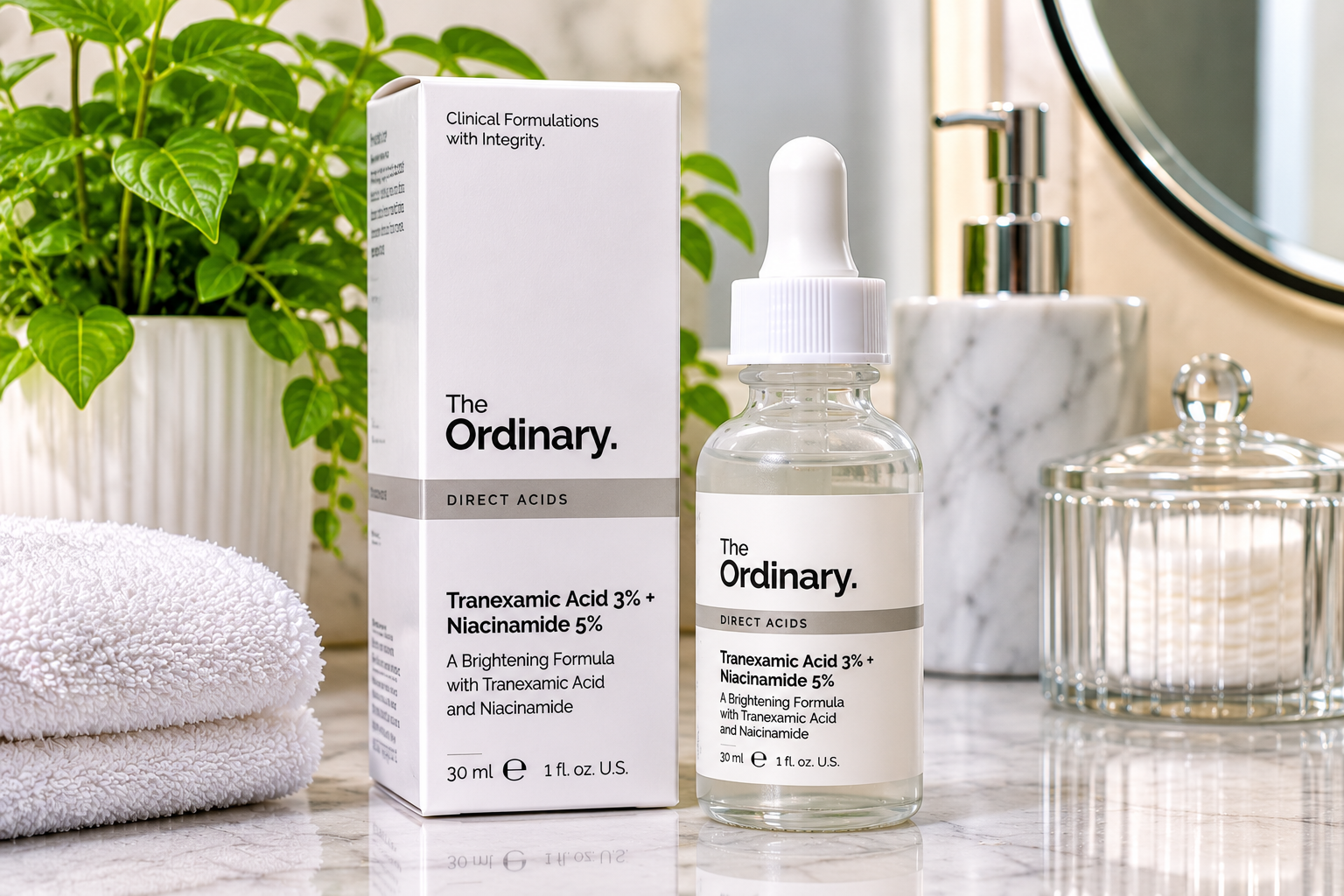
Some skincare formulas combine niacinamide and tranexamic acid. They may be useful together in a pigmentation-focused routine, provided your skin tolerates the product.
Tranexamic Acid and Vitamin C
Vitamin C is an antioxidant commonly used in morning skincare routines.
Some formulas combine vitamin C and TXA to target the appearance of uneven tone. If you have sensitive skin, start with one new product at a time instead of layering several strong formulas.
Tranexamic Acid and Hyaluronic Acid
Hyaluronic acid is a hydrating ingredient that helps the skin retain moisture.
It can fit comfortably into a routine that includes topical TXA.
Read our guide to what hyaluronic acid is, its benefits, and how to use it for more information.
Tranexamic Acid and Retinol
Some routines use TXA alongside retinoids, but this does not mean everyone should begin both at the same time.
Retinoids can cause dryness, peeling, and irritation, particularly when first introduced.
If you already use a retinoid, consider introducing TXA separately and monitor how your skin responds. You can also ask a dermatologist or pharmacist about the best routine for your products.
Tranexamic Acid and Exfoliating Acids
Glycolic acid, lactic acid, and salicylic acid are used for different exfoliation and acne-related purposes.
Using too many active ingredients can irritate the skin and make discoloration harder to manage.
If your skin becomes stinging, red, or flaky, simplify your routine and pause products that are causing irritation.
Side Effects and Safety of Topical Tranexamic Acid
Topical tranexamic acid is generally reported to be well tolerated in studies, but side effects are still possible.
Some people may experience:
- Redness
- Stinging or burning
- Dryness
- Mild irritation
- Itching or a rash
Stop using the product if you develop significant irritation, swelling, or a persistent rash. Seek medical advice if symptoms are severe or do not settle.
Is Tranexamic Acid Suitable for Sensitive Skin?
Some people with sensitive skin tolerate topical TXA, but no ingredient is guaranteed to suit everyone.
Before applying a new product across your face, follow the manufacturer’s patch-testing instructions. Introduce one new active ingredient at a time so you can identify any reaction.
Topical vs. Oral Tranexamic Acid: An Important Difference
Topical tranexamic acid in a cosmetic serum is not the same as oral tranexamic acid tablets.
Oral TXA is a prescription medicine used for specific medical conditions. It may sometimes be prescribed by a specialist for melasma, but it has important precautions, including the potential risk of blood clots.
Do not take oral tranexamic acid for skincare unless it has been prescribed and monitored by a qualified healthcare professional.
If you are pregnant, breastfeeding, have a history of blood clots, or have a medical condition or medication that may affect clotting risk, discuss treatment choices with your healthcare professional.
How Long Does Tranexamic Acid Take to Work?
Tranexamic acid is not an overnight solution for pigmentation.
The time needed to notice a difference varies according to:
- The cause of the dark spots.
- How deep or persistent the pigmentation is.
- The product formulation.
- How consistently the product is used.
- How well you protect your skin from sunlight.
Some people may notice gradual changes after several weeks, while stubborn pigmentation can take months and may require professional treatment.
Melasma is particularly difficult to manage because it can return after improvement.
Take photographs in consistent lighting every few weeks if you want to track changes more accurately. Avoid judging results from day to day.
A Simple Skincare Routine With Tranexamic Acid
Here is an example of how a topical TXA product might fit into a basic routine.
Morning Routine
- Gentle cleanser.
- Tranexamic acid serum, if the product is suitable for morning use.
- Moisturizer.
- Broad-spectrum SPF 30 or higher sunscreen.
Evening Routine
- Gentle cleanser.
- Tranexamic acid serum, if directed for evening use.
- Moisturizer.
If you already use retinoids or exfoliating acids, introduce TXA carefully rather than adding everything at once.
If your skin feels irritated, simplify the routine and focus on gentle cleansing, moisturizer, and sunscreen until it feels comfortable again.
For more guidance, see our winter skin care routine and skin barrier guide.
Common Mistakes to Avoid When Using Tranexamic Acid
A brightening routine should support your skin, not overwhelm it.
Avoid these common mistakes:
1. Expecting immediate results
Dark spots and melasma usually take time to improve. Be cautious of products promising to erase pigmentation in a few days.
2. Skipping sunscreen
Sun protection is a central part of managing pigmentation. A serum cannot compensate for repeated unprotected sun exposure.
3. Using too many active ingredients
Combining multiple brightening products, exfoliating acids, and retinoids too quickly can cause irritation.
4. Applying more product than directed
Using extra serum does not guarantee faster results. Follow the product instructions.
5. Treating every dark spot as ordinary pigmentation
A new, changing, irregular, or bleeding spot should be examined by a healthcare professional rather than treated with a cosmetic serum.
Frequently Asked Questions
Does tranexamic acid help with dark spots?
Topical tranexamic acid may help improve the appearance of certain types of pigmentation, including post-inflammatory marks and melasma. Results vary, and it works best as part of a routine that includes sun protection.
Can I use tranexamic acid serum every day?
Some topical products are designed for daily use, but the correct frequency depends on the formulation and product instructions. Start gradually if you have sensitive skin.
Is tranexamic acid good for melasma?
Topical TXA has been studied as an option for melasma and may help some people. However, melasma can be persistent and often needs a dermatologist-guided treatment and long-term sun protection.
Can I use tranexamic acid with niacinamide?
Some products combine both ingredients. They may be used in the same routine if your skin tolerates them, but introduce new products gradually.
Can I use tranexamic acid with vitamin C?
Yes, some skincare formulas combine them. If you are sensitive, start with one product at a time and monitor your skin.
Does tranexamic acid lighten your natural skin color?
No. In skincare, TXA is used to help improve the appearance of excess pigmentation and uneven tone. It should not be used with the goal of changing your natural skin color.
Is topical tranexamic acid the same as oral tranexamic acid?
No. Topical TXA is used in skincare products, while oral TXA is a prescription medicine with different uses and risks. Never take oral TXA for cosmetic purposes without a prescription and medical supervision.
Can tranexamic acid cause irritation?
Yes. Some users may experience redness, dryness, stinging, itching, or a rash. Stop using it if you develop a significant reaction and seek advice when needed.
Key Takeaways
- Topical tranexamic acid may help improve the appearance of dark spots, melasma, and post-acne discoloration.
- It works through pathways involved in pigmentation and inflammation.
- Results vary and may take weeks or months.
- Follow the instructions for your specific serum or cream.
- It can be formulated alongside ingredients such as niacinamide, vitamin C, and hyaluronic acid.
- Daily sunscreen is essential when managing pigmentation.
- Oral tranexamic acid is a prescription medicine and should never be self-prescribed for skincare.
References and Further Reading
- American Academy of Dermatology – Melasma: Diagnosis and Treatment
- Topical Treatments for Melasma and Their Mechanism of Action – PubMed
- Efficacy and Safety of Topical Agents in the Treatment of Melasma – PubMed
- A Practical Guide to Over-the-Counter Treatments for Hyperpigmentation – Wiley
- Optimizing Melasma Management With Topical Tranexamic Acid – PubMed
This article is for general skincare education only and is not medical advice. It does not replace a diagnosis or treatment plan from a dermatologist or other qualified healthcare professional. Seek professional advice for persistent, changing, or unusual skin spots, severe pigmentation, or questions about medical treatments.