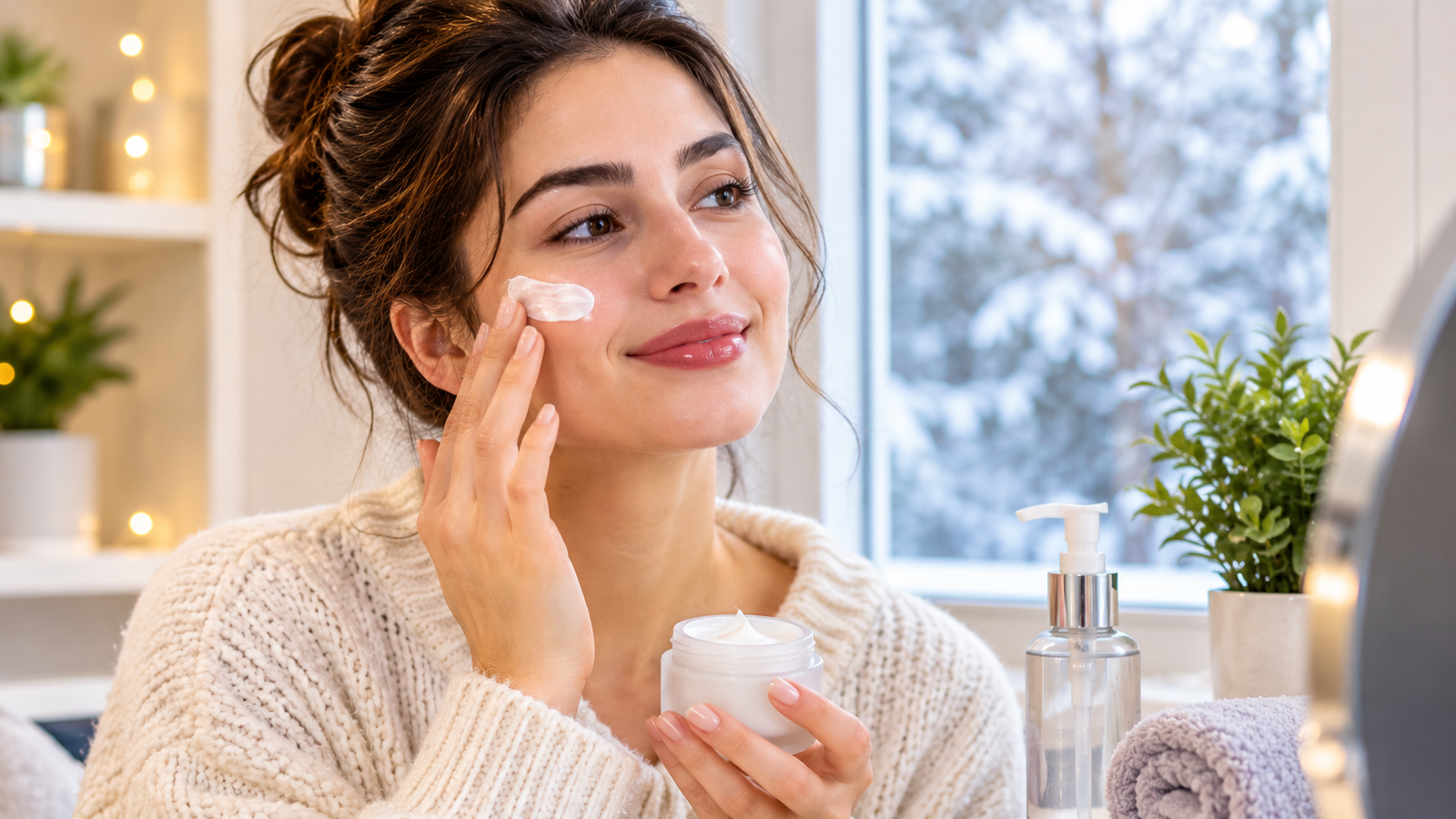
Cold weather can leave your skin feeling tight, rough, flaky, and uncomfortable. You might notice that your usual moisturizer no longer seems to work, makeup settles into dry patches, or products that normally feel gentle suddenly cause stinging.
A good winter skin care routine can help you manage these seasonal changes without adding unnecessary products. The key is to use a gentle cleanser, apply moisturizer while your skin is still damp, protect your skin from the sun, and avoid overdoing exfoliating treatments.
Whether you have dry, oily, combination, sensitive, or acne-prone skin, the right winter routine should focus on keeping your skin comfortable and supporting its natural moisture barrier.
Quick Answer: What Is the Best Winter Skin Care Routine?
The best winter skin care routine is a simple combination of gentle cleansing, hydration, moisturizing, and daily sun protection.
Morning routine:
- Cleanse gently or rinse with lukewarm water.
- Apply a hydrating serum to slightly damp skin if needed.
- Use a moisturizer suited to your skin type.
- Finish with broad-spectrum SPF 30 or higher.
Night routine:
- Remove makeup and sunscreen with a gentle cleanser.
- Use treatment products only if your skin tolerates them.
- Apply moisturizer while your skin is slightly damp.
- Add a thin layer of an ointment or balm to especially dry areas if needed.
You do not need a completely new collection of skincare products for winter. Small adjustments to your existing routine may be enough.
Why Does Skin Become So Dry in Winter?
Winter weather can make it harder for your skin to retain moisture. Cold outdoor air often contains less moisture, while indoor heating can make the air dry as well.
Your skin has a natural protective barrier that helps retain water and protect against external irritants. This barrier contains skin cells and lipids, including ceramides, cholesterol, and fatty acids.
When the skin becomes excessively dry or irritated, this protective barrier may not function as effectively. You may notice:
- Tightness after washing your face
- Flaky or rough patches
- Redness or itching
- Stinging when applying skincare products
- Makeup clinging to dry areas
- Cracked skin around the nose, lips, or hands
Several everyday habits can make winter dryness worse:
Cold and dry air: Low humidity can contribute to moisture loss from the skin.
Indoor heating: Heaters and fireplaces can reduce indoor humidity, leaving your skin feeling drier.
Hot showers: Very hot water and long showers can worsen dryness.
Harsh cleansers: Strong soaps and cleansers may remove too much of the skin’s natural oils.
Over-exfoliation: Using exfoliating acids or scrubs too frequently can irritate already dry skin.
Winter dryness does not automatically mean you have a damaged skin barrier or a medical skin condition. However, persistent irritation is a reason to simplify your routine and seek professional advice when necessary.
The Best Winter Skin Care Routine: Step by Step
You can support your skin during colder months with a straightforward morning and evening routine.
Morning Winter Skin Care Routine
1. Cleanse Gently or Rinse With Water
Start your morning without stripping your skin.
If your face feels very dry, rinsing with lukewarm water may be enough. If you prefer using a cleanser, choose a gentle, fragrance-free formula that does not leave your skin feeling tight.
Avoid washing your face with very hot water or using harsh soaps. Your skin should feel comfortable after cleansing, not squeaky or uncomfortable.
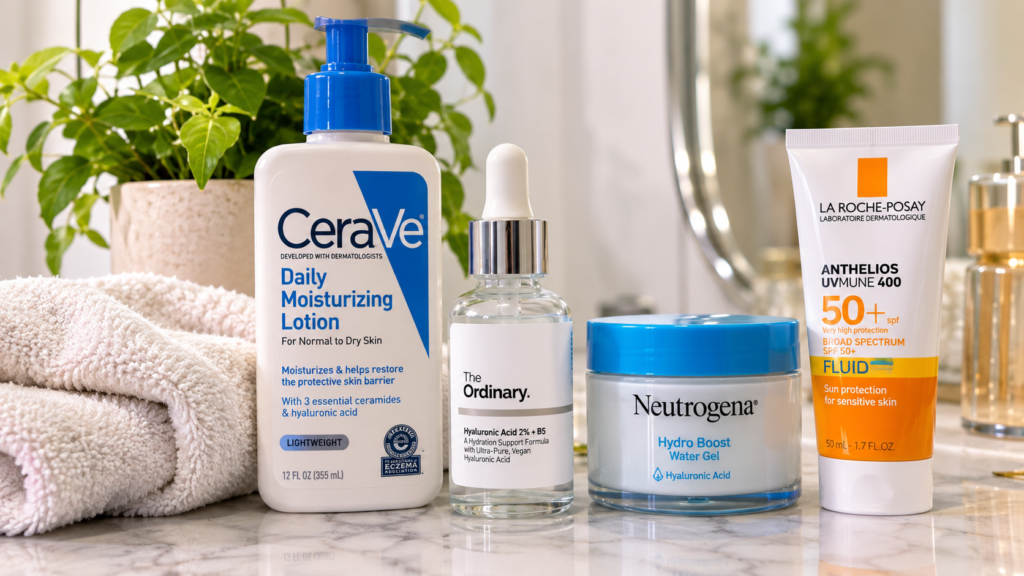
2. Apply a Hydrating Serum
A hydrating serum can be helpful when your skin feels tight or dehydrated.
Look for ingredients such as:
- Glycerin: Helps attract and retain water in the skin.
- Hyaluronic acid: Helps hydrate the skin by attracting water.
- Panthenol: Helps condition the skin and support moisture.
Apply your serum to slightly damp skin, following the product instructions. You do not need multiple hydrating serums. One suitable product is enough.
If you already use a hyaluronic acid serum, you may not need to replace it for winter.
3. Use a Moisturizer That Matches Your Skin Type
Moisturizer is one of the most important steps in a winter routine.
If your lightweight summer lotion no longer feels sufficient, consider switching to a richer cream. Creams and ointments generally provide more moisture protection than lightweight lotions.
Look for ingredients such as:
- Ceramides
- Glycerin
- Petrolatum
- Squalane
- Shea butter
- Hyaluronic acid
Ceramides are especially useful ingredients to look for because they are naturally present in the skin barrier.
Choose a moisturizer that feels comfortable and does not cause irritation. If you have oily or acne-prone skin, look for a lightweight, non-comedogenic formula rather than automatically choosing the thickest cream available.
4. Finish With Sunscreen
Do not skip sunscreen just because the weather is cold or cloudy.
UV exposure occurs throughout the year, so use a broad-spectrum sunscreen with SPF 30 or higher on exposed skin.
Apply it as the final step of your morning skincare routine, following the product’s instructions. If you spend extended time outdoors, reapply as directed on the label.
A moisturizing sunscreen can also help reduce the number of separate products you need.
Night Winter Skin Care Routine
Your nighttime routine should remove the day’s sunscreen, makeup, and buildup without leaving your skin feeling stripped.
1. Remove Makeup and Sunscreen
Use a gentle cleanser to remove sunscreen, makeup, and everyday impurities.
If you wear heavy or water-resistant makeup, you may prefer an oil-based first cleanser followed by a gentle second cleanser.
Avoid aggressive scrubbing. Pat your face dry with a clean, soft towel instead of rubbing it.
2. Be Careful With Active Ingredients
You do not necessarily need to stop using retinoids, vitamin C, or exfoliating acids during winter.
However, dry weather can make already-irritated skin feel worse. Pay attention to how your skin responds.
If a product causes persistent stinging, redness, peeling, or discomfort, consider reducing its frequency or pausing nonessential irritating products until your skin feels comfortable again.
If you use a prescription retinoid or another prescribed treatment, speak with your healthcare professional before changing the treatment schedule.
Avoid combining several strong exfoliating products in one routine, especially when your skin is already dry or irritated.
3. Apply a Moisturizer
After cleansing, apply your moisturizer while your skin is still slightly damp.
For dry skin, a richer cream may feel more comfortable than a lightweight lotion. For oily skin, a lighter moisturizer may be more suitable.
You can apply moisturizer to your face and neck, following the product instructions.
4. Protect Extra-Dry Areas
Some areas of the face may become drier than others, especially around the nose, cheeks, and lips.
If needed, apply a small amount of a simple ointment or balm over particularly dry areas after moisturizing.
Petrolatum-based products can help reduce moisture loss. You do not need to cover your entire face with a heavy ointment if your regular moisturizer is already working well.
Winter Skin Care Routine for Every Skin Type
Not everyone’s skin responds to winter weather in the same way. Adjust your routine according to your skin type and how your skin feels.
Winter Routine for Dry Skin
Dry skin may become rough, flaky, or tight during colder months.
Try:
- A gentle, fragrance-free cleanser
- A hydrating serum with glycerin or hyaluronic acid
- A richer moisturizer containing ceramides
- An ointment for especially dry patches
- Daily sunscreen
Apply moisturizer whenever your skin feels dry, particularly after washing.
Winter Routine for Oily Skin
Oily skin can still become dehydrated or irritated in winter.
Try:
- A gentle cleanser
- A lightweight hydrating serum if needed
- A gel-cream or lightweight moisturizer
- Non-comedogenic sunscreen
Avoid using harsh cleansers to remove every trace of oil. Over-cleansing can leave your skin irritated and uncomfortable.
Winter Routine for Combination Skin
Combination skin may feel oily around the forehead, nose, and chin while the cheeks become dry.
Try:
- A gentle cleanser
- A lightweight moisturizer on oilier areas
- A richer cream on dry areas
- Sunscreen suitable for your skin type
You can use different amounts or textures of moisturizer on different parts of your face. Your whole face does not have to receive exactly the same treatment.
Winter Routine for Sensitive Skin
Sensitive skin may react more easily to fragrance, harsh cleansers, and strong active ingredients.
Try:
- Fragrance-free cleanser
- A simple moisturizer with ingredients your skin already tolerates
- Broad-spectrum sunscreen
- Fewer new products
Introduce new products one at a time and patch test according to the product instructions.
Winter Routine for Acne-Prone Skin
Acne-prone skin still needs moisture during winter.
Try:
- A gentle cleanser
- A non-comedogenic moisturizer
- Sunscreen suitable for acne-prone skin
- Your usual acne treatment, if tolerated and used as directed
If acne treatments cause excessive dryness or irritation, ask a dermatologist how to adjust your routine. Avoid adding several exfoliating products in an attempt to remove winter flakes.
Best Ingredients to Look for in Winter Skincare Products
You do not need to buy a product simply because it is advertised as a winter skincare essential. Understanding a few common ingredients can help you choose products that suit your needs.
Ceramides
Ceramides are lipids naturally found in the skin barrier. They help support the barrier’s structure and reduce moisture loss.
You can find them in many facial moisturizers and body creams.
Glycerin
Glycerin is a humectant, which means it attracts water. It is commonly used in moisturizers and hydrating products.
Hyaluronic Acid
Hyaluronic acid helps attract water and is frequently included in hydrating serums and moisturizers.
For more information, read our guide to What Is Hyaluronic Acid? Benefits & Uses.
Petrolatum
Petrolatum is an occlusive ingredient that helps reduce water loss from the skin. It is commonly found in ointments and protective balms.
Squalane
Squalane is an emollient that helps soften the skin and improve the feel of dry areas.
Shea Butter
Shea butter is used in creams and body moisturizers to soften and condition dry skin.
Niacinamide
Niacinamide is a form of vitamin B3 used in skincare products. It can support the skin barrier and may help improve the appearance of uneven skin tone.
Choose a formula that your skin tolerates rather than assuming a higher concentration is always better.
Winter Skincare Habits That Can Make a Difference
Your skincare products are only one part of managing seasonal dryness. Everyday habits can also affect how your skin feels.
1. Keep showers short and warm.
Very hot water can worsen dryness. Aim for short showers of around five to ten minutes using warm rather than hot water.
2. Moisturize after washing.
Apply your moisturizer while your skin is still damp. This helps trap existing moisture.
3. Consider using a humidifier.
If indoor heating makes your home air very dry, a clean humidifier may help add moisture to the air. Follow the manufacturer’s cleaning instructions.
4. Protect your hands.
Wear gloves when going outside in cold weather or when doing household tasks that involve frequent water exposure. Apply hand cream after washing.
5. Look after your lips.
Use a simple lip balm or petroleum jelly when your lips feel dry. Avoid products that cause burning or stinging.
6. Avoid unnecessary exfoliation.
Do not scrub away flakes when your skin is already irritated. Focus on moisturizing and allowing your skin to settle.
7. Choose gentle fabrics.
If your skin is very dry or sensitive, soft fabrics such as cotton may feel more comfortable than rough materials.
Common Winter Skin Care Mistakes to Avoid
A few common habits can make seasonal dryness more difficult to manage.
Using very hot water: Hot showers may feel relaxing, but they can worsen dry skin.
Applying too many active ingredients: Combining several strong treatments can increase irritation.
Skipping moisturizer: Even oily skin may need a suitable moisturizer during colder months.
Exfoliating flaky skin aggressively: Scrubs and frequent exfoliating acids can make irritation worse.
Changing every skincare product at once: If your skin reacts, it becomes difficult to identify which product caused the problem.
Ignoring sunscreen: UV protection remains important throughout the year.
The goal is not to use the most products. It is to build a routine your skin can tolerate consistently.
What About Winter Body Skin Care?
Your face is not the only area that can become dry in winter. Your hands, legs, arms, and feet may also feel rough or uncomfortable.
A simple body skincare routine can help:
- Take short, warm showers instead of long, hot ones.
- Use a gentle body cleanser.
- Pat your skin dry rather than rubbing it.
- Apply a fragrance-free body cream while your skin is still damp.
- Use hand cream after washing your hands.
- Apply a protective balm to very dry areas if needed.
If your hands become especially dry from frequent washing or cold weather, keep a moisturizer nearby so you can reapply it throughout the day.
When Should You See a Dermatologist?
Mild seasonal dryness may improve with gentle skincare and regular moisturizing. However, not every winter skin problem is ordinary dryness.
Consider seeing a dermatologist if you experience:
- Skin that is cracked, bleeding, or painful
- Severe or persistent itching
- Redness or swelling that is spreading
- A rash that does not improve with gentle skincare
- Burning or stinging from products you previously tolerated
- Repeated eczema flare-ups or unexplained skin changes
Conditions such as eczema and psoriasis can cause symptoms that look similar to ordinary dry skin. A dermatologist can help identify the cause and recommend appropriate treatment.
Do not keep adding stronger products if your skin is getting worse.
Frequently Asked Questions About Winter Skin Care
What is the best winter skin care routine for dry skin?
A simple routine includes a gentle cleanser, a hydrating product if needed, a rich moisturizer, and daily sunscreen. At night, you can use an ointment on especially dry areas if your skin needs extra protection.
Should I change my moisturizer in winter?
Not necessarily. If your current moisturizer keeps your skin comfortable, you can continue using it. If your skin becomes tight or flaky, consider switching to a richer cream or ointment.
Is hyaluronic acid good for winter skin?
Hyaluronic acid can help attract water to the skin. It is commonly used in hydrating serums and moisturizers. Apply it according to the product instructions and follow with a moisturizer.
Should I stop using retinol during winter?
Not automatically. Some people can continue using retinol comfortably throughout the year. If you develop irritation, peeling, or persistent dryness, ask your dermatologist or prescribing healthcare professional about adjusting your routine.
Is sunscreen necessary during winter?
Yes. Broad-spectrum SPF 30 or higher remains an important part of daily skincare because UV exposure occurs throughout the year.
How often should I exfoliate in winter?
There is no single schedule that works for everyone. If your skin is comfortable and tolerates exfoliation, you may be able to continue using a gentle product occasionally. Avoid exfoliating when your skin is red, stinging, peeling, or irritated.
Can oily skin become dry in winter?
Yes. Oily skin can still experience dryness and irritation, particularly when exposed to cold weather, indoor heating, or harsh cleansers. Choose a lightweight moisturizer that suits your skin.
How can I protect my skin barrier during winter?
Use gentle cleansers, moisturize regularly, avoid excessive exfoliation, and choose products that your skin tolerates. If irritation persists, seek advice from a dermatologist.
Final Thoughts
Winter skincare does not have to be complicated. A consistent winter skin care routine built around gentle cleansing, suitable moisturizers, hydration, and sunscreen can help keep your skin comfortable during colder months.
Pay attention to how your skin responds instead of following a long list of seasonal skincare rules. You may only need to adjust your moisturizer, reduce irritating products, and protect dry areas more carefully.
The best routine is one that suits your skin type, feels comfortable, and is easy to maintain throughout the season.
Disclaimer: This article is for general skincare information and is not a substitute for medical advice, diagnosis, or treatment. Skin needs vary, and products can affect people differently. Consult a qualified dermatologist about persistent, severe, or worsening symptoms.
References
- American Academy of Dermatology. Dermatologists’ Top Tips for Relieving Dry Skin.
- American Academy of Dermatology. How to Pick the Right Moisturizer for Your Skin.
- American Academy of Dermatology. Your Winter Skin Survival Kit.
- Columbia University Irving Medical Center. A Dermatologist’s Guide to Healthy Winter Skin.