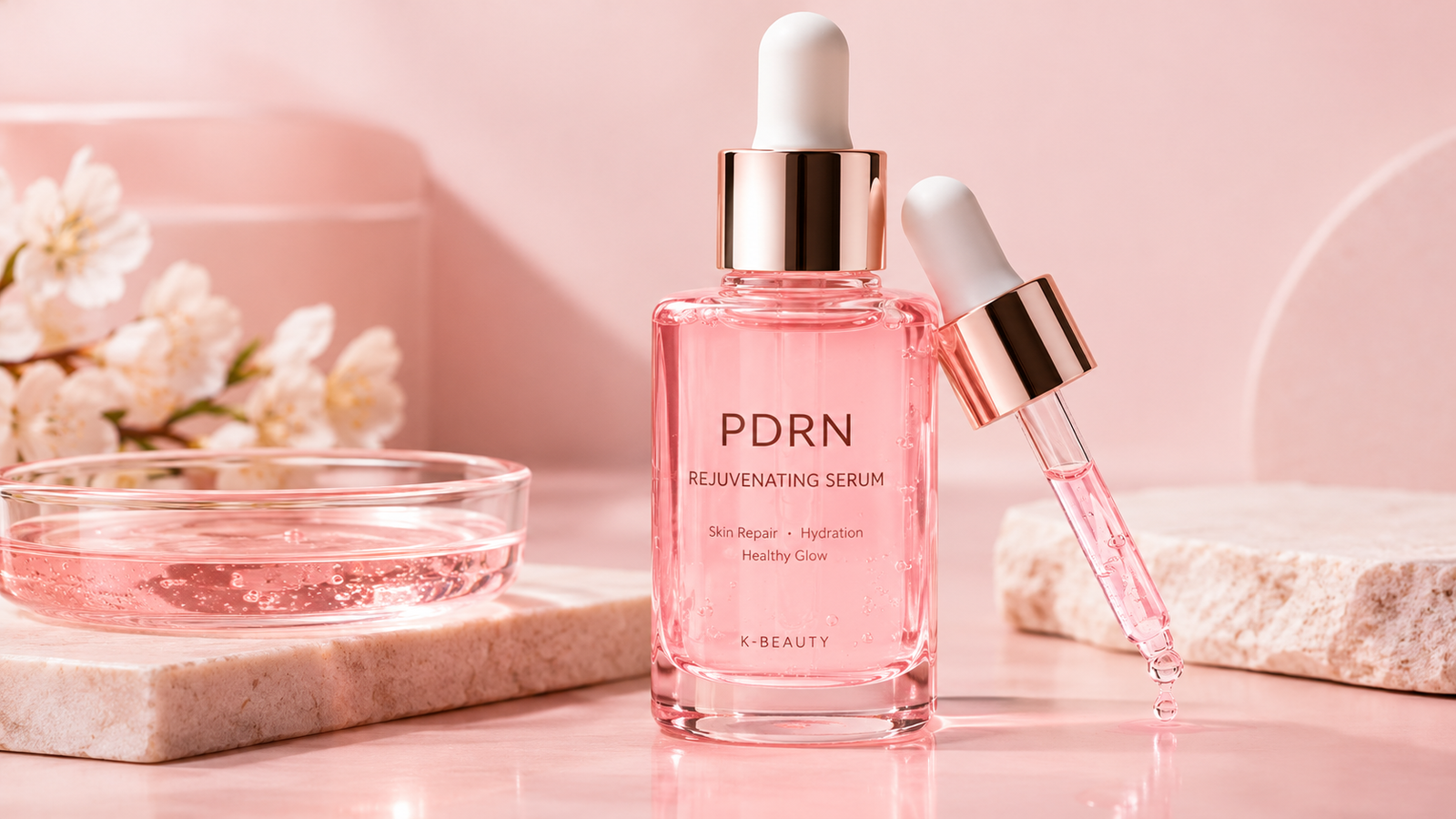
PDRN serum is becoming one of the most talked-about ingredients in Korean skincare. Often called salmon DNA skincare, PDRN has attracted attention for its connection to skin repair, hydration, and the growing interest in regenerative beauty products.
You may have seen it in Korean serums, ampoules, creams, and other skincare products. Brands often describe PDRN as an ingredient that helps improve skin texture, supports skin recovery, and gives the complexion a healthier appearance.
But what exactly is PDRN, and does applying it to your face really deliver the benefits people talk about?
The answer is more complicated than social media suggests. Research on injectable PDRN is promising in certain medical and dermatological applications, but there is still limited evidence that ordinary topical PDRN serums produce the same results.
In this guide, we’ll explain what PDRN is, its potential skincare benefits, how to use PDRN serum, and what to consider before adding it to your routine.
What Is PDRN in Skincare?
PDRN stands for polydeoxyribonucleotide. It is a substance made from DNA fragments, commonly derived from salmon or trout sources.
In dermatology research, PDRN has been studied for its potential role in tissue repair, inflammation-related processes, and wound healing. It has also attracted attention in aesthetic medicine, particularly in South Korea.
Today, PDRN is appearing in several topical skincare products, including:
- PDRN serums
- Hydrating ampoules
- Facial creams
- Skin-repair moisturizers
- Eye creams and skincare masks
Some products use the phrase “salmon DNA” in their marketing, while others list DNA-related ingredients on their ingredient labels.
However, it is important to understand that PDRN injections and PDRN skincare products are not the same thing. Evidence from an injectable treatment cannot automatically prove that a serum applied to the surface of the skin will produce identical results.
What Are the Potential Benefits of PDRN Serum?
PDRN is attracting interest because of research into its biological activity. However, the benefits of topical PDRN products have not been established as strongly as marketing claims sometimes suggest.
Here are the potential benefits commonly associated with this ingredient.
1. Supports the Skin’s Recovery Process
PDRN has been studied for its involvement in biological processes associated with tissue repair.
Some clinical research on injectable PDRN has reported improvements in wound-healing outcomes. This is one reason the ingredient has attracted attention in dermatology and aesthetic medicine.
However, these findings should not be interpreted as proof that a regular PDRN serum can heal damaged skin or replace medical wound care.
2. May Help Improve the Appearance of Skin Texture
Many PDRN skincare products are marketed toward people concerned about uneven texture and dull-looking skin.
Some formulas also contain ingredients such as hyaluronic acid, niacinamide, and peptides.
These additional ingredients may help improve hydration and the appearance of skin texture. However, there is not yet enough high-quality clinical evidence to establish that topical PDRN itself produces significant texture improvements.
3. May Support a More Hydrated Appearance
Some PDRN serums are formulated with moisturizing ingredients that help attract and retain water in the skin.
For example, hyaluronic acid and glycerin are commonly used in hydrating skincare products.
If a PDRN serum contains these ingredients, it may help skin look softer, smoother, and more hydrated.
Remember that these effects may come from the overall formula rather than PDRN alone.
4. Is Being Studied for Skin-Aging Applications
PDRN has attracted research interest because of its proposed involvement in cellular repair pathways.
Some clinical studies involving injectable polynucleotide and PDRN treatments have investigated outcomes related to wrinkles, skin quality, and tissue repair.
However, the research is still developing, and findings from injections cannot be used as proof that topical serums reverse wrinkles or stimulate collagen production in the same way.
For everyday anti-aging skincare, ingredients such as retinoids and broad-spectrum sunscreen have a more established evidence base.
Does PDRN Serum Really Work?
This is probably the most important question to ask before purchasing a PDRN product.
The honest answer is that we do not yet have enough strong clinical evidence to confirm that topical PDRN serums deliver all the skin-rejuvenating benefits often advertised.
Research on injectable PDRN has shown promising results in certain clinical applications. A 2026 systematic review of randomized clinical trials examined seven studies involving 183 participants and reported potential benefits in skin rejuvenation, wound healing, and scar-related outcomes.
However, the researchers also highlighted limitations, including small study populations and differences between treatment protocols.
Topical products present another challenge.
The outermost layer of the skin acts as a protective barrier. Larger molecules can have difficulty passing through this layer and reaching deeper skin structures.
This raises questions about how much PDRN in a regular serum can actually penetrate the skin and whether it produces the same biological effects observed in injectable treatments.
Some topical formulas may still offer useful hydration and cosmetic benefits, particularly when combined with established moisturizing ingredients.
The bottom line: PDRN serum may be an interesting addition to a skincare routine, but it should be viewed as an emerging cosmetic ingredient rather than a proven skin-rejuvenation treatment.
PDRN Serum vs. PDRN Injections: What’s the Difference?
Although both treatments use the same ingredient family, their application methods and available evidence are different.
| Feature | PDRN Serum | PDRN Injections |
|---|---|---|
| Application | Applied to the skin | Administered by injection |
| Main purpose | Cosmetic skincare | Medical or aesthetic treatment, depending on product and jurisdiction |
| Evidence | Limited topical clinical evidence | More clinical research in selected applications |
| Skin penetration | Depends on formulation and delivery | Bypasses the outer skin barrier |
| Professional supervision | Follow product instructions | Requires qualified medical supervision |
PDRN injections are not FDA-approved for cosmetic skin rejuvenation in the United States.
Anyone considering an injectable treatment should discuss its regulatory status, potential risks, and available evidence with a qualified medical professional.
A serum should never be considered a replacement for an injectable treatment, medical procedure, or professional skin assessment.
How to Use PDRN Serum in Your Skincare Routine
If you decide to try a topical PDRN serum, you can generally incorporate it into a basic skincare routine by following the product’s instructions.
Here is a simple approach.
Morning Routine
Step 1: Cleanse your face
Use a gentle cleanser to remove excess oil, sweat, and overnight skincare residue.
Step 2: Apply PDRN serum
Apply the amount recommended on the product packaging to clean skin. Avoid the eyes unless the product is specifically designed for that area.
Step 3: Apply moisturizer
Follow with a moisturizer to help maintain skin hydration and support the skin barrier.
Step 4: Finish with sunscreen
Apply a broad-spectrum SPF 30 or higher sunscreen. Sun protection remains an essential part of a daily skincare routine.
Evening Routine
Step 1: Cleanse your skin
Remove makeup, sunscreen, and daily impurities.
Step 2: Apply PDRN serum
Follow the manufacturer’s directions. Start with the recommended frequency rather than applying more product than necessary.
Step 3: Apply moisturizer
Use a moisturizer suitable for your skin type to help keep your skin comfortable and hydrated.
You do not need a complicated routine to try a new skincare ingredient. Keeping the rest of your routine simple can also make it easier to identify whether a product agrees with your skin.
Can You Use PDRN Serum With Other Skincare Ingredients?
Many PDRN products contain additional ingredients, so compatibility depends on the complete formula.
Here are a few common combinations.
PDRN and Hyaluronic Acid
Hyaluronic acid is a popular moisturizing ingredient that helps attract water to the skin.
A serum containing both ingredients may be a convenient option for people looking for a hydrating skincare product.
PDRN and Niacinamide
Niacinamide is a well-studied skincare ingredient associated with improvements in the appearance of uneven skin tone and support for the skin barrier.
Some PDRN products already include niacinamide in their formulas.
PDRN and Retinol
Retinol is a vitamin A derivative commonly used in anti-aging skincare routines.
If you already use retinol, introduce any new product gradually. Follow the instructions for both products and avoid adding multiple new active ingredients at once.
If irritation develops, simplify your routine and consider seeking advice from a dermatologist.
PDRN and Vitamin C
Vitamin C is commonly used in morning skincare routines to help improve the appearance of uneven skin tone and provide antioxidant benefits.
There is no universal requirement to avoid combining vitamin C and PDRN, but the complete formulas and your skin’s tolerance matter.
Who Should Consider Using PDRN Serum?
A topical PDRN product may interest people who:
- Enjoy exploring Korean skincare ingredients.
- Want to try a serum containing newer cosmetic ingredients.
- Prefer formulas that also include moisturizing ingredients.
- Want to add another hydrating product to their skincare routine.
However, PDRN serum is not essential for healthy skin.
If your current routine already meets your skincare needs, there is no reason to replace products that work well simply because a new ingredient is trending.
People with sensitive skin should review the full ingredient list and consider testing the product on a small area first.
If you have a known allergy to fish or other relevant ingredients, check the product’s source and consult a healthcare professional before using it.
Do not apply cosmetic serums to open wounds or freshly treated skin unless your healthcare professional specifically recommends the product.
How to Choose a Good PDRN Serum
Not every product marketed as PDRN skincare will have the same formula or quality.
Before purchasing, consider the following points.
1. Check the Full Ingredient List
Do not choose a serum based only on the words PDRN or salmon DNA on the packaging.
Look at the complete ingredient list and check whether the formula contains useful supporting ingredients such as glycerin, hyaluronic acid, niacinamide, or ceramides.
2. Look for Clear Ingredient Information
Check how the brand describes its PDRN source and formulation.
Some products may use fish-derived ingredients, while others advertise alternative sources. Ingredient names and sources can vary.
3. Avoid Unrealistic Claims
Be cautious of products promising instant collagen production, dramatic wrinkle removal, or injectable-like results from a topical serum.
A cosmetic product should not be expected to deliver the same results as a medical procedure.
4. Consider Your Skin Type
Choose a formula that fits your skin’s needs.
For example:
- Dry skin: Look for moisturizing ingredients such as glycerin and hyaluronic acid.
- Oily skin: Consider a lightweight serum that does not feel excessively heavy.
- Sensitive skin: Choose a simpler formula without ingredients that you already know irritate your skin.
- Combination skin: Look for a balanced formula that feels comfortable across different areas of your face.
5. Consider the Price
An expensive PDRN serum is not automatically more effective than a less expensive one.
Compare the complete formula, packaging, brand transparency, and available product-specific evidence before spending more.
Are There Any Side Effects of PDRN Serum?
Topical PDRN products may be tolerated by some people, but individual reactions depend on the complete formula.
Possible reactions to a skincare product include:
- Redness
- Itching
- Irritation
- Burning sensations
- Breakouts or sensitivity to other ingredients
Always follow the product’s directions and discontinue use if you experience a reaction.
If irritation is severe or persistent, consult a healthcare professional.
It is also important to distinguish topical serums from injectable treatments. Injectable procedures have different risks and should only be discussed with appropriately qualified medical professionals.
Is PDRN Serum Worth Trying?
PDRN is an interesting ingredient in the growing Korean skincare market, and its research background makes it worth understanding.
However, the excitement surrounding PDRN has moved faster than the evidence for many topical products.
If you enjoy trying new skincare formulas, a PDRN serum may be worth exploring, especially if it contains other useful moisturizing ingredients.
But you should not purchase one expecting guaranteed wrinkle reduction, deep skin regeneration, or results equivalent to an injectable procedure.
For a reliable everyday routine, prioritize gentle cleansing, moisturizer, and sunscreen. Consider better-established ingredients such as retinoids, niacinamide, and hyaluronic acid according to your skin’s needs.
Ultimately, the best skincare product is one that suits your skin, has a sensible formula, and makes realistic claims.
Frequently Asked Questions About PDRN Serum
What does PDRN stand for?
PDRN stands for polydeoxyribonucleotide. It refers to DNA fragments studied for their potential biological roles in tissue repair and other processes.
Is PDRN serum made from salmon sperm?
Some PDRN ingredients are derived from salmon or trout reproductive material. However, not every product uses the same source, so check the manufacturer’s ingredient and sourcing information.
Can PDRN serum help with wrinkles?
There is promising research involving injectable PDRN and polynucleotide treatments, but there is not enough strong evidence to confirm that ordinary topical PDRN serums significantly reduce wrinkles.
Can I use PDRN serum every day?
Some topical products are designed for daily use, but the correct frequency depends on the individual formula. Always follow the product’s instructions.
Is PDRN better than hyaluronic acid?
They are different ingredients with different research backgrounds. Hyaluronic acid has an established role as a moisturizing ingredient, while the benefits of topical PDRN are still being investigated. Neither is automatically better for everyone.
Is PDRN serum suitable for sensitive skin?
It depends on the complete formula and individual skin sensitivities. Review the ingredient list and patch-test before regular use. Stop using the product if irritation occurs.
Is PDRN serum FDA-approved?
Cosmetic skincare products are regulated differently from drugs and medical treatments in the United States. PDRN injections are not FDA-approved for cosmetic skin rejuvenation. Do not assume that a topical product or injectable treatment has FDA approval simply because it contains PDRN.
Final Thoughts
PDRN serum is an exciting example of how ingredients associated with Korean aesthetic medicine are influencing everyday skincare.
Its research background is interesting, but there is an important difference between clinical evidence for injectable treatments and evidence for products applied to the surface of the skin.
If you decide to try PDRN skincare, look beyond the marketing, review the full formula, and keep your expectations realistic.
Healthy skin does not require every trending ingredient. A consistent routine built around cleansing, moisturizing, and sun protection remains a much stronger foundation.
Glowings Routine tip: Explore new skincare ingredients with curiosity, but always let reliable evidence and your skin’s actual needs guide your choices.