Cold weather can make your usual hair routine feel less effective. Your scalp may feel tight or itchy, your hair may become harder to manage, and static or frizz can appear even when you have not changed your products.
Winter conditions can contribute to these problems. Cold outdoor air, low humidity, indoor heating, hot showers, and frequent heat styling can all affect how your hair and scalp feel.
The solution is not necessarily to buy an entirely new collection of products. A better approach is to make a few practical changes to your winter hair care routine: cleanse your scalp appropriately, condition your hair consistently, reduce unnecessary heat, and handle wet strands gently.
This guide explains how to manage common winter hair concerns, how to tell dry scalp from possible dandruff, and how to build a routine that works with your hair type.
Quick Answer: What Should Your Winter Hair Care Routine Include?
A practical winter hair care routine should focus on keeping your scalp comfortable and reducing avoidable damage to your hair.
- Use a gentle shampoo that suits your scalp and hair type.
- Wash according to how quickly your scalp becomes oily or dirty, rather than following a fixed weekly schedule.
- Apply conditioner after shampooing, concentrating on the lengths and ends when appropriate.
- Use a leave-in conditioner or suitable hair serum if your hair becomes dry, frizzy, or static-prone.
- Reduce frequent high-heat styling and use a heat protectant when styling.
- Detangle carefully, especially when your hair is wet.
- Treat dandruff with an appropriate dandruff shampoo rather than assuming every flake means dry scalp.
The best routine depends on your hair texture, scalp condition, and styling habits. You do not need every product mentioned in this guide.
Why Does Hair Feel Different During Winter?
Winter can change the environment around your hair and scalp. Outdoor temperatures drop, humidity may be lower, and indoor heating can make the air feel even drier.
These conditions may contribute to dryness and make some hair types more difficult to manage.
Here are a few common reasons your hair routine may need adjusting.
1. Cold and Dry Air
Cold weather and low humidity can leave hair feeling rougher and less manageable. Some people notice more frizz, tangling, or static during colder months.
Hair that is already dry, chemically treated, bleached, or frequently heat-styled may be especially prone to breakage.
2. Indoor Heating
Heating systems make indoor spaces more comfortable, but they can also reduce indoor humidity.
When your hair is already prone to dryness, spending long periods in heated rooms may make it feel less soft or flexible.
3. Hot Showers
A very hot shower may feel relaxing in winter, but hot water and harsh cleansing products can leave some scalps feeling dry or irritated.
Try comfortably lukewarm water instead. You do not need to use cold water to wash your hair.
4. Frequent Heat Styling
Blow-dryers, straighteners, and curling irons can contribute to hair damage when used too frequently or at high temperatures.
Winter styling habits may also change because people want their hair dry before going outside. Try to avoid unnecessary heat and use a lower setting when possible.
Dry Scalp vs. Dandruff: How Can You Tell the Difference?
A flaky scalp does not always mean you have dandruff.
Dry scalp and dandruff can look similar, and both may involve itching and visible flakes. It is not always possible to identify the cause by looking at the size or color of the flakes.
The American Academy of Dermatology explains that dry scalp may occur when the skin loses too much water. Cold, low-humidity weather and irritating hair products can contribute to dryness. Dandruff, meanwhile, can have different causes and may need a different treatment approach.
Signs That May Be Consistent With Dry Scalp
You may notice:
- A tight or dry feeling on your scalp.
- Itching or discomfort.
- Visible flakes.
- Symptoms that become worse after using a drying or irritating shampoo.
A gentle, non-medicated shampoo may help when the problem is ordinary dryness.
Signs That May Be Consistent With Dandruff
Dandruff can involve:
- Recurrent scalp flaking.
- Itching.
- Dry or greasy-looking scale.
- Symptoms that do not improve after simply switching to a gentler shampoo.
Dandruff shampoos may contain active ingredients such as ketoconazole, selenium sulfide, salicylic acid, sulfur, coal tar, or zinc pyrithione, depending on the product and where it is sold.
Follow the product instructions. Some dandruff shampoos need to remain on the scalp for several minutes before rinsing.
Important: Do not diagnose a scalp condition from flake color or size alone. Dry scalp, dandruff, seborrheic dermatitis, psoriasis, eczema, and other conditions can overlap in appearance. If symptoms are severe, persistent, painful, or worsening, consult a dermatologist.
How to Build a Winter Hair Care Routine Step by Step
You do not need a complicated routine to care for your hair during winter. Start with the basics and adjust them to your scalp and hair type.
Step 1: Choose a Gentle Shampoo
Your shampoo should clean your scalp without leaving it uncomfortably dry or irritated.
Look for a product that suits your scalp and hair type. If your scalp is dry, a gentle, non-medicated shampoo may be a reasonable starting point.
If you have an oily scalp, you may need to wash more frequently. If your hair is curly, coily, thick, or naturally dry, you may prefer a different washing schedule.
There is no single shampooing frequency that works for everyone.
Helpful tip: Apply shampoo mainly to your scalp. Let the lather rinse through the lengths rather than aggressively rubbing the entire hair shaft.
Step 2: Condition After Washing
Conditioner is an important part of a winter hair care routine because it helps make hair easier to detangle and manage.
Choose a conditioner suited to your hair texture.
- Fine or straight hair: Concentrate conditioner on the mid-lengths and ends if your roots become oily easily.
- Dry or curly hair: You may benefit from applying conditioner through more of the hair length.
- Chemically treated or damaged hair: A richer conditioner may make your hair easier to manage.
Avoid applying a heavy conditioner to your scalp if it makes your roots feel greasy or causes buildup.
Step 3: Add a Leave-In Conditioner if Needed
If your hair feels dry after washing, a leave-in conditioner can help improve softness and manageability.
Apply a small amount to damp hair, focusing on the lengths and ends. Start with less product and add more only if needed.
A leave-in product may be especially useful if your hair is:
- Naturally curly or coily.
- Frequently colored or bleached.
- Prone to tangling.
- Dry or frizzy after washing.
A leave-in conditioner is optional. If your regular conditioner already works well, you may not need another product.
Step 4: Manage Static and Frizz
Static can become more noticeable in dry conditions. Hair may cling to clothing, fly away, or become difficult to style.
Try these practical adjustments:
- Use conditioner consistently.
- Apply a small amount of leave-in conditioner if your hair needs extra softness.
- Avoid excessive brushing when your hair is dry and static-prone.
- Choose a comb or brush that works well with your hair texture.
- Avoid overusing dry shampoo or styling products if they leave your hair feeling coated.
If you use a serum, apply a small amount to the lengths and ends. Too much product can make fine hair look greasy.
Step 5: Reduce Heat Styling
Frequent high-heat styling can contribute to dryness and breakage.
Try to:
- Air-dry when practical.
- Use a low or medium heat setting when blow-drying.
- Keep hot tools for occasions when you actually need them.
- Apply a heat-protectant product before using heat tools.
- Avoid repeatedly passing a straightener or curling iron over the same section.
Heat protectants can help reduce styling-related damage, but they do not make unlimited heat exposure harmless.
Step 6: Detangle Gently
Hair can be more vulnerable to damage when wet, so avoid rough brushing or pulling through knots.
For gentler detangling:
- Apply conditioner in the shower if your hair tangles easily.
- Use a wide-tooth comb or a suitable detangling tool.
- Start at the ends and work gradually upward.
- Avoid pulling hard through knots.
- Use a soft towel or T-shirt to gently absorb excess water instead of rubbing your hair vigorously.
If your hair is curly or coily, detangling while it is conditioned may be more manageable.
Step 7: Protect Your Hair From Friction
Winter clothing, scarves, hats, and rough fabrics can create friction against your hair.
If you notice tangling or breakage around your hairline or the back of your head, consider:
- Choosing softer hat linings.
- Avoiding hairstyles that pull tightly on your hair.
- Loosening scarves that repeatedly catch or rub against strands.
- Using a smooth fabric accessory when it works with your style.
These adjustments will not prevent every type of breakage, but they may reduce avoidable friction.
What Should You Do About a Dry, Itchy Scalp in Winter?
If your scalp feels dry, begin by reviewing your current hair products and washing habits.
A few changes may help:
- Switch to a gentler shampoo if your current one leaves your scalp feeling tight.
- Avoid very hot water.
- Rinse shampoo thoroughly.
- Avoid scratching your scalp with your fingernails.
- Stop using a new product if it appears to cause irritation.
- Avoid layering multiple oils, scrubs, and scalp treatments without knowing whether your scalp needs them.
If you suspect dandruff, a dandruff shampoo may be more appropriate than a regular moisturizing shampoo. Follow the label instructions and give the treatment an appropriate trial period.
If the itching or flaking continues, becomes severe, or is accompanied by redness, swelling, sores, or pain, seek medical advice.
Should You Oil Your Hair or Scalp During Winter?
Hair oils can be useful for some people, but they are not essential for everyone.
A small amount of a suitable hair oil applied to the lengths and ends may help reduce friction and improve the feel of dry hair.
However, applying oil to your scalp is not a universal solution for winter dryness. Oils do not treat every cause of itching or flaking, and they should not replace dandruff treatment when dandruff is the problem.
Consider these points before adding an oil:
- Choose a product that suits your hair and scalp.
- Start with a small amount.
- Avoid applying heavy oils if they make your scalp greasy or uncomfortable.
- Stop using the product if irritation develops.
- Do not assume scalp oiling will make hair grow faster.
If you are experiencing persistent dandruff or scalp inflammation, ask a dermatologist about suitable treatment rather than relying on oil.
How to Reduce Winter Hair Breakage
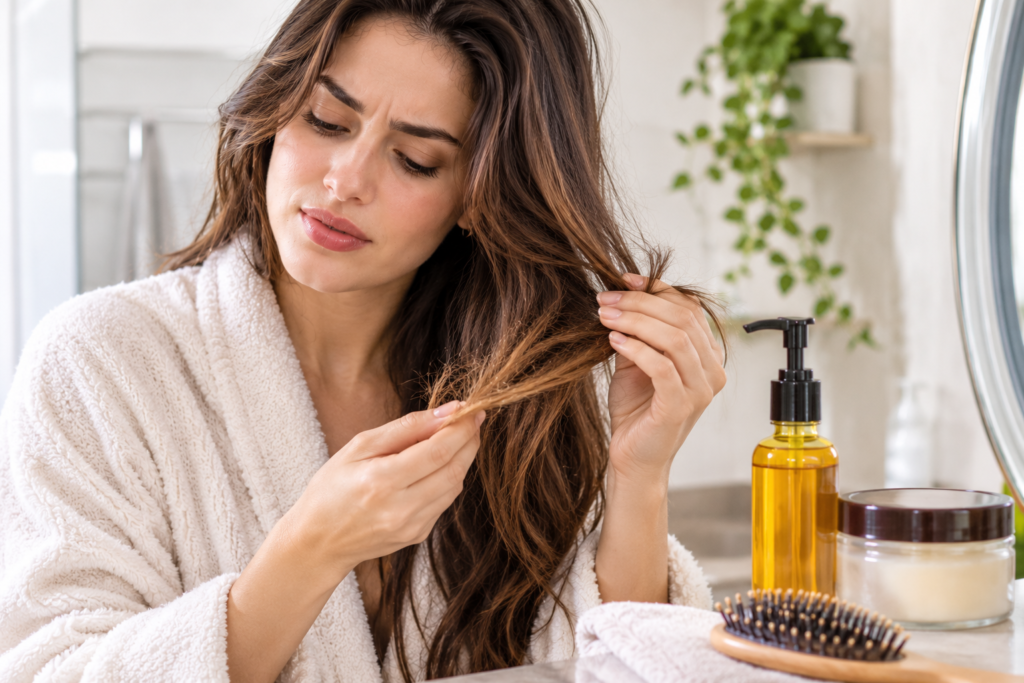
Hair breakage can happen throughout the year, but winter routines may make existing damage more noticeable.
Dryness, friction, rough detangling, chemical processing, and frequent heat styling can all contribute to fragile strands.
Try these habits:
Use Conditioner Consistently
Conditioner helps improve manageability and reduces friction when combing. Apply it after shampooing, focusing on the parts of your hair that need it most.
Avoid Tight Hairstyles
Repeated tension from tight ponytails, buns, braids, or extensions can stress the hair.
Choose looser styles when possible and avoid tying your hair so tightly that it pulls on your scalp.
Be Careful With Wet Hair
Wet hair needs gentle handling. Avoid rough towel-drying and aggressive brushing.
Use a wide-tooth comb or suitable detangling tool, and work slowly through knots.
Limit Chemical and Heat Damage
Frequent bleaching, coloring, relaxing, perming, and high-heat styling can weaken hair.
Give your hair time between intensive treatments when possible, and seek professional advice before combining chemical services.
Trim Split Ends When Needed
A haircut can remove split or damaged ends and improve the appearance of your hair.
However, no conditioner, mask, or oil can permanently repair a split hair strand. How often you need a trim depends on your hair condition, length goals, and styling habits.
A Simple Winter Hair Care Routine by Hair Type
Your hair type should guide how often you wash, how much conditioner you use, and which styling products you choose.
For Fine or Straight Hair
- Wash according to how quickly your scalp becomes oily.
- Use a lightweight conditioner on the lengths and ends.
- Choose a lightweight leave-in product if needed.
- Avoid applying too much oil or heavy styling cream.
- Use heat tools less frequently.
For Dry or Wavy Hair
- Choose a shampoo that does not leave your hair feeling stripped.
- Condition after washing.
- Use a leave-in conditioner if your hair feels rough or tangles easily.
- Detangle gently.
- Apply a small amount of serum or oil to the ends if helpful.
For Curly or Coily Hair
- Choose a washing schedule that suits your scalp and texture.
- Use conditioner generously enough to make detangling manageable.
- Consider a leave-in conditioner if your hair needs extra moisture.
- Avoid rough towel-drying.
- Reduce unnecessary heat and tight hairstyles.
For Colored, Bleached, or Chemically Treated Hair
- Use products designed for your hair’s condition and treatment history.
- Condition consistently.
- Limit additional chemical processing when possible.
- Reduce high-heat styling.
- Detangle carefully to avoid unnecessary breakage.
These are starting points, not strict rules. Adjust your routine if a product causes buildup, irritation, or more dryness.
Common Winter Hair Care Mistakes to Avoid
Some habits can make winter hair problems harder to manage.
1. Washing on a Fixed Schedule
Washing two or three times a week is not a universal rule. Some scalps need more frequent washing, while some hair textures need less.
Choose a schedule based on oiliness, sweat, product buildup, hair texture, and scalp comfort.
2. Using Very Hot Water
Very hot water may leave some scalps feeling uncomfortable or dry. Use lukewarm water instead.
3. Skipping Conditioner
If your hair is dry or tangles easily, skipping conditioner may make it harder to manage.
4. Applying Too Much Oil
More oil does not automatically mean healthier hair. Heavy application can leave hair greasy or cause unwanted buildup.
5. Treating Every Flake With Hair Oil
Flaking can have different causes. If you have dandruff, you may need a dandruff shampoo rather than an oil treatment.
6. Using High Heat Every Day
Frequent high-heat styling can contribute to damage. Lower the temperature and reduce how often you use hot tools.
7. Ignoring Persistent Scalp Symptoms
Ongoing itching, redness, pain, severe flaking, or unusual hair loss should not be treated as ordinary winter dryness without assessment.
A Simple Weekly Winter Hair Care Plan
Use this as a flexible example, not a mandatory schedule.
| When | What to do |
|---|---|
| Wash days | Cleanse your scalp with a suitable shampoo and condition your hair |
| After washing | Use leave-in conditioner if your hair needs extra softness or manageability |
| Styling days | Use heat protection and choose lower heat settings |
| Between washes | Detangle gently and avoid unnecessary product buildup |
| When needed | Use a suitable dandruff shampoo if dandruff is the problem, following its label |
| Regularly | Check whether your routine is causing irritation, buildup, or dryness |
You may need to wash more or less frequently depending on your scalp and hair type. The goal is to find a routine that keeps your scalp comfortable and your hair manageable.
When Should You See a Dermatologist?
Not every winter hair concern needs medical treatment. However, some symptoms deserve professional attention.
Consider seeing a dermatologist if you have:
- Persistent or severe scalp itching.
- Redness, swelling, pain, sores, or crusting.
- Flaking that does not improve with appropriate care.
- Bald patches or sudden, noticeable hair loss.
- Scalp symptoms that spread to other areas of your skin.
- A reaction that develops after using a new hair product.
A dermatologist can help identify whether the problem is ordinary dryness, dandruff, seborrheic dermatitis, psoriasis, eczema, an infection, or another condition.
A seasonal hair routine can improve manageability and reduce avoidable damage, but it cannot diagnose or treat every scalp or hair-loss condition.
Frequently Asked Questions
1. How often should I wash my hair in winter?
There is no ideal washing schedule for everyone. Wash according to how oily or dirty your scalp becomes and what suits your hair texture. Fine or straight hair with an oily scalp may need more frequent washing, while some curly, coily, or dry hair types need less frequent washing.
2. Why does my hair become static in winter?
Static can become more noticeable in dry conditions. Low humidity, friction from clothing, and dry-feeling hair can contribute to flyaways. Conditioner, a suitable leave-in product, and less friction may help manage it.
3. Is dry scalp the same as dandruff?
No. They can look similar, but they may have different causes and treatments. Dry scalp may improve with a gentle, non-medicated shampoo, while dandruff may require a shampoo containing an appropriate active ingredient.
4. Should I apply oil to my scalp in winter?
Not necessarily. Some people use hair oil on their lengths and ends to improve manageability, but scalp oiling is not a universal treatment for dryness, dandruff, or hair loss. Stop using an oil if it causes irritation or discomfort.
5. Does conditioner help prevent winter hair breakage?
Conditioner improves manageability and helps reduce friction during detangling. This may help reduce avoidable breakage, especially when combined with gentle handling and reduced heat styling. It cannot repair existing split ends permanently.
6. Is it bad to use a hair dryer in winter?
Not automatically. Frequent high-heat styling can damage hair, but you can reduce risk by using a low or medium setting, keeping the dryer moving, limiting unnecessary heat, and using a heat protectant.
7. Can winter weather cause hair loss?
Winter dryness and styling habits may contribute to breakage, which can look like increased hair loss. However, true hair shedding has many possible causes. Sudden, persistent, or patchy hair loss should be assessed by a healthcare professional.
8. Can I use a hair mask every week in winter?
You can use a hair mask if it suits your hair and product instructions. It is optional, not a requirement for everyone. Choose a formula appropriate for your hair type and stop if it causes irritation or buildup.
Final Thoughts: Keep Your Winter Hair Care Routine Simple
A good winter hair care routine does not need to be complicated. Focus on the habits that make the biggest practical difference: use a suitable shampoo, condition consistently, handle wet hair gently, reduce unnecessary heat styling, and choose products that work with your hair type.
If your scalp is flaky or itchy, do not automatically assume it is dry skin. Dandruff and other scalp conditions can look similar and may need different care.
Pay attention to how your scalp and hair respond as the weather changes. A few thoughtful adjustments can help keep your hair more manageable throughout the colder months.
Related Articles on Glowings Routine
Explore these related guides for more information about hair and skin care:
Before publishing, confirm that each related article is live and that the URL is correct. Remove any link that leads to a draft, an error page, or a different article.
Medical Disclaimer
This article is for general educational purposes only and is not a substitute for professional medical advice, diagnosis, or treatment. Scalp flaking, itching, irritation, and hair loss can have different causes. Consult a qualified healthcare professional or dermatologist if symptoms are persistent, severe, painful, or worsening. Always follow the instructions provided with hair and scalp products.
Sources
- American Academy of Dermatology. Is Your Dry Scalp Something More Serious?
Explains the differences between dry scalp, dandruff, and other scalp conditions. - American Academy of Dermatology. How to Treat Dandruff
Provides dermatologist guidance on dandruff shampoos, active ingredients, and washing according to hair type. - American Academy of Dermatology. Tips for Healthy Hair
Covers shampooing, conditioning, detangling, and reducing hair damage. - American Academy of Dermatology. Hair Loss: Tips for Managing
Includes practical advice on gentle cleansing, conditioning, and reducing breakage. - American Academy of Dermatology. Everyday Scalp Care
Offers general dermatologist guidance on scalp care and common scalp conditions. - Cosmetic Executive Women and Spate. 2026 Beauty and Wellness Predictions Report
Provides broader beauty and wellness trend context, including consumer interest in scalp health and hair concerns. It is not a Google keyword-volume report.