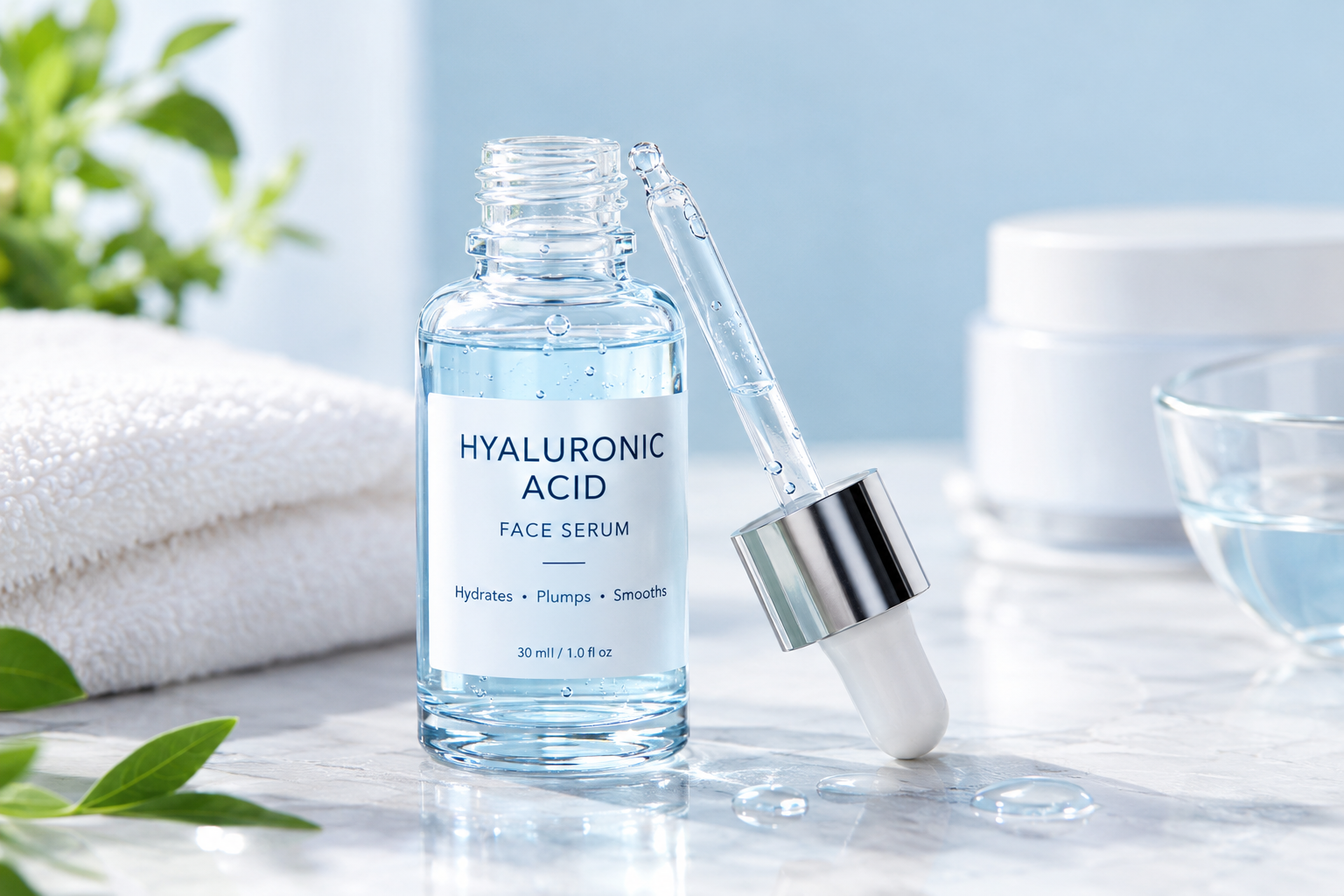
Hyaluronic acid is a popular skincare ingredient known for helping the skin retain moisture. It is found naturally in the body and is commonly added to serums, moisturizers, and other products designed to improve hydration.
If your skin feels tight, looks dull, or becomes dry after cleansing, a hydrating product may help. Understanding how this ingredient works can help you decide whether it belongs in your daily routine.
What Is Hyaluronic Acid?
Hyaluronic acid is a substance naturally present in the skin and other body tissues. One of its main functions is to attract and hold water, helping maintain moisture and keeping tissues hydrated.
In skincare, it is used as a humectant. Humectants attract water and help increase the water content of the outer layer of the skin. This can make the complexion feel softer and look smoother.
Despite its name, hyaluronic acid is not an exfoliating acid like glycolic acid or salicylic acid. It is primarily used for hydration rather than removing dead skin cells.
Benefits of Hyaluronic Acid for Skin
1. Helps maintain hydration
The ingredient attracts water, helping the skin’s surface feel more hydrated. This can be especially useful when your complexion feels dry or tight.
2. Makes skin look smoother
Well-hydrated skin often looks plumper and feels softer. Fine lines caused or emphasized by dryness may appear less noticeable when the skin has enough moisture.
3. Supports a comfortable skin barrier
The skin barrier helps limit moisture loss and protects against external irritants. A hydrating serum followed by a suitable moisturizer can help support skin comfort, although a serum alone does not repair every type of barrier damage.
4. Can suit many skin types
Lightweight hydrating formulas can work for dry, normal, combination, and oily skin. The overall formula matters, so choose a product that feels comfortable and does not irritate your skin.
5. Fits easily into a skincare routine
This ingredient can generally be used alongside many common skincare products. It does not require a complicated routine or a specific time of day.
How to Use a Hyaluronic Acid Serum
The way you apply a serum can affect how comfortable your skin feels. Follow these simple steps:
- Cleanse gently. Use a cleanser that removes dirt and excess oil without leaving your skin feeling stripped.
- Leave your skin slightly damp. After cleansing, gently pat your face with a towel rather than drying it completely.
- Apply the serum. Use the amount recommended on the product label and spread it gently over your face.
- Apply moisturizer. Follow with a moisturizer to help reduce moisture loss and keep your skin comfortable.
- Use sunscreen in the morning. Finish your daytime routine with broad-spectrum sunscreen with SPF 30 or higher.
You do not need to apply a large amount. Start with the directions on the packaging and adjust only if needed.
Should You Use It in the Morning or at Night?
Either option can work. Choose the timing that fits your routine and the instructions provided with your product.
Morning routine
- Gentle cleanser
- Hydrating serum
- Moisturizer
- Broad-spectrum sunscreen
Evening routine
- Gentle cleanser
- Hydrating serum
- Moisturizer
If you already use several active ingredients, introduce new products gradually so you can identify any irritation.
Is Hyaluronic Acid Suitable for Every Skin Type?
Dry skin: Choose a hydrating serum and follow it with a richer moisturizer if needed.
Oily skin: A lightweight, non-greasy serum may provide hydration without making your routine feel heavy.
Combination skin: Apply a balanced formula and adjust your moisturizer according to the needs of different areas of your face.
Sensitive skin: Look for a simple formula without fragrance if fragrance tends to irritate your skin. Patch-test new products before regular use.
Acne-prone skin: Hydration can be useful even when your skin produces excess oil. Look for products labelled non-comedogenic when that is appropriate for your needs.
Individual reactions vary, and no skincare ingredient is guaranteed to suit everyone.
Can You Combine It With Other Skincare Ingredients?
This hydrating ingredient is generally compatible with many common skincare products.
- Niacinamide: These ingredients can be used in the same routine. Niacinamide is often included in formulas designed to support the skin barrier and improve the appearance of uneven skin tone.
- Ceramides: Ceramides help support the skin barrier, making a moisturizer containing them a useful partner for a hydrating serum.
- Vitamin C: Many routines combine a hydrating serum with vitamin C. Follow the product directions and introduce new products gradually.
- Retinol: A moisturizer and hydrating serum may help support skin comfort when using retinol, but they do not eliminate the possibility of irritation.
- Exfoliating acids: These can be part of the same broader routine, but avoid introducing several potentially irritating products at once.
For more guidance, read our simple skincare routine guide and our guide to niacinamide in skincare.
Common Mistakes to Avoid
Applying too much serum
Using more product does not necessarily provide better results. Follow the directions and use enough to cover the intended area.
Skipping moisturizer
A serum may attract water, but it does not always provide enough moisture protection on its own. A suitable moisturizer helps reduce water loss.
Expecting it to treat every skin concern
Hydration can improve the appearance of dryness, but it will not necessarily treat acne, pigmentation, deep wrinkles, or other skin conditions.
Changing too many products at once
Introducing several new products together makes it harder to identify what is causing irritation. Add products one at a time.
Ignoring irritation
Stop using a product if it causes persistent burning, redness, itching, or swelling. Seek medical advice if symptoms are severe or do not settle.
How to Choose the Right Serum
When comparing products, look beyond the ingredient name on the front of the bottle.
- Check the full formula. Other ingredients influence how the serum feels and performs.
- Consider your skin type. Lightweight gels may feel more comfortable on oily skin, while dry skin may benefit from a richer overall routine.
- Look for suitable supporting ingredients. Glycerin and other humectants can also help attract moisture.
- Choose packaging you can use properly. Follow the storage instructions and use the product within its recommended period.
- Avoid paying only for marketing claims. A more expensive serum is not automatically more effective for your needs.
If your skin is persistently dry, you may also find our CeraVe Moisturizing Cream review helpful when comparing moisturizers.
How Long Does It Take to Notice a Difference?
Some people notice that their skin feels more comfortable or looks less dry soon after applying a hydrating product. The visible effect depends on the formula, the condition of your skin, and the rest of your routine.
Longer-term skin concerns may need a different approach. There is no single timeline that applies to everyone, and hydration products should not be expected to resolve every skin issue.
Frequently Asked Questions
What does hyaluronic acid do for your face?
It attracts and holds water, helping the skin feel hydrated and look smoother. The effect depends on the product formula and your skin’s needs.
Can I use a hydrating serum every day?
Many products are designed for daily use, but always follow the label. If irritation develops, stop using the product and reassess your routine.
Should I apply it to wet or dry skin?
Many people prefer applying it to slightly damp skin and following with moisturizer. Product instructions may differ, so check the label.
Does it help with wrinkles?
Better hydration can make some fine lines caused by dryness look less noticeable temporarily. It does not remove deep wrinkles or stop the natural ageing process.
Can oily skin use a hydrating serum?
Yes. Oily skin can still lack water. A lightweight formula may be a comfortable option, depending on the other ingredients.
Is it the same as an exfoliating acid?
No. In skincare, it is mainly used to attract moisture. Exfoliating acids such as glycolic acid and salicylic acid serve different purposes.
Final Thoughts
Hyaluronic acid can be a useful part of a simple skincare routine when your goal is to maintain hydration and improve the feel of dry or tight skin. Apply it according to the product directions, follow with a suitable moisturizer, and use sunscreen during the day.
The best routine is one that suits your skin, feels comfortable, and is easy to maintain consistently.
Skincare note: This article provides general educational information and is not a substitute for personalized medical advice. Consult a qualified healthcare professional about persistent irritation or other skin concerns.