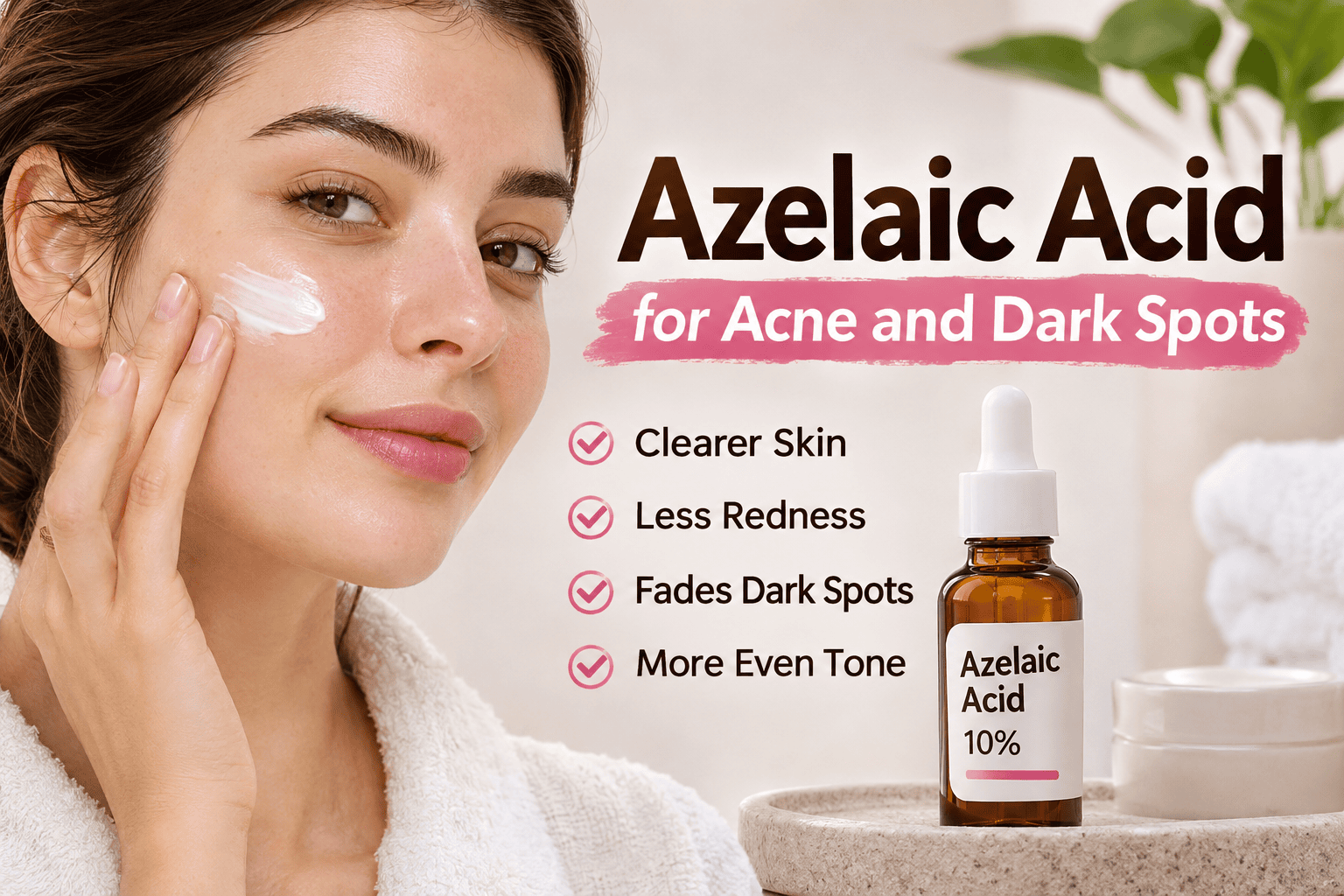
Azelaic acid for acne and dark spots is gaining attention among people who want to manage breakouts and the marks they leave behind. Unlike some skincare ingredients that focus on just one concern, azelaic acid can help address acne, inflammation, and uneven pigmentation.
However, choosing the right product and using it consistently matters more than following a skincare trend.
This guide explains what azelaic acid does, how to include it in your skincare routine, what results to expect, and which side effects to watch for.
What Is Azelaic Acid?
Azelaic acid is a naturally occurring dicarboxylic acid. It is also used as an active ingredient in skincare creams, gels, and serums.
Dermatologists use topical azelaic acid to help manage conditions such as acne and rosacea. In addition, its effects on pigmentation make it useful for certain types of dark spots.
Its main properties include:
- Anti-inflammatory: Helps reduce inflammation associated with breakouts.
- Antibacterial: Acts against bacteria involved in acne.
- Pore-clearing: Helps normalize the buildup of skin cells inside pores.
- Pigmentation control: Helps reduce excess melanin production associated with certain dark spots.
These properties explain why azelaic acid is used for several skin concerns.
Benefits of Azelaic Acid for Acne and Dark Spots
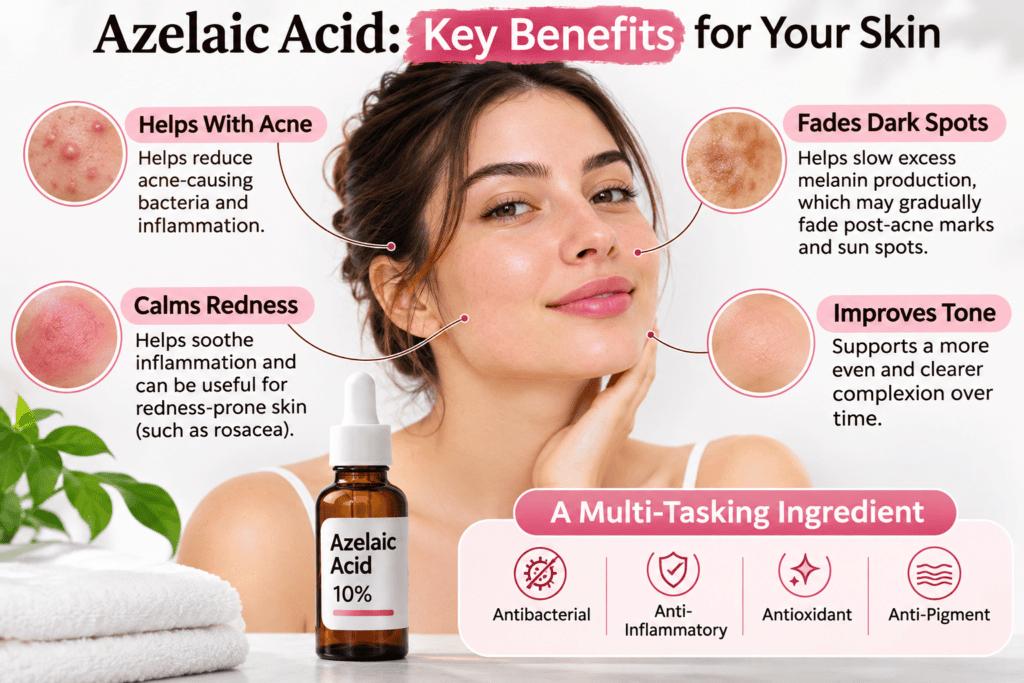
Quick Answer: Is Azelaic Acid Good for Acne and Dark Spots?
Azelaic acid can help manage acne and improve the appearance of post-acne dark spots. It has anti-inflammatory properties and can help reduce excess pigmentation, making it useful for people dealing with breakouts and uneven skin tone.
Azelaic acid is available in different concentrations, including 10% cosmetic formulas and prescription-strength products. Results take time, and some people experience temporary stinging, dryness or irritation. Start gradually, use sunscreen daily and consult a dermatologist for persistent acne or pigmentation concerns.
1. Helps Manage Acne Breakouts
Acne develops when pores become blocked and inflammation occurs. Azelaic acid helps address some of these processes.
For example, it can reduce the growth of acne-associated bacteria and help prevent abnormal buildup of skin cells inside pores.
Consequently, it can be useful for certain cases of mild to moderate acne.
However, deep, painful, or scarring acne often requires assessment by a dermatologist.
2. Helps Fade Dark Spots After Acne
Dark marks that remain after pimples heal are commonly called post-inflammatory hyperpigmentation.
These marks can be especially noticeable on medium and darker skin tones.
Azelaic acid helps reduce excessive pigment production, which may gradually improve the appearance of post-acne dark spots.
However, results take time. New breakouts can also create additional marks, so addressing ongoing acne is part of the process.
3. Helps Calm Certain Types of Redness
Another benefit is its anti-inflammatory activity.
Prescription azelaic acid formulations are used to treat inflammatory bumps associated with rosacea.
However, not every type of facial redness is caused by rosacea, and azelaic acid does not treat every form of redness equally.
If redness is persistent, painful, or accompanied by eye symptoms, seek medical advice.
4. May Improve Uneven Skin Tone
Azelaic acid is also studied for melasma and other pigmentation concerns.
Because it affects melanin production, it may help improve certain areas of discoloration.
Still, pigmentation is complex. Sun exposure, hormones, inflammation, and underlying conditions can all influence results.
Therefore, a consistent routine and daily sun protection are essential.
Azelaic Acid 10% vs 15% vs 20%: What’s the Difference?
Azelaic acid products are available in different strengths.
| Concentration | Common context | Important consideration |
|---|---|---|
| 10% | Often found in cosmetic skincare products | Evidence for specific treatment outcomes is less established |
| 15% | Prescription gel or foam in the United States | Studied for papulopustular rosacea |
| 20% | Prescription cream in the United States | Studied for acne and pigmentation concerns |
A higher concentration does not automatically make a product better for everyone.
For example, the formulation, skin sensitivity, condition being treated, and individual tolerance can influence results.
Prescription products should be used according to a healthcare professional’s directions.
How to Use Azelaic Acid for Acne and Dark Spots
A simple skincare routine can make azelaic acid easier to introduce.
Step 1: Cleanse Your Face
Start with a mild facial cleanser and gently pat your skin dry.
Avoid harsh scrubs or irritating cleansing products, especially if your skin is already sensitive.
Step 2: Apply Azelaic Acid
Apply the product as directed on its packaging or by your healthcare professional.
For many topical formulations, a thin layer is applied to the affected area.
Avoid contact with your eyes, mouth, and other sensitive areas.
Step 3: Start Gradually if Needed
Some people experience stinging or dryness when first introducing azelaic acid.
If you are using a cosmetic formula, introducing it gradually may help you assess tolerance.
However, if you are using a prescription product, follow your prescriber’s specific instructions rather than changing the schedule yourself.
Step 4: Use Moisturizer
A gentle moisturizer can support the skin barrier and help reduce dryness.
Look for products containing ingredients such as glycerin, ceramides, or hyaluronic acid.
Step 5: Apply Sunscreen Every Morning
Daily sun protection is particularly important when treating dark spots.
Use a broad-spectrum sunscreen with SPF 30 or higher and reapply according to its directions.
Without adequate sun protection, pigmentation can persist or worsen.
Can You Use Azelaic Acid With Other Skincare Ingredients?
Azelaic acid can be included in routines containing other active ingredients. However, tolerance varies.
Azelaic Acid and Niacinamide
Niacinamide is commonly used to support the skin barrier and improve uneven skin tone.
The two ingredients may complement each other, although combining them does not guarantee better results.
Niacinamide is another ingredient commonly used in routines for uneven skin tone and supporting the skin barrier. To learn more about its benefits, recommended concentrations and possible side effects, read our Niacinamide Benefits for Skin guide.
Azelaic Acid and Hyaluronic Acid
Hyaluronic acid helps attract and retain moisture.
For this reason, a hydrating serum or moisturizer may be useful in a routine containing azelaic acid.
Azelaic Acid and Vitamin C
Both ingredients are used in routines targeting uneven skin tone.
However, applying multiple active ingredients at once may increase irritation in sensitive skin.
Introduce products individually to understand how your skin responds.
If vitamin C appeals to you, choose a vitamin C serum for sensitive skin.
Azelaic Acid and Retinol
Retinoids and azelaic acid may both be used in acne management.
However, combining them can make a routine more irritating.
If you are considering prescription retinoids or using several acne treatments, consult a healthcare professional about the combination.
If you also use a retinoid, see our retinal vs retinol before combining the two.
How Long Does Azelaic Acid Take to Work?
Azelaic acid does not usually deliver overnight results.
For acne, some improvement may become noticeable after approximately four weeks with certain studied formulations.
Meanwhile, rosacea and pigmentation concerns may require longer treatment periods.
The results depend on:
- Product concentration and formulation
- Type and severity of the skin concern
- Consistency of application
- Individual skin response
- Sun protection habits
Additionally, evidence from prescription-strength studies should not automatically be applied to every over-the-counter 10% serum.
If symptoms are worsening or treatment is not helping, consult a dermatologist.
Side Effects of Azelaic Acid
Although azelaic acid is generally well tolerated, it can cause side effects.
Common reactions include:
- Mild burning or stinging
- Itching
- Dryness
- Redness
- Flaking or irritation
These reactions may be more noticeable when treatment begins.
However, persistent or severe irritation should not be ignored.
Stop using the product and seek professional guidance if you develop a significant reaction.
People with eczema, very sensitive skin, or known ingredient allergies should be particularly careful.
Is Azelaic Acid Suitable for Sensitive Skin?
Azelaic acid may be better tolerated than some other acne treatments, but sensitive skin can still react.
If your skin barrier is already irritated, focus on gentle cleansing and moisturizing before introducing additional active ingredients.
Also, avoid introducing several new skincare products simultaneously.
This makes it easier to identify which product is responsible if irritation develops.
If dark spots and uneven skin tone are your main concerns, tranexamic acid is another ingredient worth learning about. Our Tranexamic Acid for Dark Spots guide explains its potential benefits, limitations and how it fits into a skincare routine.
Azelaic Acid During Pregnancy or Breastfeeding
Topical azelaic acid is sometimes considered as a treatment option during pregnancy because systemic absorption is relatively low.
However, individual circumstances matter, and guidance can differ by formulation and medical situation.
If you are pregnant, planning pregnancy, or breastfeeding, discuss your skincare treatments with a qualified healthcare professional before using them.
Azelaic Acid vs Other Ingredients for Dark Spots
Different ingredients address pigmentation through different mechanisms.
| Ingredient | Common skincare purpose |
|---|---|
| Azelaic acid | Acne, inflammation, and certain pigmentation concerns |
| Niacinamide | Skin barrier support and uneven tone |
| Vitamin C | Antioxidant care and discoloration |
| Retinoids | Acne, skin turnover, and some pigmentation concerns |
| Tranexamic acid | Pigmentation-focused skincare |
The best ingredient depends on the underlying concern, your skin’s tolerance, and the specific formulation. Kojic Acid for Skin is another brightening ingredient that targets excess melanin production and is often compared with azelaic acid for dark spots. For a broader comparison, see our guide to the best ingredient for dark spots.
In some cases, a simple routine with fewer ingredients may be easier to maintain.
Azelaic acid and glycolic acid serve different purposes in skincare. Glycolic acid is an exfoliating alpha-hydroxy acid often used for skin texture and uneven tone, while azelaic acid is also used for acne-related concerns. Read our Glycolic Acid for Skin guide to understand the differences before choosing an ingredient.
Frequently Asked Questions
Does azelaic acid remove acne marks permanently?
Azelaic acid may help fade post-inflammatory dark marks, but it cannot guarantee permanent removal. New acne lesions or additional inflammation can create new marks.
Can I use azelaic acid every day?
Some azelaic acid products are intended for daily use. The appropriate frequency depends on the formulation, product directions, and your skin’s tolerance.
Is 10% azelaic acid enough for dark spots?
A 10% product may be suitable for some cosmetic routines. However, much of the stronger clinical evidence comes from research involving prescription-strength formulations.
Can azelaic acid cause purging?
A temporary worsening of breakouts should not automatically be described as purging. New acne, irritation, or another reaction may be responsible. Seek advice if symptoms persist or worsen.
Can I use azelaic acid in the morning?
Some formulations can be used in the morning. Follow the product directions and use appropriate sun protection.
Does azelaic acid help both acne and pigmentation?
Yes. Clinical evidence supports azelaic acid’s role in managing acne and certain pigmentation conditions, although results vary with formulation and individual circumstances.
Final Thoughts
Azelaic acid for acne and dark spots can be a useful addition to a skincare routine, particularly when breakouts and post-acne pigmentation occur together.
Its anti-inflammatory, antibacterial, and pigment-related properties make it a versatile ingredient.
However, good results depend on realistic expectations, suitable product selection, and consistent skincare habits.
Start with a gentle routine, follow product directions, protect your skin from the sun, and seek professional advice for persistent or severe skin problems.
To weigh azelaic acid against the other options, see our guide to the best ingredient for dark spots.
Medical disclaimer: This article provides general educational information and is not a substitute for professional medical advice, diagnosis, or treatment.