Sensitive skin and vitamin C often feel like a difficult match. However, the problem usually comes from the form and the strength, not from vitamin C itself. Therefore, this guide shows you the gentlest forms, the strengths that suit reactive skin, and a slow routine that delivers brightness without the sting.
Moreover, you will learn exactly how to patch test, how often to apply the serum at first, and which ingredients pair well with it. In addition, you will see the warning signs that tell you to pause. As a result, you can decide with confidence whether a vitamin C serum for sensitive skin belongs in your routine.
Quick Answer
Yes, sensitive skin can use vitamin C. First, choose a gentle derivative such as sodium ascorbyl phosphate or ascorbyl glucoside instead of strong L-ascorbic acid. Next, start two or three mornings a week after a patch test. Then build up slowly only while your skin stays calm.
Furthermore, keep L-ascorbic acid below 10 percent if you prefer the classic form, because the 5 to 10 percent range balances results with tolerability. Finally, always finish with sunscreen in the morning, since vitamin C supports sun protection but never replaces it.
What Vitamin C Does for Skin
Vitamin C works as an antioxidant, and researchers rank it among the most studied antioxidants in skincare. Consequently, brands put it in serums that target dullness, uneven tone, and early lines. For example, a steady routine can gradually make skin look brighter and more even.
It brightens dark spots and uneven tone
Dark spots form when skin produces extra pigment after sun exposure or a breakout. Vitamin C helps here because it slows one step in pigment production and, meanwhile, defends new spots while old ones fade. However, it fades spots gradually over weeks, so patience matters more than strength.
It supports collagen and defends skin daily
Additionally, vitamin C supports collagen, the protein that keeps skin firm and smooth. It also neutralizes free radicals from UV light and pollution before they damage skin. Therefore, morning use makes sense: the serum defends your skin during the day, and sunscreen then blocks most UV rays on top.
Why Vitamin C Stings Sensitive Skin
The sting has a simple cause: acidity. L-ascorbic acid, the most studied and most potent form, needs a low pH of about 2.5 to 3.5 to stay stable and effective. Unfortunately, healthy skin sits at a higher, gentler pH, so an acidic serum can prickle reactive skin within seconds.
One study on high-potency L-ascorbic acid serums underlines the point clearly. In that study, 55 percent of participants reported stinging and 24 percent reported redness over three months. Therefore, strength alone does not make a better serum, especially for sensitive skin.
A weak barrier makes the sting worse
When your barrier feels thin or damaged, even mild products can sting. So repair first and add actives later. Our guide to skin barrier repair explains how to calm skin before you introduce a new serum. In contrast, calm and intact skin usually tolerates a gentle vitamin C formula well.
Moreover, fragrance, alcohol, and strong exfoliating acids inside the same formula can add irritation on top of the acidity. For that reason, read the full ingredient list, not just the vitamin C percentage on the front label.
The Gentlest Forms of Vitamin C for Sensitive Skin
Derivatives solve the pH problem in a clever way. Instead of delivering pure acid at once, they convert into vitamin C gradually inside the skin. Consequently, they work at a skin-friendly pH and cause far less stinging. The table below compares the four forms that matter most for sensitive skin.
| Form | Strength and feel | Best for |
| L-ascorbic acid | Most potent; needs pH 2.5–3.5; stings most | Experienced users; stay below 10% |
| Sodium ascorbyl phosphate (SAP) | Stable; skin-friendly pH; most evidence among gentle forms | Sensitive or acne-prone skin |
| Ascorbyl glucoside | Releases gradually; low irritation even up to 2% | Very sensitive skin and beginners |
| Magnesium ascorbyl phosphate (MAP) | Stable and gentle; suits dry skin well | Sensitive, dry skin |
Sodium ascorbyl phosphate: the safest first try
Sodium ascorbyl phosphate, or SAP, gives sensitive and acne-prone skin the strongest evidence base among the gentle forms. It stays more stable than L-ascorbic acid, and studies link it to lower inflammatory markers in skin. Additionally, its skin-compatible pH removes the main cause of stinging.
Ascorbyl glucoside and MAP: slow and gentle
Ascorbyl glucoside releases vitamin C gradually, so skin receives a smaller dose at a time. Research reports low irritation from it even at concentrations up to 2 percent. Similarly, magnesium ascorbyl phosphate, or MAP, offers another gentle and stable option, and it suits dry sensitive skin particularly well.
Product examples other guides often mention
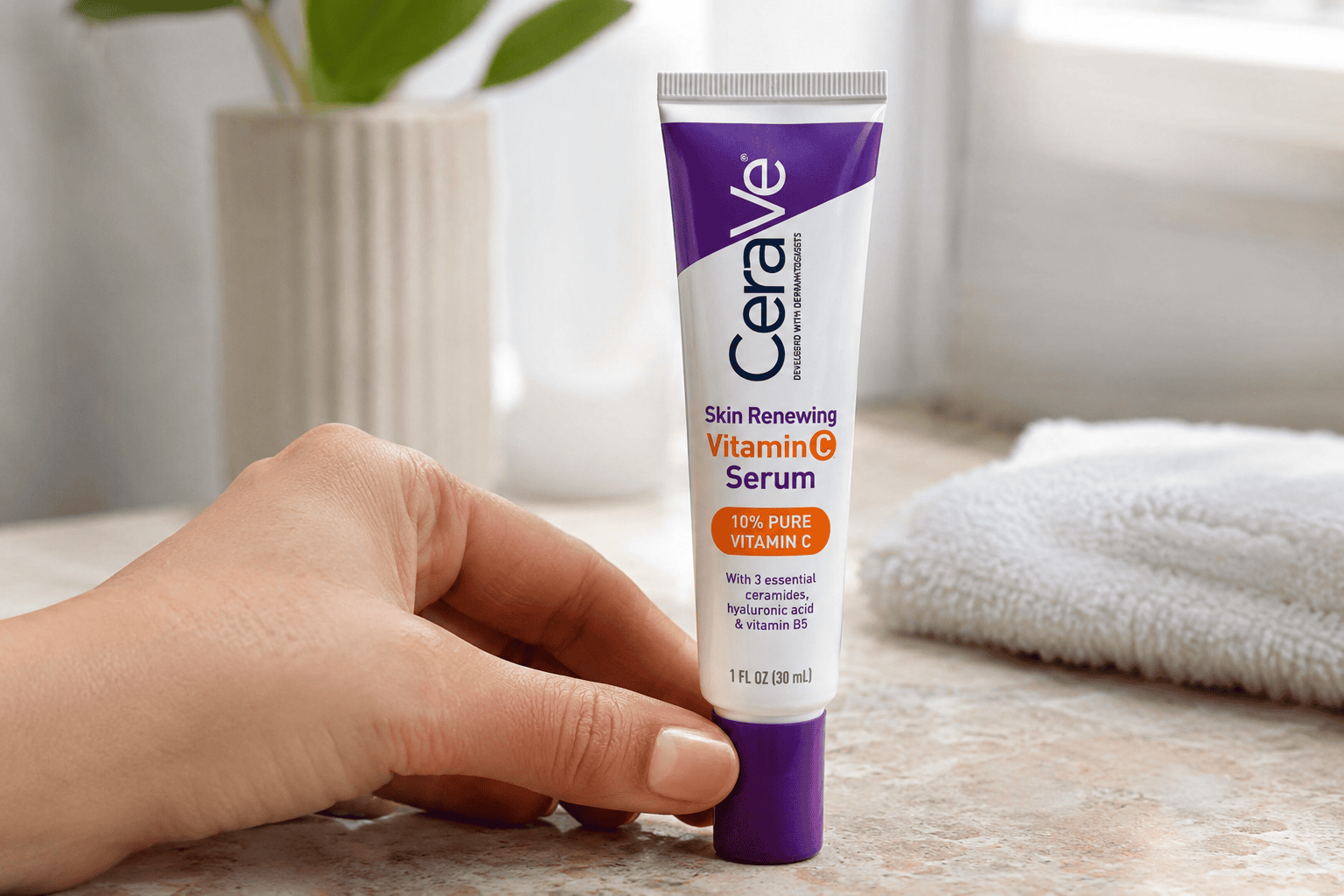
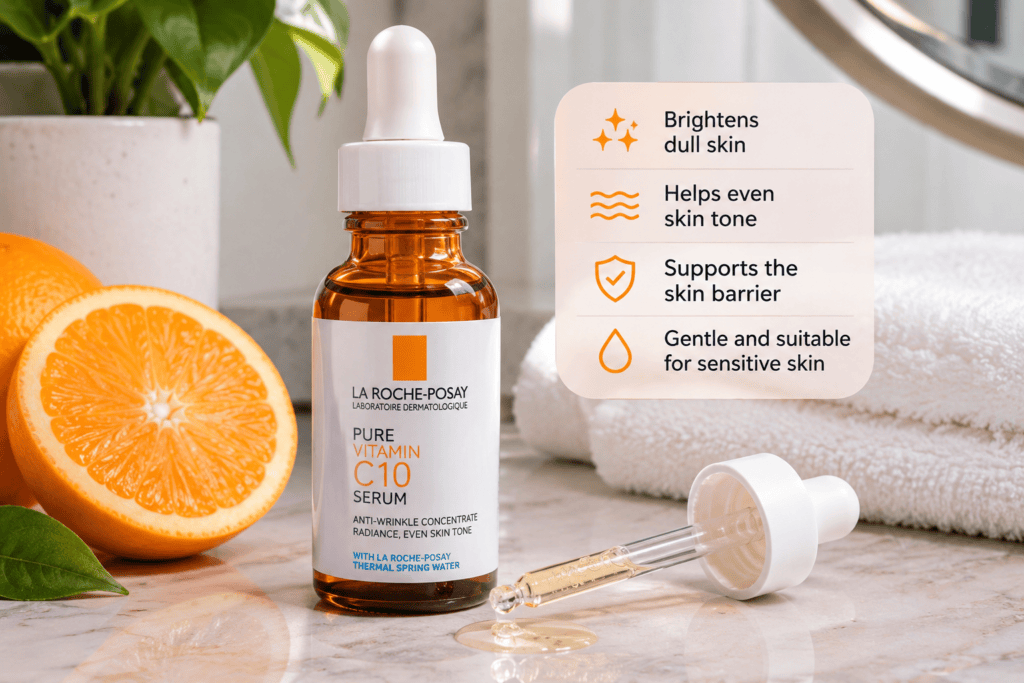
Guides for sensitive skin frequently name a few examples, and this article lists them only as examples, not as tested recommendations. They include Paula’s Choice C15 Super Booster, The Ordinary Ascorbyl Glucoside Solution 12%, CeraVe Skin Renewing Vitamin C Serum, and La Roche-Posay Pure Vitamin C10 Serum. However, check the form and strength on each label first, because two of these examples use stronger L-ascorbic acid formulas.
How to Use Vitamin C Serum, Step by Step
A careful start protects your barrier and, at the same time, tells you quickly whether a formula suits you. Follow the steps below in order, and change nothing else in your routine during the first two weeks.
Step 1: Patch test first
Apply a small amount along your jawline, on your inner forearm, or behind your ear.
Wait 24 to 48 hours and watch the area closely.
Look for burning, itching, swelling, or lingering redness, and stop if any of them appear.
Move to your face only after the test area stays calm.
Step 2: Apply it the right way
Cleanse first, then pat your skin completely dry.
Apply a pea-sized to dime-sized amount of serum to clean, dry skin.
Wait about 60 seconds before your next product.
Follow with moisturizer, and finish with SPF in the morning.
Furthermore, a hydrating layer can buffer the serum and add comfort. For instance, our guide on what hyaluronic acid does for skin explains how it draws water into skin and supports a dry barrier. Therefore, many sensitive routines pair the two ingredients in the same morning.
Step 3: Store the bottle correctly
Vitamin C oxidizes in light, heat, and air, and oxidation weakens the formula. So keep the bottle in a cool, dark place and close the cap tightly after every use. If the serum turns noticeably dark orange or brown and smells different, it has likely oxidized, and you should stop using it.
A Simple Weekly Rhythm for Beginners
Frequency matters as much as strength during the first month. Start with two or three mornings a week for the first couple of weeks. Then, if your skin stays calm, add one extra morning each week until you reach a rhythm you can maintain comfortably.
Weeks 1–2: apply the serum on two or three mornings only, with moisturizer and SPF after it.
Weeks 3–4: move to alternate mornings if you notice no stinging, redness, or tightness.
Week 5 onward: use it most mornings, or daily, only while your skin stays calm and comfortable.
Any week: drop back one step whenever irritation appears, and rebuild after a calm week.
Meanwhile, keep the rest of your routine boring and consistent. A gentle cleanser, a plain moisturizer, and daily sunscreen give the serum a fair test. In contrast, a routine that changes every few days hides the real cause of any reaction.
What Pairs Well With Vitamin C
Good pairings boost results without extra irritation, while poor pairings overload sensitive skin quickly. The table below gives you a simple map for building the rest of your routine around the serum.
| Ingredient | Pairing advice | Why it helps |
| Niacinamide | Yes — ideally in a separate step, such as your moisturizer | Supports tone and the barrier |
| Hyaluronic acid | Yes — layer for hydration and comfort | Buffers dryness and tightness |
| Vitamin E and ferulic acid | Yes — often inside the same formula | Support stability and antioxidant action |
| Retinol or retinal | Separate routines — vitamin C in the morning, retinoid at night | Avoids stacking two strong actives |
| Strong exfoliating acids | Not in the same step — alternate instead | Limits acidity and irritation |
Niacinamide: an old warning that no longer applies
Many readers still worry about mixing vitamin C with niacinamide. However, that old concern largely reflects older research, and modern cosmetic concentrations let the two ingredients coexist comfortably. Ideally, apply vitamin C first and let niacinamide arrive later in your moisturizer. Our guide to niacinamide benefits for skin covers its barrier and tone benefits in detail.
Retinoids and acids: keep them in separate steps
Retinal and retinol work best at night, so a split routine solves the conflict neatly. Use vitamin C in the morning and your retinoid at night, as our comparison of retinal vs retinol explains. Similarly, keep strong exfoliating acids in a different step: for example, our glycolic acid guide and our review of Paula’s Choice 2% BHA Liquid Exfoliant both suit alternate evenings rather than the same layer as vitamin C.
Above all, introduce one new active at a time. That single rule tells you exactly which product helps your skin and which product causes trouble.
Who Should Try It, and Who Should Get Advice First
Good candidates for a gentle vitamin C serum
Sensitive skin with dullness or uneven tone fits this guide well, and your barrier currently feels calm.
You want to fade mild dark spots gradually, with daily sunscreen doing the heavy lifting.
A morning active suits your routine, and you can start slowly, two or three times a week.
For stubborn dark spots, vitamin C can also sit alongside other brighteners on different days. For example, azelaic acid for acne and dark spots suits many sensitive routines, and tranexamic acid for dark spots offers another gentle route. Nevertheless, add only one of them at a time.
Think twice or ask a clinician first
Your skin currently burns, flakes, or feels raw, because a weak barrier needs repair before any active.
Active eczema, a rosacea flare, or an unassessed rash needs a clinician’s view before any new serum.
Pregnancy or breastfeeding changes the advice: ask your clinician first, because this article does not claim vitamin C is safe in pregnancy.
Melasma or deep pigmentation usually needs professional care, so a serum alone rarely solves it.
Side Effects and Mistakes to Avoid
A very mild tingle during the first few uses can be normal, especially with L-ascorbic acid. However, strong stinging, burning, lingering redness, or new tightness sends a clear signal to pause. In that case, wash the serum off, apply moisturizer, and retry later at a lower frequency or with a gentler form.
The mistakes that cause most reactions
Starting with a 15 or 20 percent L-ascorbic acid serum on reactive skin.
Using the serum daily from day one instead of building up over several weeks.
Stacking vitamin C with a strong exfoliating acid in the same step.
Adding two or three new products in the same week, then guessing which one caused a reaction.
Skipping sunscreen, then blaming the serum when dark spots refuse to fade.
Keeping an oxidized, dark orange serum and using it anyway.
Consequently, the fix usually involves pace and form, not willpower. Skin that stings at a strong acid formula often accepts SAP or ascorbyl glucoside without complaint. Therefore, switch the form before you abandon vitamin C altogether.
Frequently Asked Questions
Can sensitive skin use vitamin C serum every day?
Eventually, many people can, but nobody needs to start daily. Begin with two or three mornings a week, then add mornings gradually while your skin stays calm. Daily use only makes sense after several comfortable weeks.
Which vitamin C form suits sensitive skin best?
Sodium ascorbyl phosphate offers the most evidence among the gentle forms, and ascorbyl glucoside follows closely for very reactive skin. Both work at a skin-friendly pH. In contrast, L-ascorbic acid delivers the most research overall but stings sensitive skin most often.
Should I apply vitamin C in the morning or at night?
Morning use wins for most people, because the antioxidant action pairs with sunscreen against UV and pollution during the day. Additionally, a morning slot keeps vitamin C away from your nighttime retinoid. Always finish the morning routine with SPF.
How long does vitamin C take to show results?
Expect weeks, not days. Most readers notice gradual brightness after several weeks of steady use, and dark spots fade even more slowly. Therefore, judge a serum after eight to twelve calm weeks, not after three applications.
Why did my vitamin C serum turn orange?
Heat, light, and air oxidize vitamin C over time, and the colour shift signals that change. A pale yellow tint can be normal for some formulas. However, a noticeably dark orange or brown colour with a different smell means the serum has likely oxidized, so stop using it.
Can I use vitamin C with niacinamide?
Yes, at modern cosmetic concentrations the two ingredients generally coexist well. Ideally, apply vitamin C first and use niacinamide in a later step, such as your moisturizer. That order keeps both layers comfortable on sensitive skin.
Key Takeaways
Sensitive skin can use vitamin C, and the form matters more than the headline percentage.
SAP and ascorbyl glucoside give you the gentlest start; keep L-ascorbic acid below 10 percent.
Patch test first, start two or three mornings a week, and build only while skin stays calm.
Vitamin C supports sunscreen but never replaces it, so finish every morning with SPF.
Results take weeks of steady use, and vitamin C will not erase dark spots overnight.
To compare vitamin C with the other brighteners side by side, see our guide to the best ingredient for dark spots.
Sources
This article draws on guides and references checked on 16 November 2026, including the Pixi Beauty guide on vitamin C for sensitive skin, which reports the pH range for L-ascorbic acid and the study figures on stinging and redness, plus the sensitive-skin guides from GlamRanked, FitBeautyGuide, and HomeWiseReview. Product names appear as examples that other guides recommend, not as tested recommendations, and this article carries no affiliate links.
Medical Disclaimer
This article provides general information only, and it does not provide medical advice. Skin conditions vary widely, so ask a dermatologist or another qualified clinician about persistent redness, rashes, pigmentation, or any concern during pregnancy or breastfeeding. Stop any product that burns or harms your skin, and seek care promptly if a reaction spreads or persists.