In This Guide
Quick Answer
Bakuchiol for skin is the gentlest well-studied alternative to retinol for people whose skin cannot cope with retinoids. In the one head-to-head trial, 0.5% bakuchiol used twice daily matched 0.5% retinol used once daily for fine lines and dark spots over 12 weeks, with far less scaling and stinging. That result comes from a single small trial of 44 people, however, so treat bakuchiol as promising rather than proven equal to retinol.
Start with a 0.5% product two or three times a week, then build up to daily use if your skin stays calm. Judge the result after 12 weeks of steady use. Bakuchiol is not a retinoid, and this guide does not claim it is safe in pregnancy, because no human pregnancy trial exists. Ask a clinician first if you are pregnant or breastfeeding.
What Is Bakuchiol for Skin?
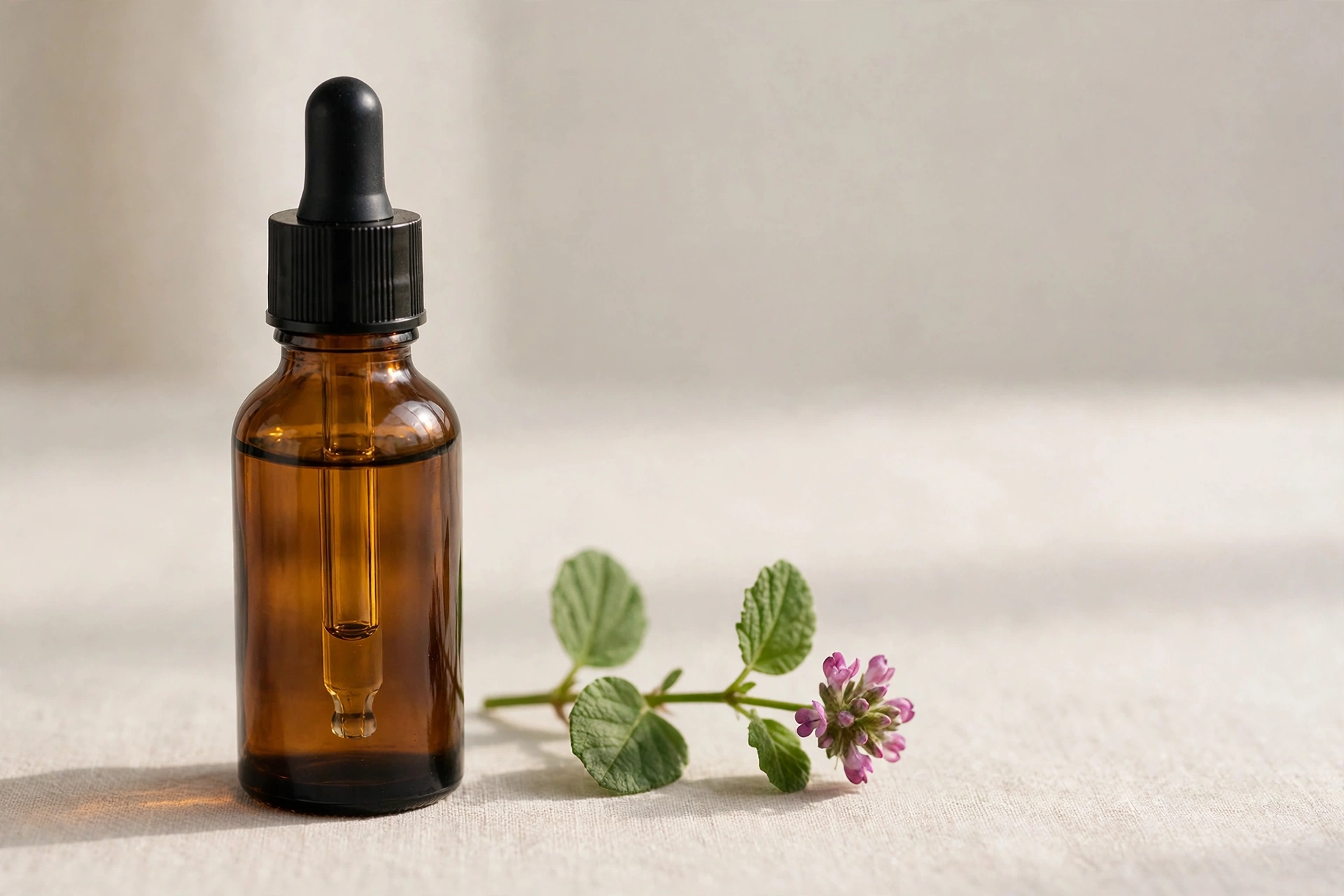
Bakuchiol is a plant compound, a meroterpene phenol, found in the seeds and leaves of Psoralea corylifolia, a plant known as babchi in Ayurvedic and traditional Chinese medicine. Skincare brands sell it in serums, oils and moisturisers, usually at 0.5% to 2%.
Its appeal is simple. Retinol works well for photoageing, yet many people stop using it because of peeling, redness and stinging. Bakuchiol promises a similar direction of travel with a calmer journey. Whether it delivers depends on the evidence, which this guide reports honestly, including its limits.
Where It Comes From
People have used babchi in traditional medicine for centuries, mainly for skin conditions. Modern skincare isolated bakuchiol from the plant and began testing it as a cosmetic active in the 2010s. Today you will find it in standalone serums and in moisturisers aimed at sensitive skin. A product label may list it as bakuchiol or by its INCI name, BAKUCHIOL.
Concentration matters more than the plant story. Most published work used 0.5% bakuchiol, while shop products range from 0.5% to 2%. A higher number does not automatically mean a better result, and it can mean more irritation for reactive skin.
Why It Is Not a Retinoid
Bakuchiol is often sold as plant retinol, yet that label misleads. Chemically, bakuchiol has no structural resemblance to retinol, and it is not vitamin A. It does not convert into retinoic acid in the skin, and it does not bind to retinoic acid receptors the way retinoids do.
Instead, laboratory work shows that bakuchiol switches on many of the same downstream genes as retinol, including genes linked to collagen types I, III and IV. Researchers call it a functional analogue of retinol: a different molecule that reaches some of the same destinations by a different road. That distinction matters, because it explains both the gentler profile and the weaker proof. For a direct comparison of the vitamin A family, see our Retinal vs Retinol guide.
What the Evidence on Bakuchiol for Skin Actually Shows
Bakuchiol has real evidence, and the evidence has real limits. One good trial supports it, several small studies add colour, and no large long-term trial has yet confirmed it. Keep that balance in mind while you read the claims below.
The One Head-to-Head Trial
The most important study is Dhaliwal and colleagues, published in the British Journal of Dermatology in 2019. It was prospective, randomised and double-blind, and it ran for 12 weeks with 44 patients aged 40 to 65. One group applied 0.5% bakuchiol cream twice daily, while the other applied 0.5% retinol cream once daily. A dermatologist graded wrinkle surface area and hyperpigmentation from photographs without knowing which treatment each patient had received.
Both groups improved significantly in wrinkle surface area and hyperpigmentation, and the difference between the groups was not statistically significant. The tolerability gap was the clearest finding: retinol users reported significantly more facial scaling and stinging, while the bakuchiol group reported no significant adverse effects in that trial. In short, bakuchiol kept pace with retinol over 12 weeks and irritated skin far less.
Three caveats belong beside that result. First, 44 people is a small sample, split into two groups. Second, 12 weeks shows early change, not long-term collagen remodelling, where retinoids have the deeper record. Third, the trial tested one 0.5% formulation, so its result does not automatically apply to every bakuchiol product at every strength.
What the Later Reviews Add
Laboratory work came first. In 2014, Chaudhuri and Bojanowski compared gene expression in skin models and found broadly similar profiles for bakuchiol and retinol, with increases in collagen types I, III and IV and in aquaporin-3. That study also included a small open-label case study of a finished product used twice daily for 12 weeks, which reported improvements in lines, pigmentation, elasticity and firmness. Open-label work has no control group and no blinding, so treat it as a signal rather than proof.
A 2024 systematic review in the Journal of Drugs in Dermatology gathered 15 human trials of topical bakuchiol and reached a sober conclusion: 12 of the 15 were unblinded, open-label studies without a control group, and 10 used combination formulas containing several actives, which makes it hard to isolate what bakuchiol alone contributed. That review does not cancel the 2019 trial, yet it explains why dermatologists still call bakuchiol promising rather than proven.
Competitor guides often skip this part. Most bakuchiol articles repeat the 2019 result and then claim pregnancy safety, which no trial supports. This guide keeps the two questions separate: the wrinkle evidence is real but small, while pregnancy safety is simply untested in humans.
Bakuchiol for Skin: Benefits
The benefits of bakuchiol for skin below follow from the trial and the laboratory work, not from marketing copy. Where the evidence is thin, this guide says so.
Fine Lines and Firmness
Fine lines are the best-supported benefit. In the 2019 trial, both bakuchiol and retinol reduced wrinkle surface area significantly over 12 weeks, with no significant difference between them. Laboratory work points the same way, through collagen-related gene expression. Expect gradual softening rather than a dramatic change, and allow a full 12 weeks before you judge a product. For context on firmer, calmer skin, our Skin Barrier Repair guide explains why a healthy barrier makes any active work better.
Dark Spots and Uneven Tone
Hyperpigmentation also improved in both groups in the 2019 trial, again with no significant difference between them. Laboratory work suggests bakuchiol can slow melanin production, which fits the trial result. Even so, one small trial cannot settle how well bakuchiol fades stubborn melasma or post-inflammatory marks, and sunscreen remains the step that protects any brightening gain. Our Best Ingredient for Dark Spots pillar compares the ingredients with the strongest evidence for this job.
A Calmer Option for Sensitive Skin
Tolerance is where bakuchiol earns its place. Sensitive skin often rejects retinol within days, while bakuchiol caused no significant adverse effects in the 2019 trial and is photostable, so it does not break down in daylight. People with rosacea-prone or reactive skin still need a patch test, because gentle does not mean risk-free, and rare allergic contact dermatitis has been reported. If vitamin C already stings your skin, read our Vitamin C Serum for Sensitive Skin guide before you add another active.
Bakuchiol for Skin vs Retinol
The table below compares the two ingredients on the points that decide which one suits your skin. It uses the 2019 trial for the head-to-head rows and the wider literature for the rest.
| Bakuchiol | Retinol | |
|---|---|---|
| What it is | Plant meroterpene phenol, not vitamin A | Vitamin A derivative |
| How it works | Switches on retinol-like genes without binding retinoic acid receptors | Converts to retinoic acid and binds retinoic acid receptors |
| 12-week trial result | 0.5% twice daily matched retinol for wrinkles and pigmentation | 0.5% once daily, same improvements, more irritation |
| Irritation | Low: no significant adverse effects in the 2019 trial | Common: scaling, stinging, peeling, redness |
| Daytime use | Yes, photostable | Evening only, breaks down in sunlight |
| Pregnancy | Safety unproven — ask a clinician | Avoid — retinoids carry teratogenic warnings |
| Evidence base | One small head-to-head trial, plus small studies | Decades of large, long-term trials |
How to Use Bakuchiol for Skin
Bakuchiol for skin is easy to use, which is part of its appeal. A slow start still helps, because even gentle actives can irritate reactive skin.
Start Low, Then Build Up
Begin with a 0.5% product two or three times a week, on clean, dry skin, before moisturiser. If your skin stays calm after two weeks, move to every other day, then daily. After four to six weeks, you can try twice daily if you want the schedule used in the trial. Stop and simplify your routine if redness or stinging lasts more than a few days.
Patch test first: apply a small amount behind your ear or on your inner arm, then wait 24 hours. That single step catches most reactions before they reach your face. Keep the rest of your routine simple during the first month, so you can tell what bakuchiol itself is doing.
Morning or Evening?
Either time works, because bakuchiol is photostable and does not break down in sunlight the way retinol does. Morning use suits people who keep retinoids for the evening, while evening use suits people who prefer one active at night. Choose the slot you will actually keep, then stay consistent. Whichever slot you choose, wear broad-spectrum SPF 30 or higher every day, since any ingredient that speeds cell turnover leaves fresh skin more exposed to sun. Our Winter Skin Care Routine guide shows how to layer SPF with richer winter moisturisers.
What to Pair It With
Bakuchiol pairs well with hydrating and barrier-supporting ingredients. Niacinamide and hyaluronic acid are the safest partners, and ceramides help if your barrier feels fragile. Our Niacinamide Benefits for Skin guide covers the niacinamide pairing in detail.
| Pair with bakuchiol | How it behaves |
|---|---|
| Niacinamide | Good partner: supports the barrier and calms skin |
| Hyaluronic acid | Good partner: adds hydration without irritation |
| Ceramides | Good partner: helps a fragile barrier recover |
| Vitamin C | Go slowly: introduce on different days at first |
| Glycolic or salicylic acid | Go slowly: alternate days, watch for stinging |
| Retinol | Avoid together at first: extra irritation, no proven extra benefit |
Go slowly with other actives. Vitamin C, glycolic acid and salicylic acid can each irritate skin on their own, so introduce them on different days rather than stacking everything at once. Our Glycolic Acid for Skin and Salicylic Acid for Skin guides explain how those two acids behave. Do not use bakuchiol and retinol together at first: the combination adds irritation without proven extra benefit, and it makes it impossible to tell which ingredient caused a reaction.
Who Should Try Bakuchiol for Skin — and Who Should Pause
Bakuchiol suits people who want anti-ageing care without the retinol adjustment phase. It fits sensitive or reactive skin, people who tried retinol and stopped because of peeling, and anyone who wants a daytime active. It also suits beginners who feel unsure about retinoids and want a gentler first step.
Pause and ask a clinician first in three situations. If you are pregnant, planning pregnancy or breastfeeding, do not rely on marketing claims: bakuchiol is not a retinoid and has no reported reproductive toxicity, yet no human pregnancy safety trial exists, so safety is unproven rather than established. If you have very reactive or sensitised skin, repair your barrier first. And if you have a known allergy to babchi or to Psoralea corylifolia, avoid bakuchiol entirely and patch test any product that lists it.
Bakuchiol for Skin: Side Effects and Mistakes to Avoid
Side effects are usually mild and uncommon. The most reported ones are redness, dryness and mild stinging, mainly in already sensitive skin or at concentrations above 2%. True allergic reactions are rare but documented, so a patch test matters even for a gentle ingredient.
Three mistakes cause most problems. First, starting at 2% twice daily instead of building up slowly. Second, stacking bakuchiol with vitamin C and an exfoliating acid in the same week, then blaming bakuchiol for the irritation. Third, skipping sunscreen, which lets sun undo the brightening work. Avoid those three, and most people find bakuchiol easy to live with.
Stop using bakuchiol and seek advice if redness spreads, swelling appears, or irritation persists beyond three weeks. Those signs point to allergy or a damaged barrier rather than normal adjustment.
Bakuchiol for Skin: Frequently Asked Questions
Is bakuchiol really as good as retinol?
In one 12-week trial of 44 people, 0.5% bakuchiol matched 0.5% retinol for wrinkles and pigmentation, with less irritation. That is promising, not proof of equality. Retinol has decades of larger, longer trials behind it, so it remains the default for established anti-ageing, while bakuchiol is the gentler alternative for people who cannot tolerate it.
Can I use bakuchiol every day?
Yes, once your skin has adjusted. Start two or three times a week, build up over four to six weeks, and then use it once or twice daily if your skin stays calm. Daily use is realistic for most people, unlike daily retinol at higher strengths.
Can I use bakuchiol with vitamin C?
You can, yet introduce them separately. Use one in the morning and the other in the evening, or alternate days for the first month. If stinging appears, drop back to one active at a time until your skin settles.
Does bakuchiol cause purging?
Purging is not a recognised bakuchiol effect. Unlike retinoids, bakuchiol does not speed cell turnover in the same way, so breakouts after starting it usually mean irritation or a reaction to the product base, not purging. Simplify your routine and patch test again.
Is bakuchiol safe during pregnancy?
Safety in pregnancy is unproven. Bakuchiol is not a retinoid, and no reproductive toxicity has been reported, yet no human pregnancy trial exists. Many dermatologists advise caution as a precaution. Ask your clinician before using it while pregnant or breastfeeding, and do not take a product label’s word for it.
How long does bakuchiol take to work?
Allow 12 weeks of steady use of bakuchiol for skin before you judge it, which matches the trial period. Fine lines and tone change gradually, and longer use may bring more change, although no long-term trial has measured that yet. Take a photo at the start so you can compare fairly.
Bakuchiol for Skin: Key Takeaways
- Bakuchiol for skin is a plant compound that acts like retinol in some gene pathways, without being a retinoid.
- One small 12-week trial of 44 people found 0.5% bakuchiol matched 0.5% retinol for wrinkles and dark spots, with far less irritation.
- The wider evidence is thin: most later studies were small, unblinded or used combination formulas.
- Start at 0.5%, two or three times a week, then build up to daily use. Patch test first and wear SPF every day.
- Pregnancy safety is unproven, so ask a clinician first. Do not trust a label that calls bakuchiol pregnancy-safe.
- Pair it with niacinamide, hyaluronic acid or ceramides. Introduce vitamin C and exfoliating acids separately.
Sources
Dhaliwal S, et al. Prospective, randomized, double-blind assessment of topical bakuchiol and retinol for facial photoageing. British Journal of Dermatology, 2019; 180(2): 289–296. PubMed.
Chaudhuri RK, Bojanowski K. Bakuchiol: a retinol-like functional compound revealed by gene expression profiling and clinically proven to have anti-aging effects. International Journal of Cosmetic Science, 2014; 36(3): 221–230..
Systematic review of topical bakuchiol trials, Journal of Drugs in Dermatology, 2024: 15 human trials, 12 unblinded and open-label, 10 using combination formulas. Cited from the published review summary; no direct link was available at drafting time.
SkinSenseDiary, Bakuchiol ingredient profile, for EU regulatory status and tolerability notes: SkinSenseDiary bakuchiol profile.
Medical Disclaimer
This article provides general educational information. It is not a substitute for professional medical advice, diagnosis, or treatment. If you have a skin condition, are pregnant or breastfeeding, or take prescription skincare, ask a clinician before changing your routine.