Quick Answer
Ceramides for skin are fats that already exist in your skin barrier, and a good ceramide cream simply tops them up. They seal in moisture, calm tight winter skin, and help the barrier recover after strong actives such as retinal or glycolic acid. Expect softer, less tight skin within two to four weeks, not overnight. Use a cream or serum with ceramides plus cholesterol and fatty acids, morning and night, on slightly damp skin, and keep using sunscreen every morning. However, ceramides support the barrier — they are not a treatment for eczema or any medical skin condition, and a single ceramide on its own works less well than the full lipid mix.
This guide gives you the honest picture. The evidence is real but modest, mostly from small trials and combination creams, and the best ratio of ceramides to cholesterol to fatty acids is still debated. It also explains which ceramide types to look for on a label, how to layer ceramides with squalane and retinal, and when to ask a clinician instead.
What Are Ceramides?
Ceramides for skin are lipids, or fats, that sit between the cells in the outer layer of your skin. Cleveland Clinic dermatologist Dr Amy Kassouf explains that ceramides make up about 50% of your epidermis, the outer layer of skin. Your body makes them naturally, but levels fall with age, cold weather, harsh cleansers and over-exfoliation. When levels drop, the barrier develops gaps, moisture escapes, and irritants get in more easily.
The Brick-and-Mortar Picture
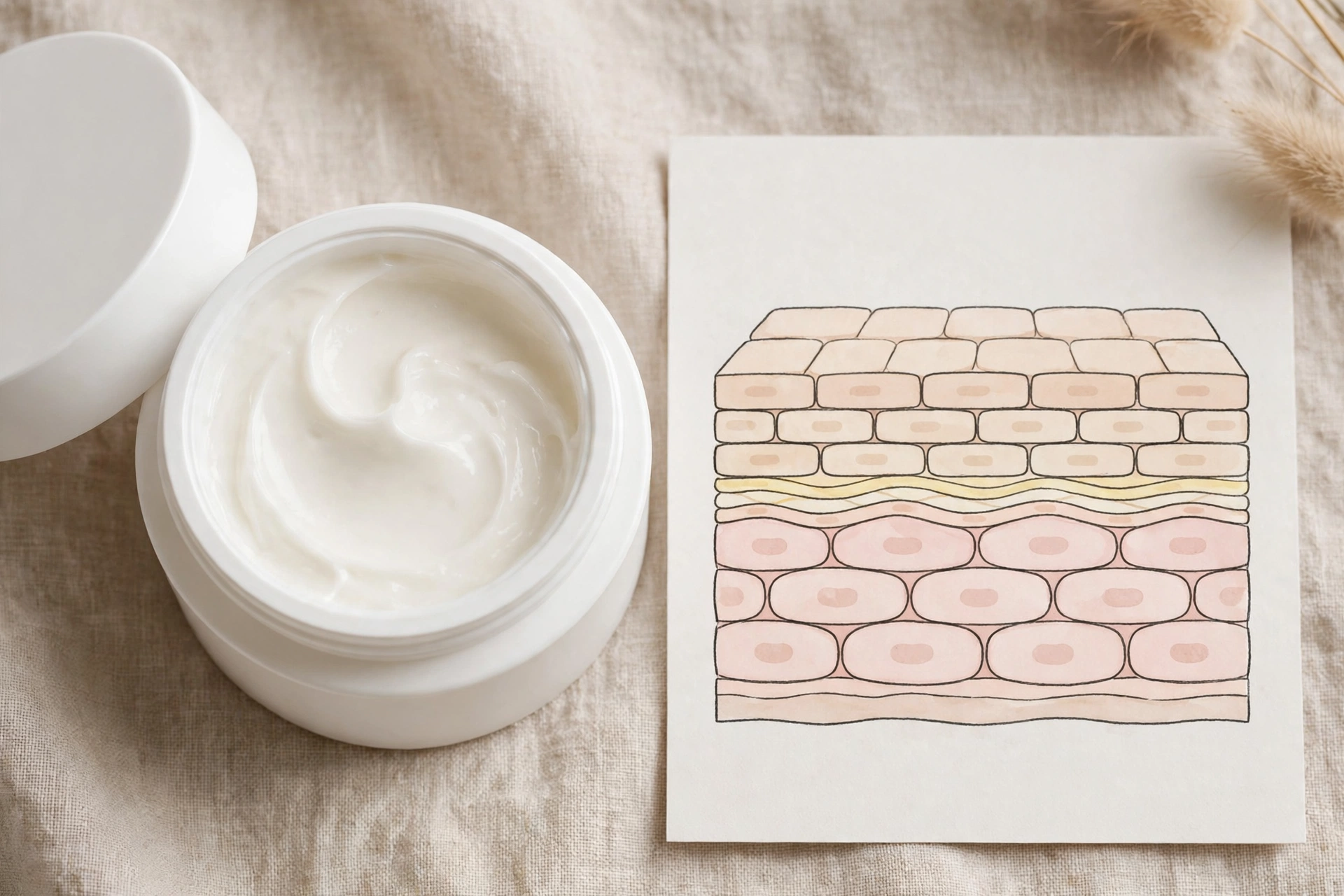
Dermatologists often describe the outer skin layer as a brick wall. The skin cells are the bricks, and the fats between them are the mortar that holds the wall together. Ceramides, cholesterol and fatty acids form that mortar. Dr Kassouf calls ceramides the grout that keeps the building blocks of the skin together and working as a barrier between the inside and outside world. When the mortar is full, skin feels smooth and calm. When it thins, skin feels tight, dry and reactive.
Ceramides Are Not One Ingredient
Ceramide is a family name, not a single molecule. Human skin contains at least 12 types, and skincare products usually use three of them. The table below shows the three to look for on a label, because a product that names them is easier to judge than one that just says "ceramide complex" with no detail.
| Label name | Also called | What it does |
|---|---|---|
| Ceramide NP | Ceramide 3 | The most common ceramide in healthy skin; the backbone of the barrier |
| Ceramide AP | Ceramide 6-II | Supports normal barrier function and helps skin hold water |
| Ceramide EOP | Ceramide 1 | A long-chain ceramide that helps organise the barrier layers |
If a label lists only one of these, it can still help, but a product with two or three of them, plus cholesterol and fatty acids, matches your skin's own mix more closely. Our Skin Barrier Repair guide explains the full barrier picture, including the other ingredients that support it.
What Ceramides Do for Skin
Ceramides for skin do three useful jobs, and all three come back to the same idea: a fuller barrier keeps water in and irritants out. That is why they suit almost every skin type, including sensitive and breakout-prone skin, and why they are a winter staple rather than a short-term fix.
They Seal In Moisture
Ceramides act more like a seal than a sponge. Humectants such as hyaluronic acid draw water into the skin, while ceramides help keep that water from escaping. Dermalogica makes the same distinction: ceramides do not pull water in, they help prevent moisture from leaving. That is why a ceramide cream works best on slightly damp skin, after a hydrating step, rather than on dry skin alone. For the hydrating step, read our What Is Hyaluronic Acid guide first.
They Support the Barrier After Strong Actives
Strong actives thin the barrier while they work, which is why skin can sting after retinal, glycolic acid or salicylic acid. A ceramide cream used on the same night, or on the nights between actives, helps the barrier recover. This buffer role is one of the most practical uses of ceramides for skin: they do not cancel the active, they make it easier to keep using. Our Retinal vs Retinol guide shows how to introduce a retinoid slowly, and ceramides are the moisturiser to reach for on that plan.
What They Cannot Do
Ceramides cannot cure eczema, rosacea or any medical skin condition, even though ceramide creams are often studied in people with those conditions. They also cannot fade dark spots on their own, build collagen, or replace sunscreen. If your main concern is dark spots, read our Best Ingredient for Dark Spots guide instead, and use ceramides as the supporting moisturiser inside that routine, not as the treatment itself.
Ceramides vs Other Barrier Ingredients
Ceramides for skin are one part of the barrier team, and each team member does a different job. The short comparison below shows where ceramides fit, so you can see why the best winter routine usually combines two or three of them instead of relying on one ingredient alone.
| Ingredient | Main job | Best for | Evidence note |
|---|---|---|---|
| Ceramides | Seal the barrier, stop water loss | Dry, tight or over-exfoliated skin | Good; small trials, mostly in creams |
| Squalane | Lightweight seal, softens skin | Oily and acne-prone skin in winter | Modest; no large trial of squalane alone |
| Hyaluronic acid | Draws water into the skin | Dehydrated skin under a cream | Good for hydration, needs a seal on top |
| Niacinamide | Supports barrier and calms tone | Almost everyone, as a first step | Good for tone and barrier support |
| Cholesterol + fatty acids | Complete the lipid mortar | Barrier repair alongside ceramides | Best used together, not alone |
The last row matters most. Ceramides, cholesterol and fatty acids work as a team in your skin, and a cream that includes all three is usually a better barrier repair product than a cream with ceramides alone. The next section explains why the exact ratio is still debated.
What the Evidence Actually Shows
Honesty matters here, because many product pages present ceramides as a proven cure for every skin problem. The evidence for ceramides for skin is real but modest. Trials are small, most test ceramide creams rather than ceramides on their own, and formulations vary widely. That does not make ceramides useless — dermatologists recommend them for good reason — but it does mean you should expect steadier, calmer skin rather than a dramatic transformation.
The Trials Are Small and Mostly Use Combination Creams
One small study often cited by skincare guides followed 24 children with atopic dermatitis who used a ceramide cream for three weeks, and severity improved in 22 of the 24 children. That is encouraging, but it is a small, short study, and the cream contained other ingredients too, so the result cannot be credited to ceramides alone. Larger reviews report that ceramide-dominant barrier creams can match mid-strength steroid creams for mild to moderate flares in some trials, yet those creams also contain cholesterol and fatty acids in set ratios. In short, the evidence supports ceramide creams as a group, not ceramides in isolation.
The Ratio Is Debated: 3:1:1 or 1:1:1?
Healthy skin holds ceramides, cholesterol and fatty acids in roughly equal proportions, and researchers have tested two practical ratios for creams: about 3 parts ceramides to 1 part cholesterol to 1 part fatty acids, and an equal 1:1:1 mix. Early laboratory work by Man and colleagues in 1993, and later by Zettersten and colleagues in 1997, found that applying ceramides alone, or in the wrong proportions, could delay barrier repair rather than speed it. That is why the ratio matters: a cream with ceramides plus cholesterol and fatty acids is more likely to help than a product with a single ceramide and nothing else. The exact best ratio is still debated, so treat any brand that claims a magic ratio with care, and judge the product by its full ingredient list instead.
How to Use Ceramides, Step by Step
Ceramides for skin are forgiving to use, because they are gentle and suit morning and night. The steps below get the most from a ceramide cream without adding extra products or extra cost. If your skin stays calm for two weeks, you can keep the same routine all winter; if it still feels tight, add a richer cream at night before you add anything stronger.
Step 1: Cleanse Gently
Wash with lukewarm water and a gentle, fragrance-free cleanser, then pat the skin so it stays slightly damp. Avoid hot water and harsh foaming cleansers, because they strip the same lipids you are trying to replace. If your skin feels squeaky after washing, your cleanser is too strong for winter.
Step 2: Add Water First, Then the Seal
Apply a hydrating step first, such as hyaluronic acid on damp skin, and let it absorb for a minute. Then apply your ceramide cream or serum on top, so the ceramides seal the water in. A cream suits dry skin best, because it carries more lipids, while a lighter ceramide serum suits oily skin and layers well under a separate moisturiser.
Step 3: Use It Morning and Night
Ceramides work in the morning and at night, unlike acids and retinoids that usually belong at night. Use a pea-sized amount for the face, or more for the neck and body, and spread it gently rather than rubbing hard. Twice a day is the usual pattern in the trials, and it is the simplest habit to keep.
Step 4: Buffer Your Strong Actives
On nights when you use retinal, glycolic acid or salicylic acid, apply the ceramide cream after the active, or use the sandwich method: ceramide cream first, active second, ceramide cream again. That buffer lowers stinging without stopping the active from working. If your skin feels raw, skip the active for a night and use ceramides alone until it calms. Our Winter Skin Care Routine guide shows how to fit this buffer into a cold-weather routine.
Step 5: Wear Sunscreen Every Morning
Apply a broad-spectrum sunscreen with SPF 30 or higher every morning, even on cloudy days, and reapply when you spend time outdoors. Ceramides do not protect against the sun, and sunlight keeps damaging the barrier you are repairing. Sunscreen is part of the barrier routine, not an optional extra.
Step 6: Give It Two to Four Weeks
Skin usually feels softer within a few days, but real barrier change takes two to four weeks of steady use. Judge the product after a month, not after three days. If nothing has changed by then, the cream may be too light for your skin, or another step in your routine may be causing the dryness.
Ceramides and Squalane: Layering the Two Together
Ceramides and squalane are the two winter seals in this site's barrier cluster, and they layer well together. Squalane is the lightweight seal: a single oil that softens skin without feeling heavy. Ceramides are the mortar: the fats that rebuild the barrier itself. Used together, squalane adds slip and softness while ceramides rebuild the structure underneath. Apply squalane first, then the ceramide cream on top, so the cream seals the oil in. For the full squalane guide, read our Squalane for Skin post, which published on Monday 23 November 2026. Dermalogica already notes squalane as a supporting lipid beside ceramides, so this pairing is not new — it is simply the two seals used in the right order.
What Pairs Well With Ceramides — and What to Keep Apart
Ceramides for skin pair well with almost everything, because they are gentle and do not increase sensitivity. Niacinamide supports the barrier through a different route and calms redness, and Vitamin C adds antioxidant protection during the day. Hyaluronic acid hydrates underneath the ceramide seal, and a plain moisturiser always pairs safely. Keep ceramides apart from nothing in particular — the caution runs the other way. Strong peels, high-strength Glycolic Acid and Salicylic Acid can strip the barrier on their own, so use ceramides to buffer them rather than skipping ceramides on active nights. If you use a retinoid, alternate nights at first, and use ceramides every night, including the nights you skip the retinoid.
How to Read a Ceramide Label
A good ceramide product is easy to spot once you know what to look for, and the label tells you more than the front of the bottle. Check four things before you buy, and skip any product that fails the first two.
Look for NP, AP and EOP Together
Choose a product that names ceramide NP, ceramide AP and ceramide EOP in its ingredient list. One ceramide alone can still help, but two or three together match your skin's own mix more closely. Be wary of a product that says "ceramide complex" on the front but names no ceramide type on the back.
Check That Cholesterol and Fatty Acids Are There Too
Look for cholesterol and a fatty acid, such as stearic acid or linoleic acid, in the same ingredient list. A cream with ceramides plus cholesterol and fatty acids is a barrier repair cream; a cream with ceramides alone is only part of the job. The exact ratio is debated, so do not chase a brand's claimed ratio — just check that all three lipid types are present.
Check Where Ceramides Sit in the List
Ingredients are listed from the highest amount to the lowest. Ceramides near the top or middle of the list are present in a useful amount; ceramides at the very bottom, after fragrance and preservatives, are likely a token amount for the label. Fragrance-free suits sensitive skin best, and a pump or tube keeps the cream fresher than an open jar.
Pseudo-Ceramides Are Not the Same
Some products use pseudo-ceramides, which are lab-made molecules that behave like ceramides but are not identical to the ones in your skin. They can still help, and they are often cheaper, but a product that lists real ceramide NP, AP and EOP is the safer choice when you want the closest match to your skin's own lipids.
Who Should Try Ceramides?
Ceramides for skin suit almost everyone, because they replace fats your skin already makes. They suit dry, tight winter skin best, and they also suit sensitive skin, skin that stings after actives, and skin that has been over-exfoliated. Oily and acne-prone skin can use them too, as long as the formula is light: a ceramide serum or a gel-cream, rather than a heavy balm. If that describes you, start with a fragrance-free cream and follow the steps above.
A Good Fit If You
Your skin feels tight after washing, flakes in winter, or stings when you apply other products. You use retinal, glycolic acid or salicylic acid and want a buffer that makes them easier to tolerate. A ceramide cream also suits anyone who wants a moisturiser to use every day, morning and night, without worrying about irritation or sun sensitivity.
Think Twice, or Get Advice First, If You
You have eczema, rosacea or a diagnosed skin condition that is flaring, because ceramides support the barrier but do not treat the condition itself — ask a clinician about a treatment plan, and use ceramides as the supporting moisturiser inside it. See a dermatologist promptly if a patch of skin is cracked, bleeding, blistered, or does not heal, or if a mark changes shape, grows or looks different from your other moles.
Side Effects and Safety
Ceramides for skin are among the gentlest ingredients in skincare, and side effects are rare. Most people use them twice a day for months without any reaction, and they are widely used in products for babies and sensitive skin. The main risk is not the ceramide itself but the rest of the formula: fragrance, essential oils or preservatives can irritate sensitive skin, so choose fragrance-free when your skin reacts easily. Patch test a new cream on the inner arm for two or three days before you put it on your face, and stop use if you develop itching, redness or swelling where you tested it.
Common Mistakes to Avoid
The most common mistake is using ceramides alone on dry skin and expecting them to hydrate. Ceramides seal water in, so they need water underneath — a damp face, a hyaluronic acid step, or both. Another mistake is buying a cream with ceramides at the very bottom of the ingredient list and expecting barrier repair from a token amount. A third mistake is layering ceramides with a strong acid and a retinoid on the same night and blaming the ceramide cream when skin stings. Finally, do not stop sunscreen because your skin feels softer; ceramides do not protect against the sun, and winter sun still damages the barrier.
Frequently Asked Questions
Can I use ceramides every day?
Yes, twice a day is the usual pattern, morning and night. Ceramides are gentle, do not increase sun sensitivity, and do not need a break-in period. Use them every day, including the nights you skip stronger actives.
Can I use ceramides with retinol or retinal?
Yes, and this is one of the best pairings in skincare. Apply the ceramide cream after your retinoid, or sandwich it around the retinoid on sensitive nights. The ceramides buffer irritation without stopping the retinoid from working. Our Retinal vs Retinol guide explains the slow introduction that makes this pairing work.
Can I use ceramides with vitamin C?
Yes, the two pair safely. Use vitamin C in the morning for antioxidant protection and ceramides morning and night for the barrier. Many ceramide creams already include niacinamide for the same reason: the ingredients support the barrier through different routes.
Are ceramides good for oily or acne-prone skin?
Yes, if the formula is light. Oily skin still needs a barrier, and a damaged barrier can make breakouts worse. Choose a ceramide serum or a gel-cream rather than a heavy balm, and avoid formulas with added oils that feel greasy on your skin.
Do ceramides help eczema?
Ceramide creams can support the barrier in eczema and make skin feel more comfortable, and small trials have shown improvement in severity. However, ceramides are not a treatment for eczema itself. If eczema is flaring, ask a clinician for a treatment plan and use ceramides as the supporting moisturiser inside it.
How long do ceramides take to work?
Skin often feels softer within a few days, but real barrier change takes two to four weeks of steady, twice-daily use. Judge the product after a month. If nothing has changed by then, the cream may be too light, or another step in your routine may be causing the dryness.
Key Takeaways
Ceramides for skin rebuild your barrier by topping up the fats your skin already makes, and they seal in moisture rather than adding water. Choose a fragrance-free cream with ceramide NP, AP and EOP, plus cholesterol and fatty acids, and use it morning and night on slightly damp skin. Layer squalane underneath for extra softness, buffer retinal and acids with ceramides on active nights, and wear SPF 30 or higher every morning. The evidence is modest and the best ratio is still debated, but ceramides are one of the gentlest, most reliable winter ingredients you can use.
Sources and References
Cleveland Clinic — Ceramides: What They Are and What They Do for Skin (Dr Amy Kassouf)
Dermalogica — Ceramides: Benefits for Skin
Sensitive Skin Field Guide — Ceramide Moisturizers for Sensitive Skin: Barrier Repair
Man et al., 1993, and Zettersten et al., 1997 — early laboratory work on ceramide, cholesterol and fatty acid ratios and barrier recovery, as reported in barrier-repair reviews. Cited by name; the exact best ratio remains debated.
Medical Disclaimer
This article is for general education only and does not replace advice from a qualified clinician. Skincare ingredients affect people differently, and pregnancy, skin conditions and medicines can change what is safe for you. Patch test new products, stop use if irritation appears, and ask a dermatologist about persistent dryness, eczema flares, or any reaction that does not settle within a few days.