Winter eczema can turn an ordinary cold day into a cycle of itching, dryness, and irritation. As temperatures fall, your skin may feel unusually tight, develop rough patches, or become uncomfortable even after applying your usual moisturizer.
For people with eczema-prone skin, winter can be particularly challenging. Cold outdoor air, dry indoor heating, and changes in daily habits can make it harder for the skin to retain moisture. As a result, existing eczema symptoms may become more noticeable or difficult to manage.
Fortunately, a few practical changes can help protect your skin during colder months.
This guide explains why eczema gets worse in winter, how to recognize common symptoms, and which skincare habits can help calm flare-ups. It also covers moisturizer ingredients, common mistakes, and signs that professional treatment may be necessary.
Quick answer: Winter eczema often worsens because cold, dry air and indoor heating contribute to moisture loss from the skin. Short lukewarm showers, fragrance-free creams or ointments, comfortable clothing, and consistent moisturizing can help manage dryness. However, persistent or severe eczema may also require medical treatment.
What Is Winter Eczema?
Winter eczema is a common term used to describe eczema symptoms that develop or worsen during colder weather. It is not a separate medical diagnosis.
Eczema refers to a group of inflammatory skin conditions that cause itching and irritation. The most common type is atopic dermatitis, a long-term condition associated with changes in the skin barrier and immune system.
Your skin barrier acts as a protective layer. It helps retain moisture while limiting exposure to environmental irritants.
When this barrier is disrupted, water can escape more easily. Meanwhile, soaps, fragrances, and other irritants may cause additional discomfort.
In winter, lower humidity and cold weather can make this problem worse.
However, not everyone with eczema experiences their worst symptoms in winter. Some people are more affected by summer heat, sweating, or seasonal allergens.
The main goal is to understand your personal triggers and maintain a skincare routine that supports your skin throughout the year.
Winter Eczema Symptoms: What to Look For
Winter eczema symptoms vary depending on the type of eczema, the affected area, and the individual’s skin tone.
Common symptoms include:
- Persistent itching: Skin may itch throughout the day or become particularly uncomfortable at night.
- Dry, rough patches: Affected areas may feel coarse, flaky, or unusually tight.
- Inflammation: Patches can look pink or red on lighter skin and purple, gray, or darker than surrounding skin on deeper skin tones.
- Cracked skin: Severe dryness may lead to painful cracks, especially on the hands and fingers.
- Thickened skin: Repeated scratching can gradually make affected areas thicker and rougher.
- Sleep disruption: Intense itching may interfere with sleep and everyday activities.
Eczema commonly affects the hands, elbows, knees, and other areas of the body. In young children, it can also appear on the face.
According to the National Health Service (NHS), eczema symptoms often fluctuate between periods of improvement and flare-ups.
Because other skin conditions can produce similar symptoms, a healthcare professional should evaluate a new, persistent, or unexplained rash.
Winter Eczema vs. Ordinary Dry Skin
Dry skin and eczema can look similar, but they are not necessarily the same condition.
| Feature | Ordinary dry skin | Eczema |
|---|---|---|
| Itching | Often mild | Can be intense or persistent |
| Skin texture | Rough or flaky | Dry, inflamed, cracked, or thickened |
| Common triggers | Low humidity, frequent washing | Irritants, allergens, weather changes, and other factors |
| Duration | May improve with basic skincare | Can involve recurring flare-ups |
| Treatment | Moisturizing may be sufficient | May require moisturizers and anti-inflammatory treatment |
Ordinary winter dryness can cause discomfort without an underlying inflammatory skin condition.
Eczema, on the other hand, involves inflammation and may require more than moisturizer alone.
Another condition, called asteatotic eczema or eczema craquelé, can develop in very dry skin, particularly in older adults. It may create a distinctive cracked appearance.
Because these conditions can overlap, do not rely on appearance alone to identify the cause of a rash.
Why Does Eczema Get Worse in Winter?
Several environmental and lifestyle factors can contribute to winter eczema flare-ups.
Understanding these triggers can make it easier to adjust your everyday routine.
1. Cold Air and Low Humidity
Cold winter weather is often accompanied by lower humidity.
When the surrounding air is dry, moisture can evaporate more readily from the skin. People with eczema may experience greater discomfort because their skin barrier is already vulnerable.
This can leave affected areas feeling tight, rough, or increasingly itchy.
Cold wind may add further irritation, especially on exposed areas such as the face and hands.
2. Indoor Heating Can Increase Dryness
During winter, many people spend more time indoors with central heating, room heaters, or warm air blowing through their homes.
Heating can reduce indoor relative humidity, particularly when cold outdoor air is warmed without adding moisture.
Consequently, skin may remain exposed to dry conditions even after coming indoors.
A properly maintained humidifier may help when indoor air is excessively dry. However, it is not a substitute for eczema treatment, and some people may find that higher humidity worsens their symptoms.
The US Environmental Protection Agency generally recommends keeping indoor relative humidity between 30% and 50% to help manage indoor air quality.
3. Long, Hot Showers
A steaming shower may feel comforting on a cold morning. Unfortunately, very hot water can make eczema-prone skin more uncomfortable.
Prolonged exposure to hot water may worsen dryness and irritation.
The American Academy of Dermatology (AAD) recommends short, warm baths or showers lasting approximately 5–10 minutes, followed by moisturizing while the skin is still damp.
4. Wool and Irritating Winter Clothing
Winter clothing can sometimes create friction against sensitive skin.
Coarse wool, tight garments, and certain synthetic fabrics may contribute to itching. Additionally, wearing too many layers can cause overheating and sweating, which are eczema triggers for some people.
Soft, breathable clothing is often more comfortable.
If you need a heavy winter sweater, consider wearing a smooth cotton layer underneath to reduce direct contact with irritating fabric.
5. Harsh Cleansers and Frequent Handwashing
Frequent washing, strong soaps, and fragranced products can aggravate eczema-prone skin.
Hands are particularly vulnerable because they are repeatedly exposed to water, cleansers, and environmental irritants.
As a result, some people notice more cracking, tightness, and itching around their fingers and knuckles during winter.
Choosing a gentle, fragrance-free cleanser and moisturizing after washing can help reduce irritation.
6. Stress and Other Personal Triggers
Weather is not the only factor that matters.
Stress, allergens, infections, and individual sensitivities may also contribute to eczema flare-ups.
For that reason, two people with the same type of eczema may respond differently to the same winter conditions.
Paying attention to when symptoms worsen can help you identify patterns and discuss them with your dermatologist.
How to Calm Winter Eczema: A Simple Skincare Routine
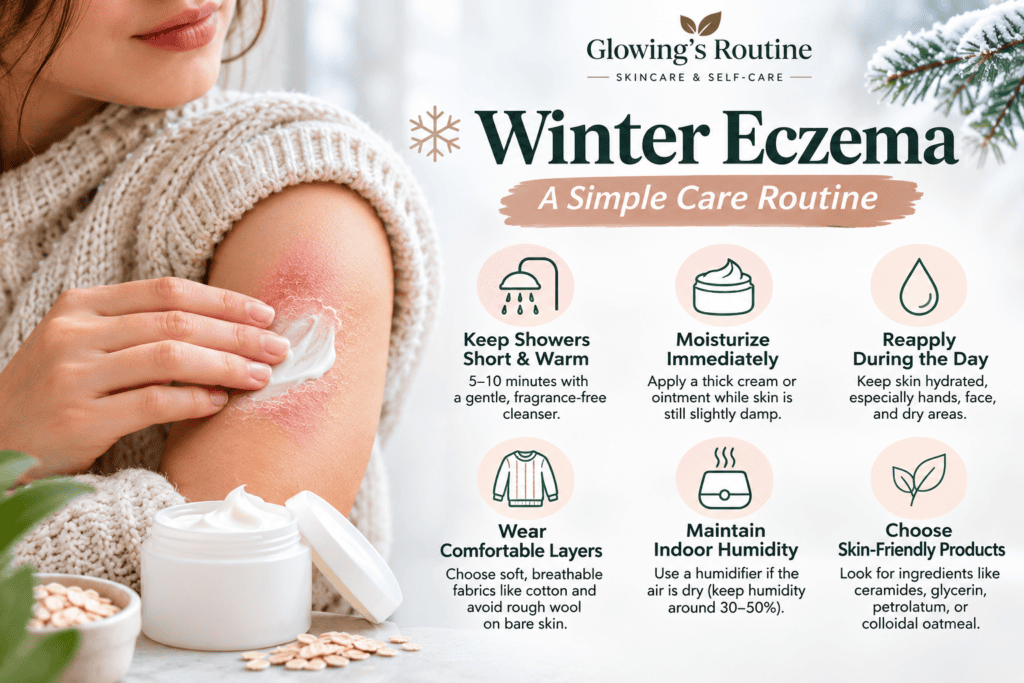
A good winter eczema skincare routine does not need expensive products or numerous steps.
Instead, it should focus on gentle cleansing, regular moisturizing, and avoiding known irritants.
The following routine can help support eczema-prone skin alongside any treatment recommended by your healthcare professional.
Step 1: Cleanse Gently With Lukewarm Water
Start by avoiding very hot water.
Keep baths and showers relatively short, and use a mild, fragrance-free cleanser when needed.
Focus cleansing on areas that require it rather than aggressively washing every dry patch.
Avoid rough washcloths, exfoliating gloves, and harsh scrubs on irritated skin.
Why it helps: Gentle washing reduces unnecessary irritation while maintaining everyday hygiene.
Step 2: Pat Your Skin Dry
After bathing, use a soft, clean towel to pat your skin gently.
Avoid vigorous rubbing, particularly over inflamed or cracked areas.
Leave your skin slightly damp before applying moisturizer.
This prepares the skin for the next step without adding unnecessary friction.
Step 3: Apply a Thick, Fragrance-Free Moisturizer
Moisturizing is one of the most useful everyday habits for managing eczema-prone skin.
Apply a suitable cream or ointment shortly after bathing, while your skin remains slightly damp.
Thicker products generally provide more moisture protection than lightweight lotions, although individual preferences and skin tolerance matter.
Look for formulas labeled fragrance-free rather than simply unscented.
The AAD explains that products labeled unscented can sometimes contain ingredients used to mask fragrance.
Helpful tip: Keep moisturizer near your bathroom sink or shower so applying it becomes part of your daily routine.
For additional information on protecting skin in cold weather, read our Winter Skin Care Routine: How to Protect Dry Skin and Your Skin Barrier.
Step 4: Reapply Moisturizer Throughout the Day
One application may not be enough, especially if your hands are frequently washed or your skin becomes dry again.
Apply moisturizer at least twice daily, and more often when needed.
Pay particular attention to areas that become uncomfortable, including:
- Hands and fingers
- Elbows and knees
- Lower legs
- Other areas affected by recurring dryness
Continue moisturizing even when symptoms improve.
Consistent care can support the skin barrier between flare-ups.
Step 5: Protect Very Dry Areas With an Ointment
If a regular cream does not provide enough comfort, a plain fragrance-free ointment may be helpful.
Petrolatum-based ointments create a protective layer that reduces moisture loss.
You can use an appropriate ointment as your moisturizer or, if tolerated, apply a thin layer over a cream.
However, do not apply unfamiliar products to infected or severely damaged skin without professional advice.
People with known ingredient sensitivities should always check product labels.
Step 6: Test New Skincare Products Carefully
Even products marketed for sensitive skin can occasionally cause irritation.
Before introducing a new product across a large area, test it on a small patch of unaffected skin.
The AAD advises testing products on a small area of the arm for 7–10 days and monitoring for reactions.
If itching, swelling, or irritation develops, stop using the product.
This home test is not the same as medical allergy patch testing, which is performed by healthcare professionals.
For more information about understanding the protective layer of your skin, see our guide to repairing a damaged skin barrier.
Best Moisturizer Ingredients for Winter Eczema
Choosing the right moisturizer can make winter skincare easier.
Rather than focusing on expensive packaging or complicated formulas, prioritize products that your skin tolerates and that provide lasting moisture.
The following ingredients are commonly found in moisturizers designed for dry or eczema-prone skin.
| Ingredient | Potential benefit |
|---|---|
| Ceramides | Lipids that help support the skin’s protective barrier |
| Glycerin | A humectant that helps attract and retain water |
| Petrolatum | An occlusive ingredient that reduces moisture loss |
| Colloidal oatmeal | May help soothe dry, itchy, irritated skin |
| Hyaluronic acid | A humectant that helps support skin hydration |
| Shea butter | An emollient that softens and conditions dry skin |
No single ingredient is guaranteed to work for everyone.
Some people prefer rich creams, while others find plain ointments more comfortable.
The National Eczema Association explains that creams and ointments are particularly useful for helping eczema-prone skin retain moisture.
Its Seal of Acceptance program can also help consumers identify products that have undergone an additional review process. However, the seal does not guarantee that a product will suit every individual.
Cream, Lotion, or Ointment: Which Is Better?
Creams are often a practical everyday choice because they provide moisturizing ingredients without feeling as greasy as ointments.
Ointments contain more oil and can be especially useful for very dry areas or overnight care.
Lotions are generally lighter and may feel more comfortable in some situations, but they may not provide enough moisture protection for severely dry skin.
The best option is a product that keeps your skin comfortable, does not trigger irritation, and fits your skincare needs.
How to Relieve Winter Eczema Itching Safely
Itching is often one of the most frustrating eczema symptoms.
Unfortunately, scratching can further damage irritated skin and contribute to an ongoing itch-scratch cycle.
If itching becomes uncomfortable, consider these gentle strategies.
Use a Cool Compress
Place a clean, cool, damp cloth over the itchy area briefly.
This may provide temporary comfort without the irritation associated with hot water.
Afterward, apply a suitable moisturizer if the area feels dry.
Keep Fingernails Short
Short, smooth fingernails can help reduce accidental skin damage from scratching.
For children, discuss appropriate ways to manage nighttime scratching with a healthcare professional.
Avoid Overheating
Excessively warm rooms and heavy clothing may increase sweating and discomfort.
Choose breathable layers and adjust room temperature to maintain comfort.
Follow Prescribed Eczema Treatment
Moisturizing helps manage dryness, but it does not replace treatment for significant inflammation.
If your dermatologist has prescribed an eczema medication, use it according to their instructions.
If itching remains severe or regularly interrupts sleep, seek medical advice rather than repeatedly adding new over-the-counter products.
Can a Humidifier Help With Winter Eczema?
A humidifier may be useful when indoor air becomes excessively dry.
By adding moisture to the air, it can help reduce environmental dryness that may contribute to skin discomfort.
However, humidifiers require proper maintenance.
To use one more safely:
- Monitor indoor humidity with a hygrometer.
- Avoid raising humidity above 50%.
- Empty and dry the water tank daily.
- Clean the device according to the manufacturer’s instructions.
- Stop using it if excess humidity, condensation, or irritation becomes a problem.
The US Environmental Protection Agency provides additional guidance on maintaining home humidifiers.
Remember that a humidifier supports the indoor environment; it does not cure eczema.
Common Winter Eczema Mistakes to Avoid
Even a good skincare routine can become less effective when certain habits repeatedly irritate the skin.
Here are some common mistakes worth avoiding.
Exfoliating Dry, Flaky Patches
Flaking does not automatically mean your skin needs exfoliation.
When eczema is active, physical scrubs and strong exfoliating acids may increase irritation.
Instead, prioritize gentle cleansing, moisturizing, and appropriate medical treatment.
Using Fragranced Skincare Products
A pleasant scent does not mean a product is suitable for sensitive skin.
Perfumes, scented body washes, and some essential oils may trigger irritation in susceptible individuals.
Choose fragrance-free products whenever possible.
Trying Several New Products at Once
Introducing multiple products makes it harder to identify which ingredient causes a reaction.
During a flare-up, keep your routine simple and use products you already know your skin tolerates.
Ignoring Symptoms Between Flare-Ups
Eczema can improve temporarily and then return.
Stopping all moisturizing as soon as your skin feels comfortable may leave it vulnerable to renewed dryness.
Regular maintenance is therefore an important part of long-term care.
Relying on Unproven Home Remedies
Not every natural or homemade treatment is safe for eczema-prone skin.
Essential oils, concentrated herbal mixtures, and other household ingredients can irritate sensitive or cracked skin.
Ask a healthcare professional before applying unfamiliar remedies to inflamed or broken skin.
Avoiding Medical Treatment When It Is Needed
A moisturizer cannot always control an inflammatory eczema flare.
Some people require prescription topical corticosteroids or other anti-inflammatory medicines.
Delaying appropriate treatment can allow symptoms to continue or worsen.
When Should You See a Dermatologist?
Winter eczema symptoms should not be ignored when they are persistent, painful, or affecting everyday life.
Arrange a medical appointment if:
- Itching continues despite consistent gentle skincare.
- Symptoms repeatedly interrupt sleep.
- Cracked skin becomes painful or begins bleeding.
- A rash spreads or keeps returning.
- You are unsure whether your symptoms are caused by eczema.
- Your usual treatment is no longer working.
A healthcare professional can assess your symptoms and recommend treatment based on the type and severity of the condition.
Warning Signs That Need Prompt Medical Attention
Seek urgent medical assessment if affected skin:
- Becomes increasingly painful, hot, or swollen.
- Develops pus, oozing, or unusual crusting.
- Suddenly becomes much worse or spreads rapidly.
- Develops clusters of painful blisters, especially with fever or feeling unwell.
These symptoms may indicate a skin infection or another serious complication.
In particular, eczema herpeticum is a potentially serious viral infection that requires urgent medical assessment.
Do not attempt to manage suspected infection with moisturizer alone.
The NHS guidance on atopic eczema outlines symptoms that require urgent attention.
What Treatments Can Help With Persistent Winter Eczema?
Daily moisturizing is an important part of eczema care, but treatment depends on the severity and underlying condition.
For mild symptoms, a healthcare professional may recommend an emollient and changes to everyday skincare.
For more significant inflammation, treatment may include prescribed topical corticosteroids or non-steroidal anti-inflammatory medicines.
People with difficult-to-control eczema may need additional therapies.
The National Institutes of Health explains that eczema treatment aims to reduce inflammation, control itching, restore skin comfort, and prevent future flare-ups.
Because treatment choices depend on factors such as age, affected body area, and severity, avoid starting or changing prescription medicines without appropriate medical guidance.
How to Help Prevent Winter Eczema Flare-Ups
Although it may not be possible to prevent every flare-up, consistent habits can help reduce avoidable irritation.
Before colder weather arrives, review your skincare routine and make sure you have a moisturizer that suits your skin.
When temperatures fall, continue the basics:
- Moisturize regularly, including after bathing and handwashing.
- Choose warm rather than very hot water.
- Use gentle, fragrance-free cleansing products.
- Wear comfortable layers that do not irritate your skin.
- Protect exposed skin from cold wind.
- Avoid overheating and excessive sweating.
- Identify personal triggers and follow your eczema treatment plan.
Most importantly, remember that prevention is not about creating a complicated skincare routine.
It is about keeping everyday habits comfortable, consistent, and appropriate for your skin.
Frequently Asked Questions About Winter Eczema
Why does eczema get worse in winter?
Cold, dry air and indoor heating can contribute to skin moisture loss. Hot showers, irritating fabrics, and harsh cleansing products may add further irritation. However, winter is not the worst season for everyone with eczema.
What is the fastest way to calm winter eczema?
A gentle routine with lukewarm washing and regular application of a fragrance-free cream or ointment may help relieve dryness. A cool compress can temporarily soothe itching. Significant inflammation may require medical treatment, and no single home routine guarantees rapid relief.
What is the best moisturizer for winter eczema?
A thick, fragrance-free cream or ointment is generally a useful choice. Ingredients such as petrolatum, glycerin, and ceramides can help support moisture retention. The ideal product depends on your skin’s tolerance and needs.
Is Vaseline good for winter eczema?
Plain petroleum jelly can help reduce moisture loss and protect very dry skin. However, it does not directly treat the underlying inflammation of eczema. Some people benefit from using it as part of a broader skincare and treatment routine.
Can winter eczema spread?
Eczema is not contagious, so it cannot spread from one person to another through contact. However, affected areas can become more extensive during a flare-up. Rapid spreading, pain, unusual crusting, or fever requires prompt medical assessment.
Can winter eczema affect the face?
Yes. Eczema can affect the face, including the cheeks and areas around the eyes. Facial skin can be particularly sensitive, so avoid using strong medicated products there unless a healthcare professional recommends them.
Should I use a humidifier for winter eczema?
A humidifier may help when indoor humidity is unusually low. However, excess moisture can promote mold and dust mites, and it may worsen symptoms for some people. Maintain the device carefully and avoid excessively high humidity.
Does winter eczema go away when the weather gets warmer?
Symptoms related to cold-weather dryness may improve as environmental conditions change. However, atopic dermatitis is a recurring condition, and some individuals experience flare-ups during warmer months as well.
Final Thoughts
Winter eczema can be uncomfortable, particularly when dryness, itching, and irritation interfere with daily activities.
However, caring for eczema-prone skin does not have to mean buying an expensive collection of skincare products.
Start with gentle cleansing, consistent moisturizing, and comfortable clothing. Next, identify the everyday habits that make your symptoms worse.
A thick, fragrance-free moisturizer can help support the skin barrier, while avoiding harsh soaps and excessive heat may reduce unnecessary irritation.
Above all, remember that persistent eczema is a medical condition rather than simply a cosmetic issue.
The best winter eczema routine is one that protects the skin barrier, respects individual triggers, and works alongside appropriate medical care when needed.
If you are also dealing with ordinary seasonal dryness, explore our complete winter skincare routine for additional ways to keep your skin comfortable during colder months.
Medical Information and References
This article was prepared using publicly available patient education and clinical guidance from established medical and health organizations.
- American Academy of Dermatology: How to Treat Eczema at Home — Guidance on bathing, moisturizing, fragrances, product testing, and daily eczema care.
- NHS: Atopic Eczema — Symptoms, triggers, treatment options, and signs that require medical attention.
- NIH MedlinePlus: Eczema and the Cold — Cold-weather triggers and general winter eczema prevention tips.
- National Eczema Association: Moisturizing — Guidance on choosing moisturizers for eczema-prone skin.
- National Institute of Arthritis and Musculoskeletal and Skin Diseases: Atopic Dermatitis Treatment — Overview of medical treatments and disease management.
- US Environmental Protection Agency: Use and Care of Home Humidifiers — Indoor humidity and humidifier safety recommendations.
Medical Disclaimer
The information in this article is provided for general educational purposes only. It is not intended to diagnose, treat, or cure any medical condition and should not replace advice from a qualified healthcare professional. Eczema symptoms and treatment needs vary. Consult a dermatologist or other qualified healthcare provider for persistent, severe, or worsening symptoms, and seek urgent medical care for signs of infection or other serious complications.