Quick Answer
Kojic acid for skin is a brightening ingredient that can fade dark spots and uneven tone over time. It works by slowing tyrosinase, the enzyme that starts melanin production, so less new pigment forms while old pigment sheds with normal skin renewal. Expect gradual change over 8 to 12 weeks, not overnight results. Start with a leave-on product at 1% or less, use it once a day at night, patch test first, and wear sunscreen every morning. However, kojic acid causes contact allergy more often than gentler brighteners, so sensitive skin needs extra care.
This guide gives you the honest picture. The evidence is modest, mostly from small trials and combination products, and kojic acid works more slowly than hydroquinone. It also explains which strength to choose, how to use it step by step, what pairs well with it, and when to ask a clinician instead.
What Is Kojic Acid?
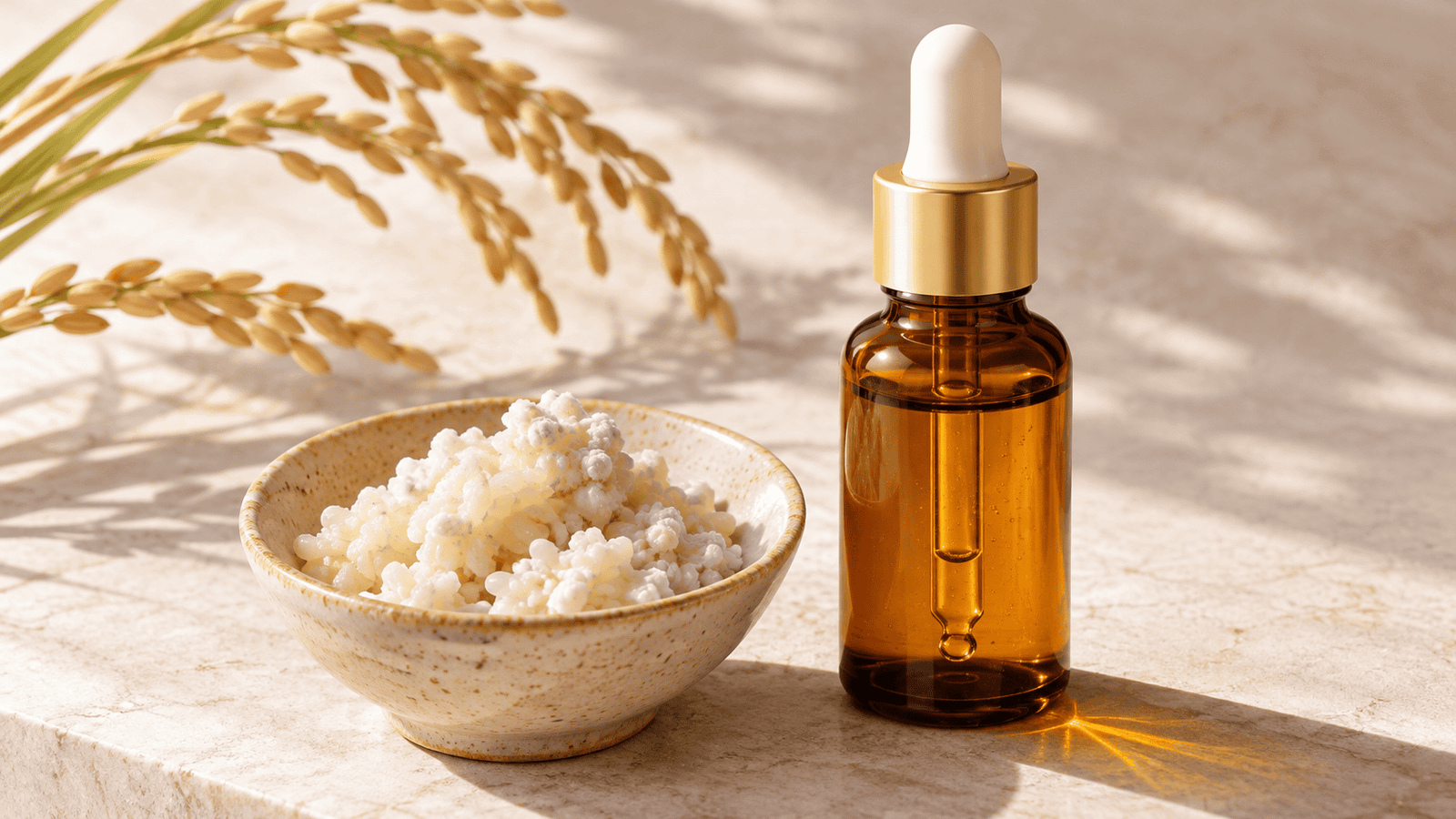
Kojic acid for skin starts as a natural compound made by fungi during fermentation. It is the same family of fungi that ferments rice for sake and soy sauce, and the best-known source is Aspergillus oryzae, the koji mould. In skincare it appears in serums, creams, spot treatments, cleansers and soaps, usually as a brightening ingredient for dark spots and uneven tone.
Where Kojic Acid Comes From
Manufacturers obtain kojic acid as a by-product of fermentation, then purify it for cosmetic use. For that reason, product labels may describe it as a fermentation-derived brightener rather than a plant extract. It is not an acid exfoliant in the same sense as glycolic acid, even though it often sits beside AHAs on the shelf. Its main job is pigment control, not peeling.
Kojic Acid and Kojic Dipalmitate Are Not the Same
Regular kojic acid dissolves in water and breaks down in light and heat, which is why older products can turn yellow or brown. Kojic dipalmitate is a modified, oil-soluble form that stays stable for longer and irritates less, but it may also act more slowly. When you compare products, check which form the label names, because the two forms behave differently in a formula.
How Kojic Acid Works
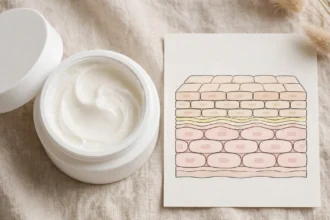
Melanin gives skin its colour, and dark spots form when pigment cells make too much of it in one place. Sun exposure, acne, hormones and ageing can all trigger that overproduction. Kojic acid intervenes at the start of the chain, before the extra pigment is made.
It Slows Tyrosinase, the Enzyme That Starts Melanin
Tyrosinase drives the first step of melanin production, and it needs copper to work. Kojic acid binds that copper and slows the enzyme, so pigment cells produce less new melanin. As a result, existing dark patches fade gradually as the skin renews itself, usually over weeks rather than days. In addition, kojic acid has antioxidant activity in laboratory tests, and it shows antimicrobial activity that may help with acne-prone skin.
What That Means Before You Spend Money
Because kojic acid acts on new pigment, it cannot erase a dark spot in a week, and it cannot stop new spots if you skip sunscreen. Sunlight keeps triggering melanin, so daily SPF 30 or higher is part of the treatment, not an optional extra. Without sun protection, the same spots often return, even after months of careful use.
What the Evidence Actually Shows
Honesty matters here, because many product pages overstate this ingredient. The evidence for kojic acid for skin is modest. Trials are small, most test kojic acid inside combination products, and no large trial has tested kojic acid on its own for dark spots. That does not make it useless, but it does mean you should expect slow, partial fading rather than a dramatic transformation.
The Trials Are Small and Mostly Use Combination Products
In one 60-person study, a cream with 0.75% kojic acid and 2.5% vitamin C improved melasma by week 8 and more clearly by week 12. A 2018 systematic review found mixed results across the handful of kojic acid studies it could gather. One combination with glycolic acid matched hydroquinone, while another study found 1% kojic acid most useful when added to hydroquinone. The reviewers called for research on kojic acid alone, because the current evidence cannot separate its effect from its partners.
How Kojic Acid Compares With Hydroquinone
Hydroquinone remains the stronger prescription option for melasma, and in the 60-person study it worked faster and better than the kojic acid combination at every visit. Kojic acid, by contrast, is available over the counter and suits people who want a gentler, non-prescription step first. If your melasma is stubborn or widespread, a dermatologist can build a plan around stronger options, and kojic acid may still play a supporting role inside that plan.
Benefits: What Kojic Acid Can and Cannot Do
A clear list protects you from disappointment and from overusing a product that irritates. Kojic acid helps with tone, but it is not a treatment for every skin concern, and it is not a substitute for medical care when a mark changes shape or colour.
What It May Help With
Kojic acid may help sun spots and age spots look lighter over time. It may also fade post-acne marks and soften melasma, especially when combined with vitamin C or glycolic acid. Some people notice a brighter, more even tone overall after two to three months of steady use. Its antimicrobial activity may support acne-prone skin, although that effect is secondary and less proven than its brightening role.
What It Cannot Do
Kojic acid cannot remove a dark spot permanently, because new pigment forms whenever sun or hormones trigger it again. Deep dermal melasma will not lift on its own either, and kojic acid cannot replace sunscreen, retinoids or prescription treatment for severe pigmentation. Wrinkles and firmness sit outside its job as well, since it does not build collagen. Finally, no safe product can make skin lighter than its natural tone in a lasting way, so avoid any product that promises that result.
Kojic Acid vs Other Brightening Ingredients
Kojic acid is one of several ingredients that target dark spots, and each one works at a different step. Our Best Ingredient for Dark Spots guide compares six of them in detail. The short version below shows where kojic acid fits, so you can choose the gentlest effective option for your skin.
If your skin reacts easily, start with niacinamide or azelaic acid instead, and add kojic acid later only if you still need more fading. For a full side-by-side comparison, read our Tranexamic Acid for Dark Spots and Azelaic Acid guides before you decide.
Which Strength Should You Start With?
Safety panels in the United States and Europe have concluded that kojic acid is safe in cosmetics at up to 1%. The European scientific committee reached that conclusion in 2022, after weighing its possible hormone-related effects. Products on the shelf often list 1% to 4%, but higher amounts do not work faster; they mainly raise the risk of redness and allergy. When you buy kojic acid for skin, choose a leave-on serum or cream at 1% or less, and use a product above 1% only when a dermatologist recommends it for your skin. Rinse-off cleansers and soaps carry less risk, because the ingredient stays on the skin for a shorter time.
How to Use Kojic Acid, Step by Step
Slow introduction beats strong application with this ingredient. The steps below keep irritation low while giving the product enough time to work. If your skin stays calm for two weeks, you can move to nightly use; if it stings or reddens, step back to every other night.
Step 1: Patch Test First
Apply a small amount to the inner arm twice a day for seven to ten days before you put it on your face. Contact allergy to kojic acid is relatively common, and it can appear weeks or even months after you start, so a short one-day test is not enough. Stop at once if you develop itching, redness or scaling where you tested it.
Step 2: Cleanse Gently
Wash with lukewarm water and a gentle cleanser, then pat the skin dry. Avoid scrubs, cleansing brushes and strong exfoliants on the same night, because freshly exfoliated skin absorbs more product and reacts more easily.
Step 3: Apply a Thin Layer at Night
Use three to four drops of serum, or a thin layer of cream, on the dark spots and about half a centimetre around them. Night is the better time, because light breaks kojic acid down and the ingredient stays more stable away from daylight. Spread it gently and let it absorb before the next step.
Step 4: Moisturize Afterwards
Follow with a plain moisturizer to support the skin barrier and reduce dryness. A barrier-supporting cream helps here, and our Skin Barrier Repair guide explains which ingredients help most. If your skin feels tight, add moisturizer first and kojic acid second, so the cream buffers the active ingredient.
Step 5: Wear Sunscreen Every Morning
Apply a broad-spectrum sunscreen with SPF 30 or higher every morning, even on cloudy days, and reapply when you spend time outdoors. Kojic acid can make skin more sun-sensitive, and sunlight is the main trigger for new dark spots. Without this step, the fading you gain at night is often undone during the day. Our Winter Skin Care Routine guide shows how to fit sunscreen into a cold-weather routine without extra dryness.
Step 6: Build Up Slowly
Start every other night for two weeks, then move to nightly use if your skin stays calm. Use only one kojic acid product at a time, and do not add a strong peel or a retinoid on the same night until your skin has adjusted. A typical course lasts 10 to 12 weeks; if you see no improvement by then, ask a dermatologist before continuing.
A Simple Weekly Rhythm for Beginners
Monday, Wednesday and Friday nights: kojic acid after cleansing, then moisturizer. Tuesday, Thursday, Saturday and Sunday nights: moisturizer only, with no active ingredient. After two calm weeks, use kojic acid every night instead. Keep mornings the same every day: gentle cleanse, moisturizer and sunscreen.
What Pairs Well With Kojic Acid — and What to Keep Apart
Kojic acid for skin pairs well with gentle brighteners that act at different steps. Niacinamide supports the barrier and evens tone without adding irritation, and Vitamin C adds antioxidant protection that complements kojic acid during the day. Hyaluronic acid and a plain moisturizer also pair safely, because they hydrate without increasing sensitivity. Keep kojic acid apart from strong peels, high-strength Glycolic Acid and Retinal on the same night, since layering strong actives raises irritation and can trigger new dark marks. If you use a retinoid, alternate nights instead, and skip kojic acid entirely on nights when your skin feels raw.
How to Choose a Kojic Acid Product
Form matters as much as percentage. Serums suit oily and combination skin, because they layer lightly under moisturizer. Creams suit dry or mature skin, because they add moisture while they treat. Soaps and cleansers suit people who want a gentler start, since the ingredient rinses off quickly, although they fade spots more slowly than leave-on products.
Serums, Creams and Soaps: Which Form Fits?
A serum fits when your main concern is a few dark spots on otherwise normal skin. A cream fits when your skin runs dry or when you want one step that both treats and moisturizes. For a gentler start, a soap or cleanser fits when your skin has reacted to leave-on actives before, or when you want to treat larger areas such as the neck or body. In every case, buy from a reputable brand and check the percentage on the label.
Three Warning Signs on the Label
First, skip any product that has turned yellow or brown, because that colour change means the kojic acid has oxidized and lost strength. Second, avoid unbranded whitening creams, since some have been found to hide steroids or mercury, which can seriously harm skin. Third, be wary of a label that promises permanent whitening or results in days; honest kojic acid products promise gradual fading over weeks. Store your product in a cool, dark place in an opaque bottle, and replace it if the colour or smell changes.
Who Should Try Kojic Acid?
Kojic acid for skin suits normal, combination, oily and mature skin with sun spots or uneven tone. It also suits people whose post-acne marks linger long after breakouts heal, and people who want a non-prescription step before asking about hydroquinone. If that describes you, start at 1% or less and follow the weekly rhythm above.
A Good Fit If You
Sun spots, age spots or post-acne marks that have stayed for months fit this ingredient well. Tolerance of mild actives helps, and daily sunscreen use is already a habit. Patience matters too: you need to wait 8 to 12 weeks for visible change, and you want a brightener you can buy without a prescription.
Think Twice, or Get Advice First, If You
Your skin reacts easily, or you have eczema, rosacea or a damaged barrier; Mandelic Acid is a gentler alternative worth reading about first. Ask a clinician before use if you are pregnant or breastfeeding, because no safety data exists for kojic acid in pregnancy. Do not use it on broken, freshly peeled or irritated skin, and see a dermatologist promptly if a mark changes shape, grows, bleeds or looks different from your other moles.
Side Effects and How to Patch Test
Most people tolerate kojic acid for skin at 1% or less, but side effects do happen, and allergy is the one to watch. The patch test in Step 1 is your main protection, because it catches a reaction before it spreads across your face.
Contact Allergy Is the Main Risk
Contact dermatitis is the most common side effect of kojic acid, and it can cause redness, itching, dry patches and, in severe cases, pain or blisters. A Japanese patch-test series found that five of eight people who had used 1% kojic acid products reacted to it, with facial dermatitis starting one to twelve months after they began. That pattern is unusual, and it is why a long patch test matters more for this ingredient than for most others. If a rash appears, stop the product at once and do not try it again without medical advice.
Normal Tingles vs Warning Signs
A brief, mild tingle in the first minute can be normal, especially on dry skin. Warning signs are different: itching that lasts, redness that spreads, swelling, flaking, blisters or a burning feeling that does not settle within a few minutes. Stop using the product if any warning sign appears, soothe the area with a plain moisturizer, and see a clinician if symptoms do not clear within a few days. Long-term use can also raise sun sensitivity, so sunscreen stays essential for as long as you use kojic acid.
Common Mistakes to Avoid
The most common mistake is using too much, too often, in the hope of faster results. Higher percentages and twice-daily use mainly add irritation, and irritation itself can trigger new dark marks, especially on brown and Black skin. Another mistake is layering kojic acid with a strong acid and a retinoid on the same night, which overwhelms the barrier. Skipping sunscreen is the third mistake, and it quietly reverses the fading you worked for. Finally, do not keep using a product that has turned brown, and do not buy unbranded whitening creams from unknown sellers.
Frequently Asked Questions
Is kojic acid good for sensitive skin?
Usually not as a first choice. Kojic acid causes contact allergy more often than gentler brighteners such as niacinamide or azelaic acid, so sensitive skin should start with those instead. If you still want to try it, use a rinse-off cleanser first, patch test for seven to ten days, and stop at the first sign of itching or redness.
Can I use kojic acid every day?
Yes, once your skin has adjusted. Start every other night for two weeks, then move to once a day, usually at night. Twice a day is rarely needed, and it raises irritation without speeding results. If redness appears, return to every other night until your skin calms.
Can I use kojic acid with vitamin C?
Yes, the two are often combined in products, and the 60-person melasma study used them together. Vitamin C adds antioxidant support while kojic acid slows new pigment. Use vitamin C in the morning and kojic acid at night if your skin is sensitive, or use a combined product if your skin tolerates it well.
Can I use kojic acid with niacinamide?
Yes, niacinamide is one of the safest partners for kojic acid. It supports the barrier, calms redness and evens tone through a different route, so the two complement each other. Many kojic acid serums already include niacinamide for exactly that reason.
How long does kojic acid take to work?
Some people see early change in the second week, but visible fading usually takes 8 to 12 weeks of steady use with daily sunscreen. Deeper melasma may take longer, and some marks respond only partly. If nothing has changed after 12 weeks, ask a dermatologist about stronger options rather than raising the percentage yourself.
Is kojic acid safe in pregnancy?
No safety data exists for kojic acid in pregnancy or breastfeeding, so do not use it without asking your clinician first. Some sources list pregnancy as a reason to avoid it, while others say only to seek advice. The safe step is a direct question to your doctor, who knows your history. Azelaic acid and niacinamide are the gentler brighteners clinicians more often discuss in pregnancy.
Key Takeaways
Kojic acid for skin can fade dark spots by slowing tyrosinase, the enzyme that starts melanin production. The evidence is modest, from small trials and combination products, and it works more slowly than hydroquinone. Choose 1% or less, patch test for seven to ten days, use it at night, and wear SPF 30 or higher every morning. Watch for contact allergy, which is its main risk, and ask a clinician first if you are pregnant, have very sensitive skin, or have a mark that is changing.
Sources and References
Healthline — Kojic Acid: Side Effects and Benefits
Medical News Today — Kojic acid: Uses, benefits, safety, and risks
Tua Saúde — Kojic Acid: Uses, How to Apply and Side Effects
La Dermatique — Kojic Acid for Dark Spots: Benefits, Side Effects and Safety
The Pathway to Progress — Kojic acid for skin
iHerb — How Kojic Acid Can Benefit Your Skin
European Commission, Scientific Committee on Consumer Safety — Opinion on kojic acid (SCCS/1637/21, 2022). Cited by name; the opinion concludes kojic acid is safe as a skin-lightening agent up to 1%.
Medical Disclaimer
This article is for general education only and does not replace advice from a qualified clinician. Skincare ingredients affect people differently, and pregnancy, skin conditions and medicines can change what is safe for you. Patch test new products, stop use if irritation appears, and ask a dermatologist about persistent dark spots, changing moles, or any reaction that does not settle within a few days.
| Ingredient | Best for | Gentleness | Evidence note |
|---|---|---|---|
| Kojic acid | Sun spots and post-acne marks | Lower: allergy is fairly common | Modest; small trials, mostly combinations |
| Tranexamic acid | Stubborn brown spots and melasma | Higher: usually well tolerated | Good for melasma, often combined |
| Azelaic acid | Sensitive skin and red marks | Higher: gentle at 10% | Good for redness and dark spots |
| Vitamin C | Dull skin and brightening | Medium: depends on the form | Good support, best with sunscreen |
| Niacinamide | First step for almost everyone | Highest: very gentle | Good for tone and barrier support |
| Retinal | Spots plus fine lines | Lower: can irritate at first | Strong, but needs slow introduction |