Quick Answer
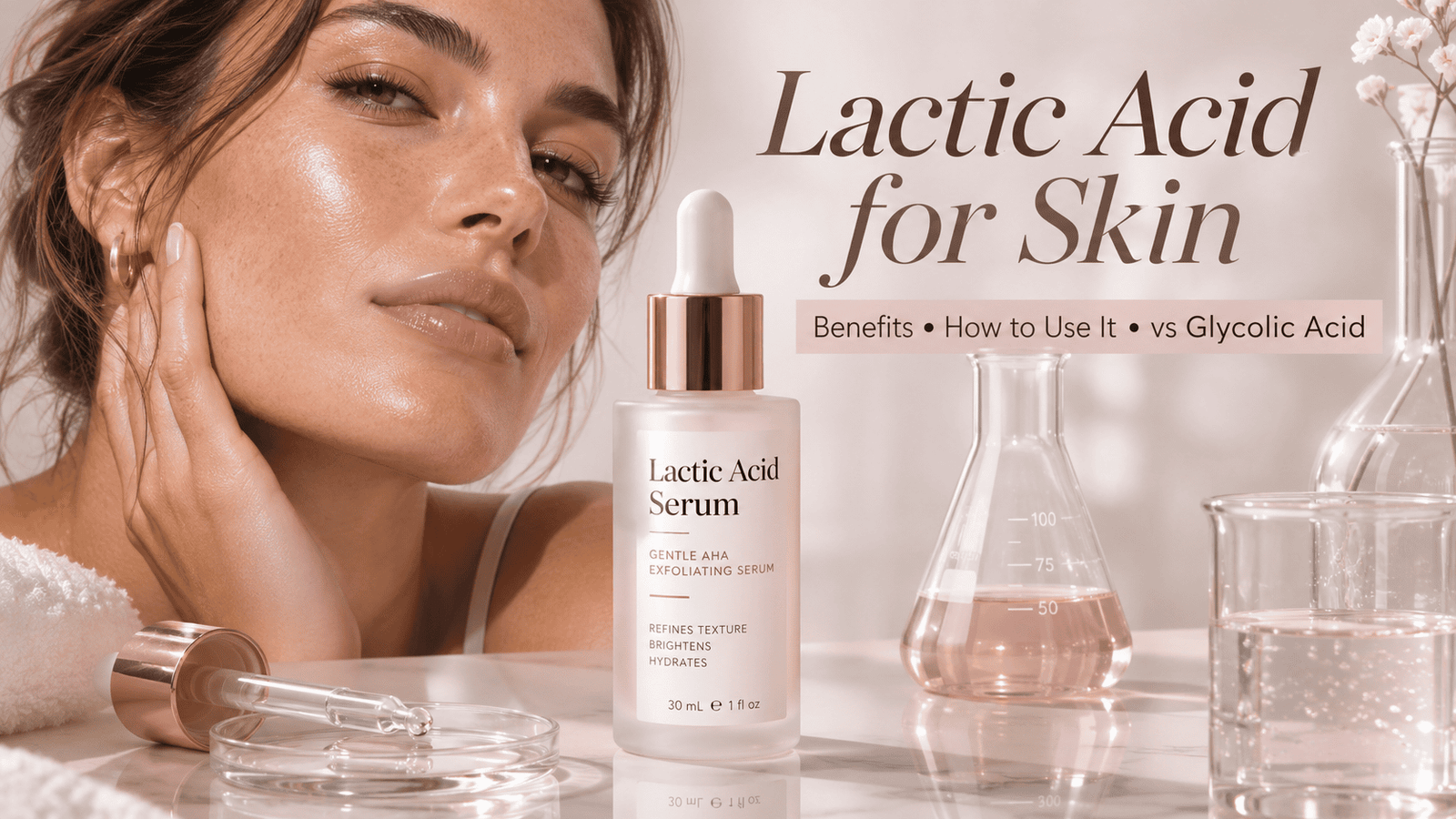
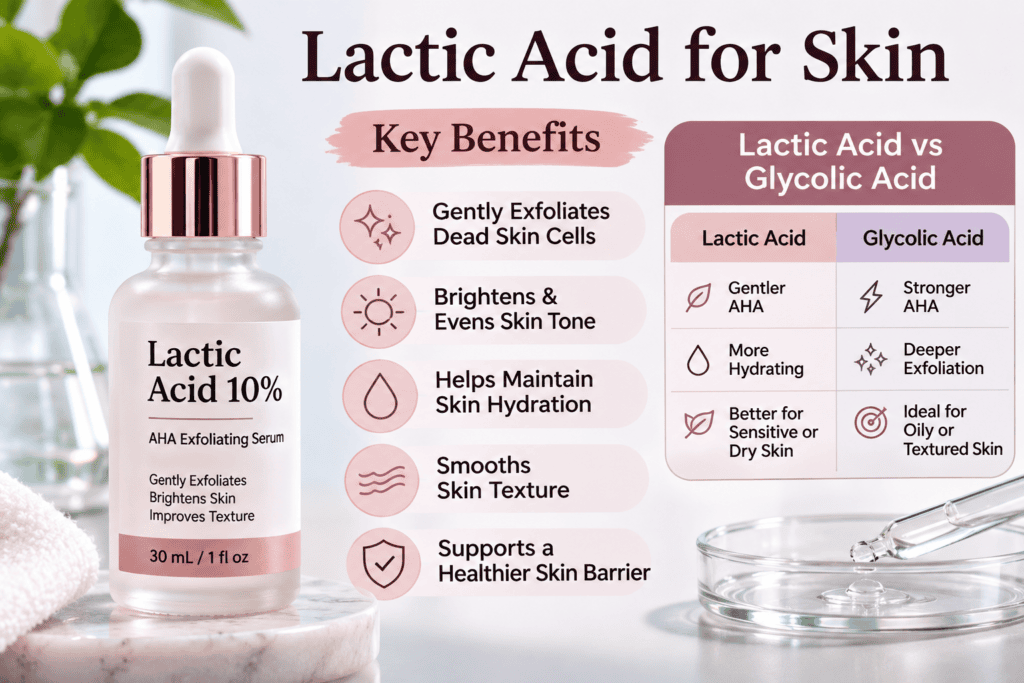
Lactic acid for skin is a gentle alpha hydroxy acid (AHA) that exfoliates the surface while helping skin hold water. Unlike stronger exfoliants, it works mainly on the outer layer, so dullness and rough texture can improve with less stinging for many people.
That gentler pace is the whole point of choosing it. Dry, sensitive, or first-time AHA users often tolerate lactic acid better than glycolic acid, because its molecule is larger and it doubles as a humectant.
One simple rule: start lactic acid if your skin is dry or sensitive and you are new to exfoliating acids. Choose glycolic acid instead if your skin is resilient and rough texture is your main concern.
Judge any new routine after 8 to 12 weeks of steady use, with sunscreen every morning. Surface smoothing may show sooner, yet tone changes take patience.
What Is Lactic Acid?
Chemically, lactic acid belongs to the alpha hydroxy acid family, alongside glycolic and mandelic acids. Your body also makes lactate during exercise, and bacteria produce it when milk ferments, which is why older beauty traditions used sour milk on skin.
Most skincare sold today uses lab-made or fermented lactic acid, not milk poured from a bottle. Vegan formulas are common, so check the label if that matters to you.
Shoppers meet this ingredient in leave-on serums, exfoliating toners, cleansers, creams, and body lotions. Each form behaves differently, because contact time, strength, and pH all change how much exfoliation you get.
For a direct contrast with the stronger AHA, read our Glycolic Acid for Skin guide after this one. Both guides use the same routine rules, so picking between them becomes much easier.
How Lactic Acid Works
It loosens dead cells at the surface
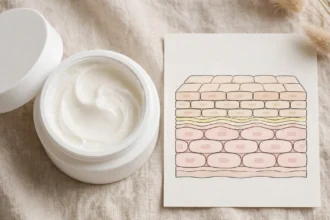
Healthy skin sheds its outer cells every day without help. Age, sun exposure, and dry weather slow that shedding down, leaving a rough layer that scatters light and makes skin look flat.
Acids speed the process up by loosening the bonds between those dead surface cells. Freed cells then lift away during cleansing, and fresher skin shows through underneath.
Size explains much of the difference between the two best-known AHAs. Lactic acid has a larger molecule than glycolic acid, around 90 versus 76 in molecular weight, so it moves into skin more slowly and stays closer to the surface.
It also helps skin hold water
Water handling sets lactic acid apart from a plain exfoliant. Lactate forms part of your skin’s natural moisturizing factor, the mix of water-holding substances inside surface cells that keeps them plump and flexible.
Research on L-lactic acid also links it to ceramide production in the outer layer. Extra ceramides matter, because those lipids act like mortar between skin cells and help limit water loss.
Cold months make that dual action especially useful. Our Winter Skin Care Routine shows how to pair gentle exfoliation with richer moisturizing when heated indoor air dries skin out.
What the Evidence Actually Shows
Honest evidence matters more here than a long benefit list. Human research on lactic acid is real, but much of it is older, small, or based on one specific cream rather than every serum on a shelf.
A 22-week double-blind trial by Stiller and colleagues compared 8% L-lactic acid cream with 8% glycolic acid cream and a plain vehicle in 74 women with photodamaged skin. About 71% of lactic users improved by at least one grade on the face, close to 76% for glycolic, while only 40% improved on vehicle.
Work by Smith in 1996 examined topical lactic acid on epidermal and dermal skin and reported changes linked to smoother, thicker surface skin with continued use.
Dry-skin research is the other strong area. Trials of 12% ammonium lactate lotion found better roughness, scaliness, and moisture in people with very dry skin (xerosis) than a vehicle lotion gave them.
Sun safety evidence cuts the other way, so balance the picture. AHA use can raise sun sensitivity, which is why regulators pair these ingredients with sunscreen advice rather than casual daily use.
What this means before you spend money
Modest, gradual improvement is a fair expectation from a well-made lactic product. Promises of instant glass skin, erased wrinkles, or cured melasma go well beyond what those studies tested.
Formulation limits what any single trial can tell you. A result from an 8% cream used for 22 weeks does not guarantee the same result from a weak cleanser rinsed off in a minute.
Benefits: What Lactic Acid Can and Cannot Do
What it may help with
Smoother-feeling texture, as built-up surface cells shed more evenly
Brighter-looking skin, because a smoother surface reflects light better
Flaky, rough patches on the face and body, especially in dry weather
Uneven tone and post-acne marks, gradually, alongside daily sunscreen
Hydration support, since lactate helps surface cells hold water while you exfoliate
A calmer first step into chemical exfoliation for people who found glycolic acid too harsh
Dark marks deserve a separate plan when pigmentation is your main problem. Our Azelaic Acid for Acne and Dark Spots guide covers an ingredient used for breakouts and the marks they leave behind.
What it cannot do
Remove deep wrinkles, lift sagging skin, or replace in-clinic treatment
Clear moderate or severe acne on its own, since lactic acid works at the surface rather than inside pores
Erase melasma or stubborn pigmentation without a wider, professionally guided plan
Deliver lasting change in a week, however strong the bottle sounds
Replace sunscreen, moisturizer, or a gentle cleanser in a basic routine
Keep those limits in mind while you shop. A product that respects them on its label is usually a safer buy than one promising everything at once.
Lactic Acid vs Glycolic Acid: Side by Side
| Lactic Acid | Glycolic Acid | |
| What it is | A larger AHA and a natural moisturizing factor component | The smallest AHA, traditionally from sugar cane |
| Main job | Gentle surface exfoliation plus hydration support | Faster, deeper surface exfoliation |
| Molecular weight | About 90 | About 76 |
| How it feels | Milder stinging for most beginners | Stronger tingling, more peeling for many users |
| Best for | Dry, sensitive, or first-time AHA users | Resilient skin with rough texture or dullness |
| Typical start | 5% leave-on, 1 to 2 nights a week | Low strength, 1 night a week to start |
| Results pace | Gradual, judge over 8 to 12 weeks | Often a little faster, with more irritation risk |
| Sun care | SPF 30 or higher every morning | SPF 30 or higher every morning |
Head-to-head evidence keeps this choice closer than marketing suggests. At the same 8% strength in the Stiller trial, both acids improved facial photodamage by similar amounts, so tolerance may matter more than a small gap in power.
Read the full comparison inside our Glycolic Acid for Skin guide before you switch. Changing acids every fortnight tells you nothing about either one.
Lactic Acid vs Other Exfoliants
Salicylic acid solves a different problem. Being oil-soluble, that beta hydroxy acid (BHA) gets into pores, so oily and blackhead-prone skin often does better with it than with any AHA.
For clogged pores and breakouts, the oil-soluble BHA to compare is salicylic acid.
Mandelic acid offers another gentle route. Bigger still than lactic acid, it penetrates slowly and suits some reactive skin types, although product choice is narrower.
For an even gentler AHA option, see our guide to mandelic acid.
Physical scrubs work in a third way entirely. Particles rub surface cells off by friction, and rough particles or hard scrubbing can scratch and irritate, so a measured chemical option is easier to control.
Beginners rarely need two exfoliants at once. Pick the acid that matches your main concern, give it a full trial, and only then reconsider.
Which Strength Should You Start With?
| Strength on the label | Common form | Who should be careful |
| Around 5% | Leave-on serums and lotions for beginners | Very sensitive skin should still patch test first |
| Around 10% | Leave-on serums for experienced AHA users | Beginners, and anyone whose barrier already stings |
| 12% ammonium lactate | Body lotions used for very dry, rough skin | Broken or inflamed skin; follow medical advice for diagnosed conditions |
| Professional peels | In-clinic treatments only | Everyone at home; peel strengths are not DIY skincare |
Percentages alone never tell the full story. A 10% product at a higher pH can feel milder than a 5% product at a very low pH, because pH controls how much acid is in its active, free form.
Safety assessments cited by the US Food and Drug Administration (FDA) describe consumer AHA products as safe at 10% or less with a final pH of 3.5 or higher, provided sun-protection directions are followed. Treat that as a safety boundary from the Cosmetic Ingredient Review panel, not as a target to aim for.
Why formula matters as much as percentage
Buffers, humectants, and the base cream all change how an acid behaves on your face. Two bottles showing the same number can therefore feel completely different by week two.
Label directions beat internet routines every time. Follow the maker’s frequency first, and increase only when your skin has stayed calm at the starting level.
How to Use Lactic Acid, Step by Step
1. Cleanse gently. Wash with a mild cleanser and lukewarm water, then pat dry and wait a minute so skin is dry, not dripping.
2. Apply a thin layer. Smooth the product over your face, avoiding eyelids, lips, and any broken or sore areas.
3. Leave it as directed. Keep leave-on products on as the label directs, and rinse only if your product is a wash-off type or stinging becomes strong.
4. Moisturize afterwards. Seal the acid in with a plain moisturizer once it has settled, especially in winter.
5. Protect skin next morning. Finish every morning routine with broad-spectrum SPF 30 or higher, and reapply as the sunscreen label directs.
6. Start on a slow schedule. Beginners do best with 1 or 2 nights a week for the first fortnight, adding a night only if no lasting redness appears.
A simple morning and evening routine
| Morning | Evening (lactic night) | |
| Step 1 | Gentle cleanser, or rinse with water | Gentle cleanser |
| Step 2 | Hydrating serum, if you use one | Lactic acid product, thin layer |
| Step 3 | Moisturizer | Moisturizer |
| Step 4 | Broad-spectrum SPF 30 or higher | No other strong active that night |
A simple weekly rhythm for beginners
First week: one lactic night, with moisturizer-only nights around it.
The next week: two lactic nights, spaced apart, if skin stayed calm.
From week three: hold at two or three nights, rather than chasing daily use.
Every morning: cleanser, moisturizer, and sunscreen, with no exfoliant in the daytime step.
Calm skin is your signal to continue. Lingering stinging, peeling, or new sensitivity is a signal to cut back, not to push through.
What Pairs Well With Lactic Acid — and What to Keep Apart
| Ingredient | Pairing advice |
| Hyaluronic acid | Pairs well. Layer it for hydration on non-acid nights, or under moisturizer. |
| Niacinamide | Pairs well for most people. A calm partner for barrier support and uneven tone. |
| Ceramide moisturizer | Pairs well. Use one after lactic acid to limit dryness. |
| Vitamin C (ascorbic acid) | Keep apart at first. Vitamin C in the morning and lactic acid at night is simpler. |
| Retinol or retinal | Keep on different nights. Both can irritate, and spacing them protects your barrier. |
| Glycolic or salicylic acid | Do not stack in the same step. One exfoliant per night is enough. |
| Benzoyl peroxide | Use with care, ideally at a different time of day, since dryness can add up. |
Hydration is the easiest pairing to get right. Our What Is Hyaluronic Acid? guide explains how to apply a hydrating serum on damp skin and seal it with moisturizer.
Barrier support is the second pairing worth learning. Read our Niacinamide Benefits for Skin guide for a gentle ingredient that fits most lactic routines without adding more exfoliation.
How to Choose a Lactic Acid Product
Check that lactic acid appears high enough on the ingredient list to matter, rather than as a tiny pH adjuster at the very end.
Look for a stated percentage and a clear use frequency on the packaging, instead of vague promises about professional strength.
Prefer formulas with humectants such as glycerin or hyaluronic acid, because they soften the drying side of exfoliation.
Avoid heavy fragrance if your skin is sensitive, since scent adds irritation risk without adding any benefit.
Pick a form you will actually use: a serum for your face, a lotion for larger dry body areas, or a cleanser for a milder start.
Two product forms readers ask about
Face serums give you the most control over amount and frequency. Small amounts, spaced nights, and a plain moisturizer on top make them the easiest form to judge fairly.
Body lotions cover more ground for less money per use. Rough elbows, dry legs, and bumpy upper arms are common places for a lactic body lotion, applied after bathing on intact skin.
Skip brand hype while you compare those forms. No product in this guide was hands-on tested for this article, and no price is listed, because prices change and only the retailer’s own page is reliable on the day you buy.
Who Should Try Lactic Acid?
A good fit if you
Have dry or dehydrated skin that also looks dull and feels rough
Tried glycolic acid and found it too harsh, but still want gentle exfoliation
Are new to AHAs and want a slower, easier starting point
Want face and body exfoliation from one ingredient family, in different formulas
Can commit to sunscreen every morning, without exception
Think twice, or get advice first, if you
Are pregnant or breastfeeding — safety for routine cosmetic AHA use is not well established, so ask your doctor first
Live with eczema, rosacea, or a diagnosed skin condition that flares easily
Have sunburn, broken skin, or a recent in-clinic procedure on the area
Already use several strong actives and wake up with stinging or peeling
Expect a serum alone to fix deep pigmentation or scarring
Side Effects and How to Patch Test
Mild tingling for a minute or two can happen with any AHA. Burning that builds, lasting redness, swelling, or a rash is different, and those signs mean you should rinse the product off and stop using it.
Dryness usually appears before bigger problems do. Flaking, tightness after cleansing, and makeup clinging to patches all suggest your frequency is too high for your barrier right now.
Patch test like this: apply a small amount behind your ear or along your jawline once a day for 3 to 5 days before wider use. Reactions on a small area are easier to manage than a full-face flare.
Barrier first is the recovery rule when irritation does happen. Our Skin Barrier Repair guide sets out the simple cleanser, moisturizer, and sunscreen routine to use while skin settles.
Sun sensitivity lasts beyond the night you apply an AHA. FDA guidance advises sunscreen, protective clothing, and limited sun exposure while using AHA products and for a week after stopping them.
Common Mistakes to Avoid
1. Starting every night, then blaming the ingredient when skin becomes sore by week two.
2. Layering a second acid in the same step, because one exfoliant already did the job.
3. Skipping sunscreen in the morning, which can undo tone progress and raise sunburn risk.
4. Applying the product to wet skin to make it feel stronger, when damp skin can increase irritation instead.
5. Chasing a higher percentage before finishing a fair trial at a lower one.
6. Using a face serum over sunburn, fresh waxing, or broken skin, where any acid will sting.
Frequently Asked Questions
Is lactic acid good for sensitive skin?
Often, yes, compared with other AHAs. Larger molecules and humectant action make it a common first choice, although sensitive skin can still react, so patch testing and a slow start remain essential.
Can I use lactic acid every day?
Some well-tolerated, low-strength products are labelled for daily use. Most beginners do better at 2 or 3 nights a week, and daily exfoliation is a level to earn over time, not a starting point.
Can I use lactic acid with retinol?
Yes, when you space them out. Put retinoids and lactic acid on different nights at first, moisturize well on both, and drop back a night if peeling or stinging builds up.
Can I use lactic acid with vitamin C?
Both can fit one routine when timing is kept simple. Vitamin C belongs in the morning for daytime antioxidant support, while lactic acid works at night, and separating them lowers irritation risk for sensitive skin.
Can I use lactic acid with niacinamide?
Generally, yes. Niacinamide is not an exfoliant, it supports the barrier, and most people layer it comfortably with lactic acid, as long as each product was introduced one at a time.
Is lactic acid or glycolic acid better for dark spots?
Neither wins for every reader. Glycolic acid reaches deeper and may shift stubborn surface pigmentation a little faster, whereas lactic acid is easier to keep using on dry or sensitive skin, and steady use with sunscreen is what fades marks. Persistent pigmentation needs the wider plan in our Azelaic Acid guide and, when marks do not budge, a dermatologist.
How long does lactic acid take to work?
Texture often feels smoother within 2 to 4 weeks of steady use. Tone and fine-line changes need longer, so judge the routine at 8 to 12 weeks, in the same lighting, before you call it a success or a failure.
Can lactic acid help rough body skin and bumpy arms?
Body lotions with lactic acid, including ammonium lactate formulas, have trial support for very dry, rough skin. Bumpy upper arms (keratosis pilaris) may also improve with regular gentle exfoliation and moisturizing, although results vary and inflamed bumps need medical advice.
Is lactic acid safe in pregnancy?
Safety has not been well established for routine cosmetic AHA use in pregnancy or while breastfeeding. Ask your doctor before starting it, and do not rely on a blog, including this one, for that decision.
Key Takeaways
Lactic acid for skin means gentle surface exfoliation plus hydration support, in one AHA.
Dry, sensitive, and first-time AHA users are its best audience; resilient skin may prefer glycolic acid.
Evidence supports modest, gradual gains in texture, dullness, and dry roughness, not instant transformation.
Start with a low strength on 1 or 2 nights a week, moisturize afterwards, and patch test first.
Keep retinoids and other acids on different nights, and wear SPF 30 or higher every morning.
Judge results at 8 to 12 weeks, and stop and seek advice if burning, swelling, or a rash appears.
Sources and References
Clinical trials and background research
Stiller, M.J. et al. (1996). Topical 8% glycolic acid and 8% L-lactic acid creams for the treatment of photodamaged skin: a double-blind, vehicle-controlled clinical trial. Archives of Dermatology — the head-to-head trial quoted in this guide, with 71% of lactic users improving at least one grade on the face over 22 weeks.
Smith, W.P. (1996). Epidermal and dermal effects of topical lactic acid. Journal of the American Academy of Dermatology — laboratory and skin-structure work on how topical lactic acid affects the outer and deeper skin layers.
Rawlings, A.V. et al. (1996). Research on L-lactic acid and ceramide synthesis in the stratum corneum — the work behind the claim that L-lactic acid, unlike its mirror form, can support ceramide levels and barrier function.
Dry-skin trials and safety guidance
Kempers, S. et al. (1998). Trial evidence for 12% ammonium lactate lotion in xerosis (very dry skin), published in the Journal of the American Academy of Dermatology — improvement in roughness, scaliness, and moisture versus vehicle.
US Food and Drug Administration. Alpha Hydroxy Acids (cosmetic ingredients guidance, page updated 22 November 2022) — source for the Cosmetic Ingredient Review safety conditions (10% or less, pH 3.5 or higher, with sun protection) and for the advice to use sunscreen, protective clothing, and limited sun exposure during AHA use and for a week afterwards.
Product formulas, strengths, and prices change. Always check the label of the specific product you buy, and the retailer’s own page, before relying on any detail in this guide.
This guide is general skincare information, not medical advice. Individual results vary. Patch test new products, and talk to a healthcare professional before changing your routine if you are pregnant, breastfeeding, or treating a skin condition.