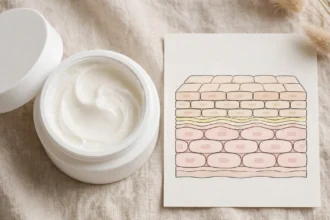
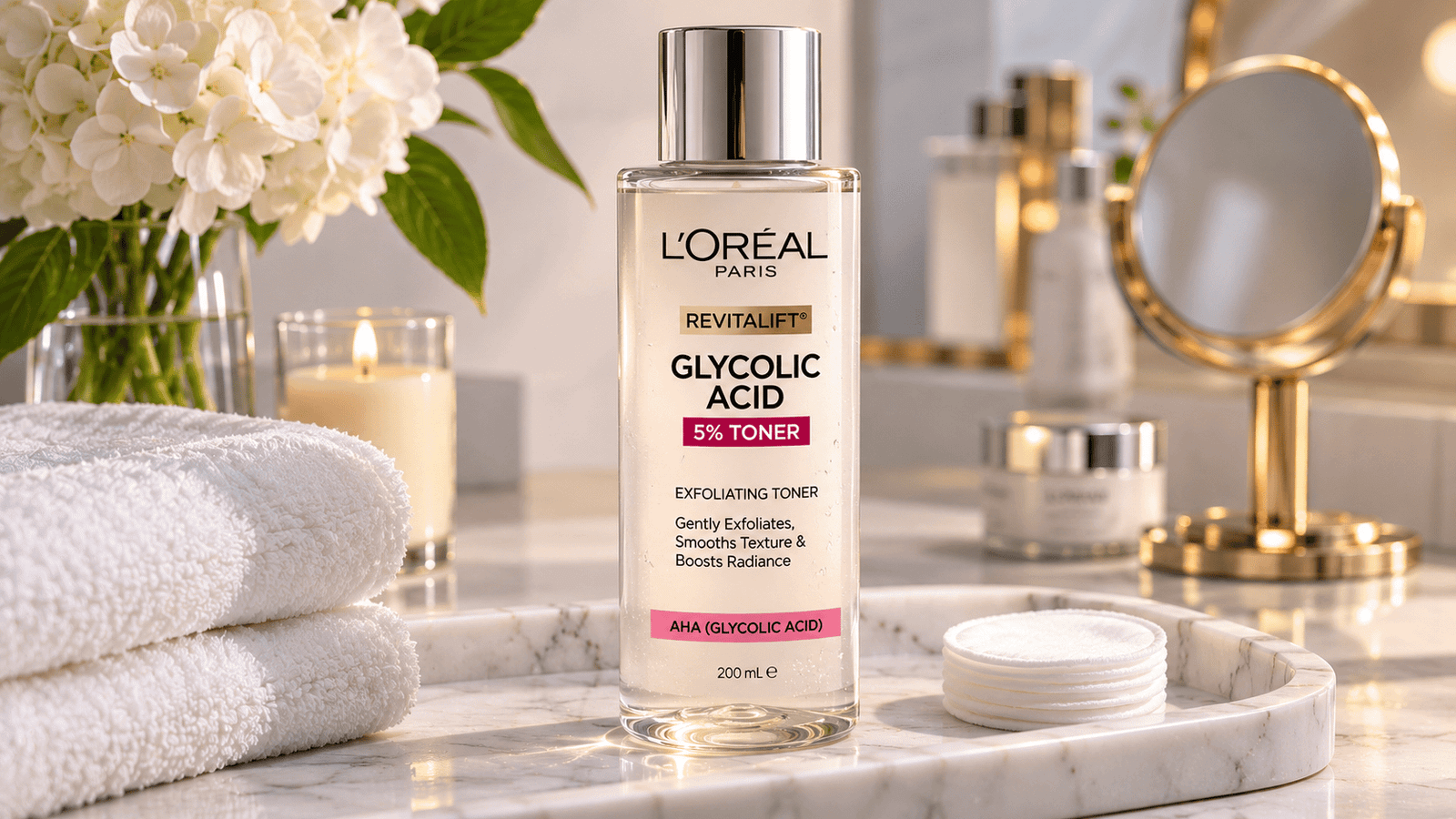
Glycolic acid for skin is a popular exfoliating ingredient that helps improve rough texture, dullness, and uneven skin tone. It works by loosening dead skin cells on the surface, allowing them to shed more easily and revealing smoother-looking skin.
However, glycolic acid is not suitable for everyone. Using a formula that is too strong, applying it too frequently, or combining it with several other active ingredients can lead to irritation, dryness, and increased sensitivity.
The key is choosing an appropriate product, introducing it gradually, and protecting your skin from the sun.
In this guide, you’ll learn what glycolic acid does, its potential benefits, how to use it safely, and the mistakes worth avoiding.
What Is Glycolic Acid?
Glycolic acid is an alpha hydroxy acid (AHA), a type of chemical exfoliant commonly used in skincare products. It is traditionally derived from sugar cane, although it can also be manufactured synthetically.
Unlike physical scrubs that use particles to remove dead skin cells, glycolic acid helps loosen the connections between cells at the skin’s surface.
This process encourages exfoliation without requiring abrasive rubbing.
Glycolic acid has a relatively small molecular size compared with several other AHAs, including lactic and mandelic acids. However, its effects depend on more than molecular size alone.
The concentration, pH, overall formulation, and condition of your skin all influence how a product performs.
Glycolic acid appears in several types of skincare products, including:
- Exfoliating toners
- Facial serums
- Moisturizers and creams
- Cleansers
- Professionally administered chemical peels
Each formulation works differently, so the directions on the product label matter.
Quick Answer: What Does Glycolic Acid Do for Skin?
Glycolic acid is an alpha-hydroxy acid (AHA) that exfoliates the skin’s surface, helping improve the appearance of rough texture, dullness and uneven skin tone. With consistent, appropriate use, it may also help reduce the appearance of some dark spots and fine lines.
However, glycolic acid can cause dryness, stinging or irritation, particularly when overused. Beginners should introduce it gradually, follow product instructions and use broad-spectrum sunscreen with SPF 30 or higher during the day.
6 Potential Benefits of Glycolic Acid for Skin
1. Helps Smooth Rough Skin Texture
One of glycolic acid’s best-known benefits is improving the appearance and feel of uneven skin.
Dead skin cells can accumulate on the surface, making skin feel rough or look less smooth.
By encouraging exfoliation, glycolic acid can help reduce this buildup.
With appropriate use, skin may gradually feel softer, and makeup may apply more evenly.
However, exfoliation is not a substitute for moisturizing. Dryness, irritation, and a weakened skin barrier can also contribute to rough texture.
2. Improves the Appearance of Dull Skin
Dull-looking skin can have several causes, including dryness, uneven texture, and accumulated surface cells.
Glycolic acid may improve brightness by removing some of the dead cells that contribute to a lackluster appearance.
However, more exfoliation does not necessarily produce more radiance.
If your skin already feels dry or tight, improving hydration may be more useful than adding another exfoliating product.
During colder months, combining gentle skincare with consistent moisturizing is particularly helpful.
For more advice, read our Winter Skin Care Routine, which focuses on protecting the skin barrier.
3. May Improve Uneven Skin Tone and Dark Spots
Glycolic acid can help improve certain forms of superficial discoloration by encouraging the shedding of pigmented surface cells.
It may be useful for some people dealing with:
- Uneven-looking skin tone
- Post-acne marks
- Certain superficial dark spots
- Dullness associated with uneven texture
However, the cause of pigmentation matters.
Melasma, persistent post-inflammatory hyperpigmentation, and other pigmentary conditions may require a different treatment approach.
Aggressive exfoliation can also make discoloration worse, especially when irritation triggers additional pigmentation.
If dark spots are your main concern, you may also find our guides to azelaic acid and tranexamic acid useful.
These ingredients work differently from glycolic acid and may be appropriate for different skincare needs.
4. Can Help With Some Clogged-Pore Concerns
Dead skin cells contribute to the buildup that can block pores.
Because glycolic acid exfoliates the skin’s surface, it may help improve certain mild congestion concerns.
However, it is not necessarily the best ingredient for every type of acne.
Salicylic acid, a beta hydroxy acid (BHA), is often considered when oily skin, blackheads, and clogged pores are the main concerns.
For persistent or inflammatory acne, a dermatologist can recommend treatments with stronger evidence for the specific condition.
5. May Improve the Appearance of Fine Lines
Glycolic acid is also used in some skincare products intended to improve signs of photoaging.
Depending on the formulation and treatment, it may help improve skin texture and the appearance of certain fine lines.
However, results vary, and cosmetic glycolic acid products should not be expected to produce the same effects as professional chemical peels.
Daily sun protection remains one of the most important steps in preventing premature skin aging.
6. Can Help With Certain Rough, Bumpy Skin Conditions
Some exfoliating products containing glycolic acid are used to improve rough, bumpy skin associated with conditions such as keratosis pilaris.
The American Academy of Dermatology identifies glycolic acid among the ingredients dermatologists may recommend for this purpose.
However, these products can cause irritation when used too frequently.
If you have a diagnosed skin condition, follow the treatment plan recommended by your dermatologist rather than experimenting with stronger acids.
What Percentage of Glycolic Acid Is Best?
Choosing a glycolic acid product involves more than selecting the highest percentage available.
A lower concentration is not automatically irritation-free, and two products containing the same percentage can behave differently.
The table below provides general context, not a universal prescription.
| Glycolic acid concentration | General considerations |
|---|---|
| Below 5% | Found in some milder formulations, although tolerance still depends on the full product |
| 5–7% | Common in consumer exfoliating products; may still irritate sensitive skin |
| 8–10% | Potentially more intensive exfoliation; not necessarily appropriate for beginners |
| Above 10% | Requires additional caution; avoid treating stronger products as ordinary beginner skincare |
| Professional chemical peels | Should be performed or supervised by appropriately trained professionals |
The FDA discusses a safety assessment of consumer products containing glycolic or lactic acid at concentrations of 10% or less and a final pH of 3.5 or higher, with appropriate sun-protection precautions.
That does not mean every product within those limits is suitable for every person.
Why Product pH Matters
The pH of an exfoliating formula affects how much of the acid is available in its active form.
As a result, concentration alone cannot tell you exactly how strongly a product will exfoliate.
Other ingredients, the delivery system, and individual skin tolerance also matter.
Rather than choosing a toner based only on a percentage printed on the bottle, look for a well-formulated product with clear usage instructions.
How to Use Glycolic Acid for Skin: Step by Step
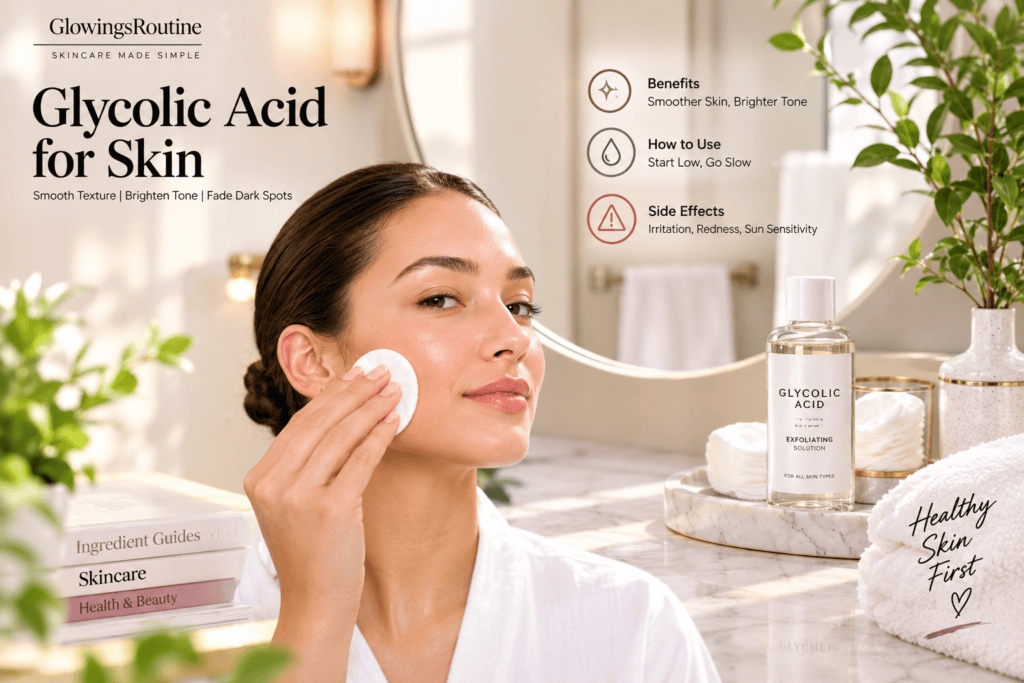
If you’re introducing glycolic acid into your routine, a gradual approach can help reduce the risk of irritation.
Step 1: Check Whether Your Skin Is Ready
Avoid applying glycolic acid to sunburned, broken, severely irritated, or actively inflamed skin.
If you have eczema, rosacea, or a damaged skin barrier, consult a dermatologist before introducing an exfoliating acid.
Step 2: Patch-Test the Product
Before applying a new product across your face, follow the manufacturer’s patch-testing instructions.
Testing a small area can help identify some reactions, although it cannot guarantee that irritation will not occur later.
Stop using the product if you develop significant burning, swelling, or persistent redness.
Step 3: Cleanse Gently
Wash your face with a mild cleanser and avoid harsh scrubbing.
Pat your skin dry before applying a leave-on acid unless the product instructions say otherwise.
Step 4: Apply the Recommended Amount
Use the amount specified on the product label.
Keep the product away from your eyes, lips, and other sensitive areas unless the manufacturer specifically indicates that those areas are appropriate.
Do not apply extra layers in an attempt to speed up results.
Step 5: Follow With Moisturizer
A gentle moisturizer can help reduce dryness and support the skin barrier.
Look for ingredients such as glycerin, ceramides, or other well-tolerated moisturizing components.
You generally do not need to wait a fixed number of minutes before moisturizing unless the product instructions specify a waiting period.
Step 6: Start Slowly
For a typical leave-on exfoliating product, starting with one evening per week can be a cautious approach, provided the product label allows it.
If your skin tolerates the product, you may gradually adjust frequency according to its instructions and your skin’s response.
There is no need to work toward daily exfoliation.
More frequent application can increase irritation without necessarily improving results.
Step 7: Use Sunscreen Every Morning
Glycolic acid and other AHAs can increase sensitivity to ultraviolet radiation.
Use a broad-spectrum sunscreen with SPF 30 or higher, along with shade and protective clothing when appropriate.
The FDA advises sun protection while using AHA products and for a week after stopping them.
Remember: Sunscreen is essential when using exfoliating acids, particularly if you’re trying to improve the appearance of dark spots.
Can You Use Glycolic Acid With Other Skincare Ingredients?
Some skincare ingredients can be used in the same overall routine, but layering several potentially irritating products may increase the risk of dryness or sensitivity.
| Ingredient | What to consider |
|---|---|
| Hyaluronic acid | Generally compatible and useful for hydration |
| Niacinamide | Often compatible, depending on the formulations |
| Retinol or other retinoids | Combining may increase irritation; consider separate nights |
| Salicylic acid | Multiple exfoliants may cause over-exfoliation |
| Vitamin C | Some formulations may irritate when layered; separate application times if needed |
| Benzoyl peroxide | Combining potentially drying products can increase irritation |
| Ceramides | Useful in moisturizers that support the skin barrier |
Glycolic Acid and Retinol
Retinoids and glycolic acid can both cause irritation, particularly when first introduced.
If you use a retinoid, avoid adding glycolic acid to the same evening routine without considering your skin’s tolerance and any medical instructions.
Using them on separate nights may be a more manageable approach for some people.
If you use a retinoid too, see our retinal vs retinol comparison first.
Glycolic Acid and Vitamin C
Glycolic acid and vitamin C are not universally incompatible.
However, certain acidic vitamin C formulations may cause additional irritation when combined with exfoliating acids.
Using vitamin C in the morning and glycolic acid on selected evenings is one possible way to simplify the routine.
Glycolic Acid and Salicylic Acid
Both ingredients exfoliate, but they have different properties.
For breakouts rather than surface dullness, the BHA to compare is salicylic acid.
Using them together may be appropriate in certain professionally formulated products. However, layering separate exfoliating products can increase the chance of over-exfoliation.
Beginners generally do not need multiple exfoliating acids in the same routine.
Glycolic Acid vs. Lactic Acid vs. Salicylic Acid
Choosing the right exfoliant depends on your main skincare concern.
| Ingredient | Type | Common uses | Important consideration |
|---|---|---|---|
| Glycolic acid | AHA | Rough texture, dullness, uneven tone | Can cause irritation and sun sensitivity |
| Lactic acid | AHA | Surface exfoliation and texture | May be better tolerated in some formulations |
| Salicylic acid | BHA | Oily skin, clogged pores, blackheads | Can also cause dryness or irritation |
| Mandelic acid | AHA | Gentle exfoliation in some formulations | Tolerance depends on concentration and formulation |
If your primary concern is dullness or rough texture, glycolic acid may be worth considering.
If blackheads and oily skin are your main concerns, salicylic acid may be more suitable.
For highly reactive skin, choosing a gentler routine without exfoliating acids may be the best starting point.
If glycolic acid feels too strong, a gentler starting point is lactic acid.
Glycolic Acid Side Effects: What to Watch For
Although glycolic acid is widely used in skincare, it can cause unwanted reactions.
Dryness and Tightness
Exfoliation can leave skin feeling dry, particularly when products are used too frequently.
If your skin becomes noticeably tight or flaky, stop or reduce exfoliation and focus on gentle moisturizing.
Redness, Burning, and Irritation
Persistent burning is not a sign that glycolic acid is working better.
If you experience significant discomfort, wash off the product if appropriate and discontinue use.
Seek medical advice for severe or persistent reactions.
Increased Sun Sensitivity
AHAs can make skin more sensitive to sunlight, increasing the risk of sunburn.
This is one of the most important safety considerations when using glycolic acid.
Dark Spots After Irritation
People prone to post-inflammatory hyperpigmentation may develop additional discoloration when their skin becomes inflamed.
Aggressive exfoliation can therefore work against the goal of achieving a more even skin tone.
Breakouts and So-Called Skin Purging
Some people report new breakouts after introducing exfoliating products.
However, not every breakout is purging.
New blemishes may reflect irritation, product intolerance, or an unrelated acne flare.
Do not assume worsening acne is a necessary adjustment period. If breakouts persist or become more severe, stop the product and seek professional advice.
Who Should Avoid or Be Especially Careful With Glycolic Acid?
Glycolic acid may not be appropriate for everyone.
People With Sensitive or Reactive Skin
Sensitive skin can react even to relatively low-strength products.
If your skin frequently burns or stings after applying skincare, prioritize identifying the cause rather than introducing an exfoliant.
People With Eczema or a Damaged Skin Barrier
Applying glycolic acid during an active eczema flare or to damaged skin can worsen irritation.
Wait until the skin has recovered and seek professional advice when necessary.
People With Rosacea
Rosacea-prone skin may be particularly reactive to exfoliating acids.
A dermatologist can help determine whether glycolic acid is appropriate.
People Prone to Hyperpigmentation
Excessive exfoliation can trigger inflammation and potentially worsen dark spots.
This is especially relevant for people whose skin develops pigmentation after acne, irritation, or injury.
People Using Prescription Skin Treatments
If you use prescription retinoids or other treatments that affect skin sensitivity, ask your prescribing clinician before introducing additional exfoliating products.
Pregnancy and Breastfeeding
Low-strength topical glycolic acid is often discussed as a skincare option during pregnancy, but suitability depends on the product and individual circumstances.
Check with your healthcare professional before introducing a new active treatment.
Common Glycolic Acid Mistakes to Avoid
Mistake 1: Using It Every Day Immediately
Starting with frequent exfoliation can overwhelm the skin.
Introduce the product gradually and follow its directions.
Mistake 2: Choosing the Highest Percentage
A higher concentration is not automatically more effective for your needs.
A well-tolerated product used appropriately is generally preferable to one that repeatedly causes irritation.
Mistake 3: Combining Too Many Active Ingredients
Using glycolic acid, retinol, salicylic acid, and other potentially irritating products together can make it difficult to identify what is causing a reaction.
Keep your routine simple when introducing something new.
Mistake 4: Skipping Sunscreen
Exfoliation without adequate sun protection can increase the risk of sunburn and undermine efforts to improve uneven pigmentation.
Mistake 5: Exfoliating Damaged Skin
Do not use glycolic acid on broken, sunburned, or actively irritated skin.
Mistake 6: Expecting Overnight Results
Skin texture and pigmentation concerns rarely change overnight.
Results depend on the product, the concern being treated, consistent use, and individual skin characteristics.
If irritation develops, continuing the product simply to reach a desired result is not worthwhile.
A Simple Skincare Routine With Glycolic Acid
You do not need a complicated routine to incorporate an exfoliating ingredient.
Morning Routine
- Gentle cleanser, if needed
- Moisturizer
- Broad-spectrum sunscreen SPF 30 or higher
Evening Routine on a Glycolic Acid Day
- Gentle cleanser
- Glycolic acid product, according to label directions
- Gentle moisturizer
Evening Routine on Other Days
- Gentle cleanser
- Moisturizer
This simplified approach gives your skin time between exfoliation sessions and makes it easier to recognize irritation.
If you already use prescription skincare products, follow your clinician’s directions rather than replacing your treatment plan.
Frequently Asked Questions
Is glycolic acid good for skin?
Glycolic acid can improve rough texture, dullness, and certain uneven skin tone concerns. However, its suitability depends on your skin type, product formulation, and tolerance.
Can beginners use glycolic acid?
Some beginners can use appropriately formulated glycolic acid products, but sensitive or damaged skin may not tolerate them. Choose carefully, follow the label, and introduce the product gradually.
Can I use glycolic acid every day?
Daily use is not necessary for most people. The appropriate frequency depends on the formulation and your skin’s response. Overuse can lead to dryness and irritation.
Does glycolic acid help with dark spots?
It may improve some superficial discoloration, including certain post-acne marks. However, persistent pigmentation conditions may require other treatments, and irritation can make dark spots worse.
Is glycolic acid better than salicylic acid?
Neither is universally better. Glycolic acid is commonly used for surface texture and dullness, while salicylic acid is often chosen for oily skin and clogged pores.
Can glycolic acid damage the skin barrier?
Yes. Using an unsuitable product, applying it too frequently, or combining it with several irritating ingredients can contribute to barrier disruption.
How long does glycolic acid take to show results?
Some people notice texture changes after several weeks, while pigmentation concerns may take longer. There is no guaranteed timeline, and results vary considerably.
Should I moisturize after glycolic acid?
Yes. A gentle moisturizer can help reduce dryness and support the skin barrier after exfoliation.
Can glycolic acid cause purging?
Breakouts can occur after introducing exfoliating products, but they should not automatically be considered purging. Persistent or worsening breakouts warrant reassessment.
Is glycolic acid suitable for sensitive skin?
Not always. Some people with sensitive skin may tolerate certain formulations, while others should avoid exfoliating acids or seek guidance from a dermatologist.
Final Thoughts
Glycolic acid can be a useful addition to a skincare routine, particularly when rough texture, dullness, or certain uneven skin tone concerns are the main goals.
However, effective skincare is not about using the strongest product or exfoliating as often as possible.
Choose a suitable formula, introduce it gradually, moisturize consistently, and protect your skin from the sun.
If your skin becomes irritated, stop exfoliating rather than trying to push through the reaction.
The best skincare routine is one that improves your skin without compromising its comfort or health.
Sources and Further Reading
- U.S. Food and Drug Administration: Alpha Hydroxy Acids
- American Academy of Dermatology: How to Safely Exfoliate at Home
- American Academy of Dermatology: Keratosis Pilaris Self-Care
- DermNet: Alpha Hydroxy Acid Facial Treatments
Medical disclaimer: This article provides general skincare information and is not a substitute for personalized medical advice. Consult a qualified healthcare professional for persistent skin problems, severe reactions, or questions about treatments during pregnancy or breastfeeding.